
Nusantara as Indonesia’s Marketing of Development
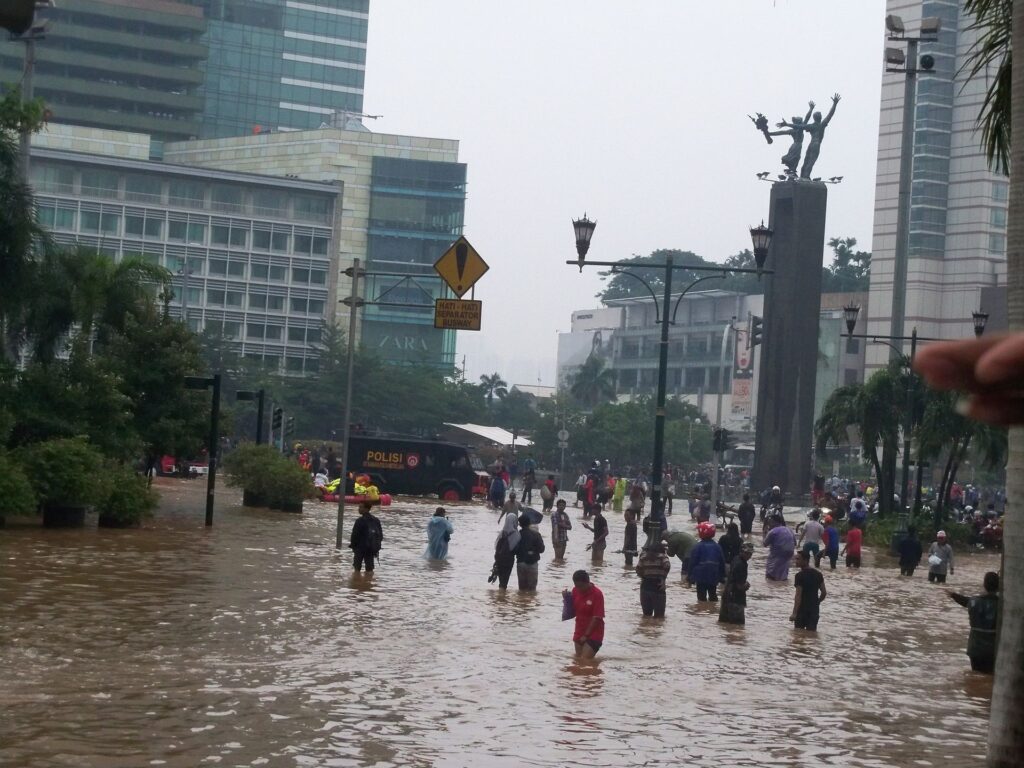
Certain world leaders are looking beyond conventional ways of projecting international power, turning away from the drawing of weapons towards ambitious and influential development projects. Indonesia, for example, is building cities from the ground up. In response to Jakarta’s environmental challenges, President Joko Widodo initiated the construction of the new city, Nusantara (IKN), in 2019. The capital was the country’s economic hub, but it ultimately faced flooding, land subsidence, and poor air quality. According to the National Research and Innovation Agency (BRIN), Jakarta’s sea level rises 2 to 10 centimetres per year. Already, almost half of the city is below sea level. Nusantara has been planned to replace Jakarta as the nation’s capital.
The Indonesian government identified eight main principles that govern Nusantara’s design and construction. One is its promise of “economic opportunities for all.” The Indonesian government claimed the city will have a GDP per capita comparable to that of high-income countries. Technology will drive Nusantara’s productivity and efficiency, promising “100 per cent digital and IT connectivity for all residents and businesses.” Located in East Kalimantan, the city’s construction has required the clearing of forested land. Nonetheless, the government assured that 75 per cent of the city will remain green, purely functioning on renewable energy. Since IKN is “designed according to nature,” it was labelled a “Forest City” meant to encourage surrounding biodiversity. The government emphasized the city’s “unity in diversity” by including local wisdom and promoting universal access to resources. Through these promotions and elaborate blueprints, Indonesia has sought to establish Nusantara as an instrument of soft power. Political scientists define soft power as a state’s influence derived not from force or coercion, but from its attraction towards its own citizens as well as to other international entities. Development is one example of such an attraction. Nusantara symbolizes Indonesia’s rising power in today’s global order.
Indonesia’s development ambitions were launched after its era of authoritarianism between 1967 and 1998. During the “New Order regime,” the late President Suharto and his family controlled most major sectors of Indonesia’s economy. GDP grew by seven per cent, but it masked elite corruption. The 1997 economic crisis, which began in Thailand, pressured reforms in both Indonesia’s economic and political status, essentially forcing Suharto to resign in 1998. With his resignation, Indonesia steadily rose to become a middle power, a liberal and democratic state with leadership capabilities and active participation in foreign policy and multilateralism. Its political reforms nurtured Indonesia’s dynamic economy, further improving its economic growth. Indonesia became the largest economy in Southeast Asia and the 17th largest in the world.
A lack of industrial diversification, however, threatens the state’s current economic position. Indonesia’s shortage of physical infrastructure, available land, and skilled workers may restrain their growth. The IKN project is presented as a potential solution. In 2024, Kalimantan Island only contributed 8.15 per cent of Indonesia’s total GDP. Moving Indonesia’s capital to the island can expand its contribution and the country’s overall output. Nusantara has become a giant in employment opportunities, driven by demand for resources and ongoing construction. The island’s location is suitable to facilitate transnational trade. In fact, foreign companies have already invested in or expressed interest in the development project, such as Malaysia, Brunei, China, and South Korea. The new city may boost Indonesia’s position as a middle power by providing resources and opportunities for multilateralism, improving the country’s economic conditions.
Nusantara’s economic benefits go hand in hand with its contribution to Indonesia’s political credibility. The city materializes the environmental and democratic values that are core features of Indonesia’s global image. For Indonesia, the end of the Suharto regime marked the beginning of a path towards democracy and its current international position. In fact, in 2004, former President Yudhoyono described the country as “a model of Muslim democracy.” Development projects were not only golden geese for economic benefits but also totems of democratic principles.
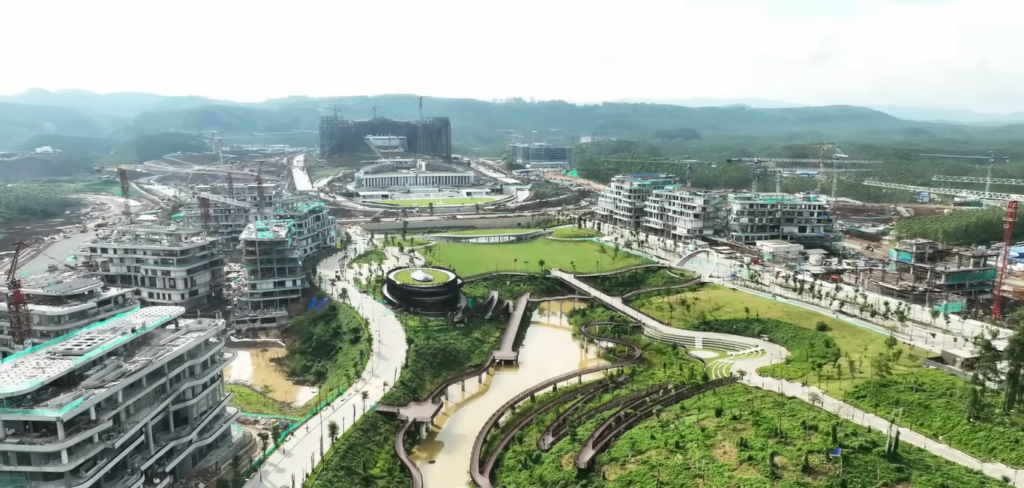
IKN’s developmental value largely stems from its green city design. Protecting the environment has been central to Indonesia’s global interactions. For instance, it is a signatory to the United Nations Framework Convention on Climate Change (UNFCCC), aiming to reduce greenhouse gas emissions. Through participating in international negotiations, Indonesia can potentially become a catalyst for climate mitigation. The United Nations recognized Indonesia for its commitment to solutions such as the Reducing Emissions from Deforestation and Forest Degradation (REDD+) program, acknowledging the country as a world leader in the climate crisis. Indonesia’s prize did not stop with a pat on the back. In fact, Indonesia was awarded a Result-Based Payment of $340.7 million USD by the United Nations Development Programme (UNDP). The plan for an environmentally integrated city further legitimizes Indonesia’s role as an accredited international leader.
IKN is more than a capital; it will be Indonesia’s banner of development. This banner is not only for the eyes of citizens but, most especially, for the eyes of the world. The marketing of IKN persuades the world to believe that such a perfect city does – or will – exist, reaffirming the country’s emerging position as a powerful actor on the global stage. Although one awaits the official completion, Nusantara is already a lucrative vision for the Indonesian state.
Edited by Maisie Minnick
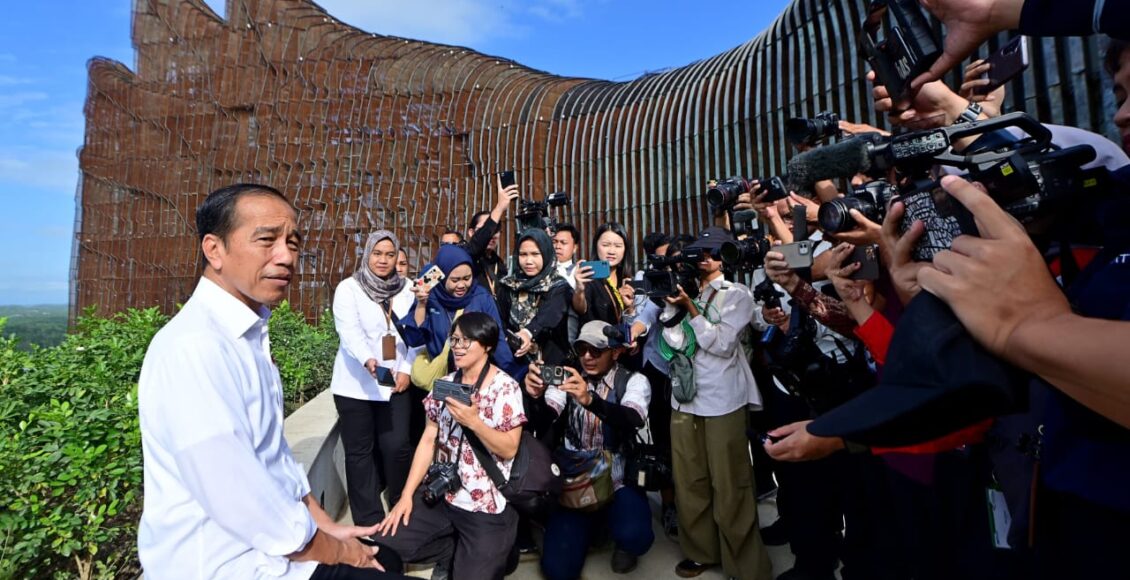
Featured Image: Indonesia’s Former President, Joko Widodo, being interviewed by the media as he visits Nusantara to inspect the Presidential Palace. Photo by BPMI Setpres/Muchlis Jr is licensed under Law 28 of 2014 on copyrights.


.jpg)