
The Non-Renewal of the USMCA and the Redefinition of World Trade
On July 1, 2026, the landscape of North American trade fundamentally changed. US Trade Representative Jamieson Greer formally declined to renew the United States-Mexico-Canada Agreement (USMCA), upending a landmark framework that brought structural predictability to continental commerce for millions of North American workers and businesses. The original agreement fostered secure cross-border supply chains, regional economic interdependencies, and a precedent for trilateral cooperation. Despite the economic benefits and security brought by the legislation, the Trump administration’s decision not to renew it puts North America’s economic cooperation at risk. Crucially, this shift forces industries and international investors into a politically volatile era of continuous and unpredictable trade management.

The United States’ refusal to sign off on a 16-year extension was driven by what the Trump administration defined as “substantial shortcomings” and unresolved market barriers. During the joint review process, Washington targeted Canada’s long-standing dairy supply management system, provincial alcohol protections, and digital broadcasting rules that “disadvantage” American tech platforms. Concurrently, US negotiators put intense pressure on Mexico about the enforcement of regional labour standards and energy-sector policies. Most notably, this non-renewal directive acts as an economic weapon against regional transshipment. The Trump administration hopes to block Chinese goods from avoiding US tariffs by passing through Mexican manufacturing hubs. By withholding renewal, the US is ensuring continental trade practices favour its own domestic industrial and political interests.
Established in 2020 to replace the outdated North American Free Trade Agreement (NAFTA), the USMCA was pioneered through intense institutional focus on balancing domestic interests with global market realities. Its architects acknowledged this by committing 1.9 trillion USD in trilateral trade, representing a third of global gross domestic product. This framework, though ambitious, sought to increase regional manufacturing and reduce volatility in North American trade by establishing predictable movement and valuation of commerce.
Despite the agreement’s massive economic footprint, Washington went forward with its non-renewal directive. While the strategic decision does not abruptly kill the pact, it triggers the sunset clause, which will force all three nations into an annual cycle of mandatory joint reviews until the initial terms expire in 2036. Rather than executing multi-year corporate strategies, international corporations must operate within a 10-year countdown. This administrative shift has immensely affected how logistics networks can function on a global scale. The original treaty granted international corporations the long-term stability required for multi-year investments. Today, under the current landscape of American politics, these protections are at risk.
Surviving this shift requires businesses to understand that the American government now favours the ability to frequently alter trade policies. By replacing multi-year stability with rolling, annual reviews, Washington can continuously leverage its position to demand overarching concessions in manufacturing and target shifting geopolitical concerns. Consequently, businesses can no longer assume a stable regulatory environment. Instead, they must create flexible frameworks that are designed to outlast constant policy shocks. Trade compliance departments are morphing from administrative cost centers into core strategic units, tasked with modelling high, overlapping tariffs, whilst addressing shifting supply chains on short notice.
This need for defensive preparation is already reshaping North American supply chain operations. Global logistics networks are ditching their entire methodology from cost-efficient “just-in-time” models to a high-cost “just-in-case” framework. Factory floors can no longer rely on immediate cross-border shipping. Instead, corporations are forcing capital into massive warehouses and stashing inventory just to endure this new era of trade management. Ultimately, this breakdown underscores the reality that shifts in global trade treaties do not just shape geopolitical landscapes, but they also directly disrupt domestic corporations and individual consumers. This structural shift forces multinational corporations to secure billions of dollars in capital simply to finance safety stockpiles and long-term warehouse leases. These massive operational burdens are found rippling through the economy, translating into structural inflation that impacts everyday consumers. With household appliances, automobiles, and groceries remaining highly integrated continental products, everyday shoppers will now face higher costs at retail stores as businesses desperately attempt to offset higher back-end fees.
These systemic changes establish a dangerous precedent for the wider global economy, threatening rapid capital flight in emerging markets. Foreign direct investments that once flowed effortlessly into Mexico now must navigate a high-risk landscape where long-term certainty is nonexistent. This instability acts as an explicit warning sign to other integrated international economic zones, signalling that emerging economic nationalism can unravel even the tightest trade corridors. It serves as a stark reminder to consumers and producers operating within these integrated zones that market stability can disappear very quickly and should not be taken for granted. To prepare for the future, global supply chains and regional economies must face a difficult reality: the era of borderless trade is being replaced by guarded economic blocs governed by sporadic and unpredictable geopolitics.
Edited by Allison Dera
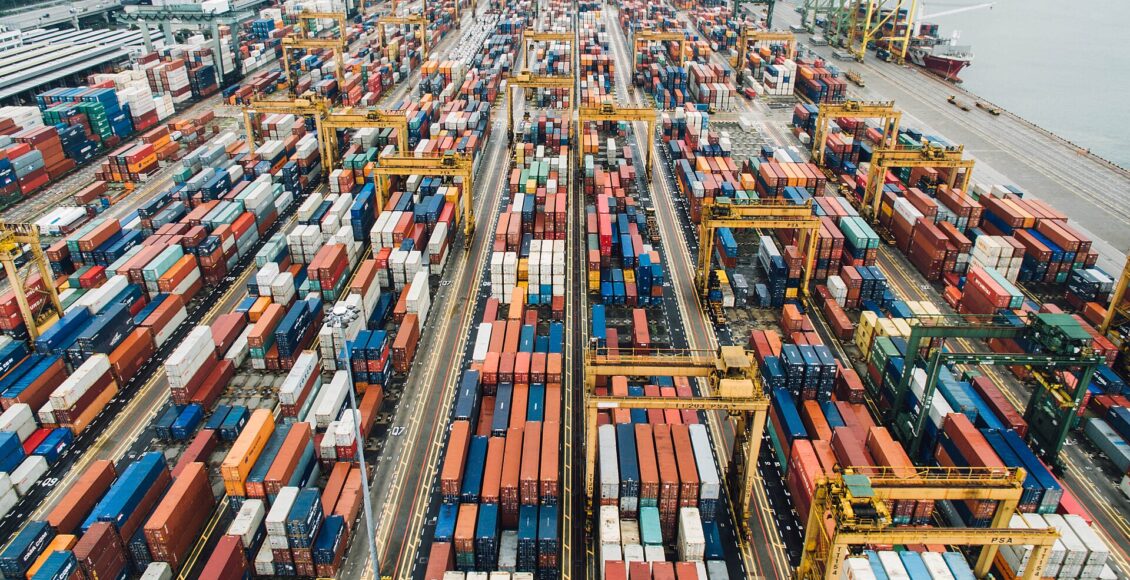
Featured Image: A large lot of cargo containers in a busy global trading port. Photo by Chuttersnap is licensed under CC0 1.0.


.jpg)