
Trump’s One-Sided Relationship with France’s National Rally
At Donald Trump’s 2025 inauguration, the first in US history to be attended by foreign heads of state, French President Emmanuel Macron was absent. Other French politicians, however, did receive an invitation. In attendance were Eric Zemmour, head of the far-right party Reconquête, and Marion Maréchal, Vice President of the European Conservatives and Reformists Party, niece of Marine Le Pen of the National Rally. Trump’s efforts to strengthen relations with the European far right are evident in this guest list.
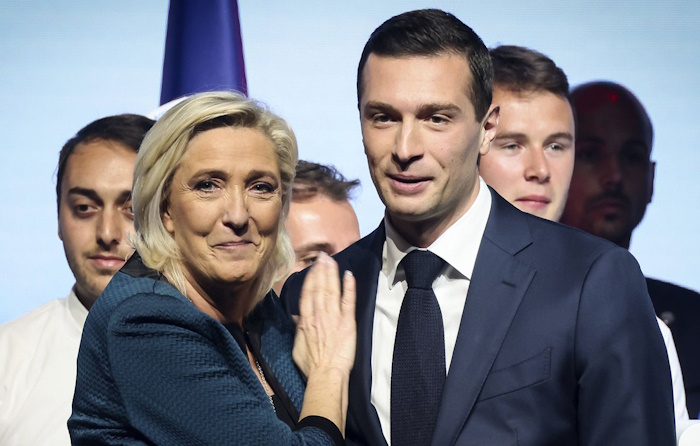
Presided over by Jordan Bardella, the NR is France’s dominant far-right party and the main opposition to Macron’s centrist party, Renaissance. Sovereignty and immigration are central to the NR’s program, which calls for Europe to change its current ways. Indeed, the NR sports a ‘French First’ approach, rejecting multiculturalism as an existential threat. The party advocates for an exclusionary immigration policy, notably by calling for stricter border controls.
Likewise, America’s 2025 National Security Strategy (NSS) reflects a stance on immigration similar to Europe’s. It frames demographic change as a threat to the continent’s future, warning of the “prospect of civilizational erasure” posed by an alleged soon-to-be “majority non-European” Europe. The NSS calls for the United States to resist Europe’s political trajectory. In expressing optimism about the rise of “patriotic” European parties, the NSS frames the electoral success of populist parties as an objective compatible with America’s strategic interests.
On paper, this overlap should position the Trump administration and the NR as natural allies, especially given France’s upcoming presidential election. Yet while America has codified its support for the European far right into international policy, France’s right wing has grown increasingly distant from, and even critical of, Donald Trump. Bardella has shifted from supporting Trump in the 2024 election to criticizing his behaviour as unsteady. Similarly, Le Pen, who celebrated Trump’s victory in 2016 and attended a far-right summit in 2025 praising Trump, recently condemned the US-led Iran War.
Despite many shared ideologies and Trump’s vocal support for Le Pen, the NR has been quite reluctant to publicly align itself with Trump’s administration. Why? The answer may lie in the American president’s widespread unpopularity in France. A relationship too close to him may pose an electoral liability for the NR.
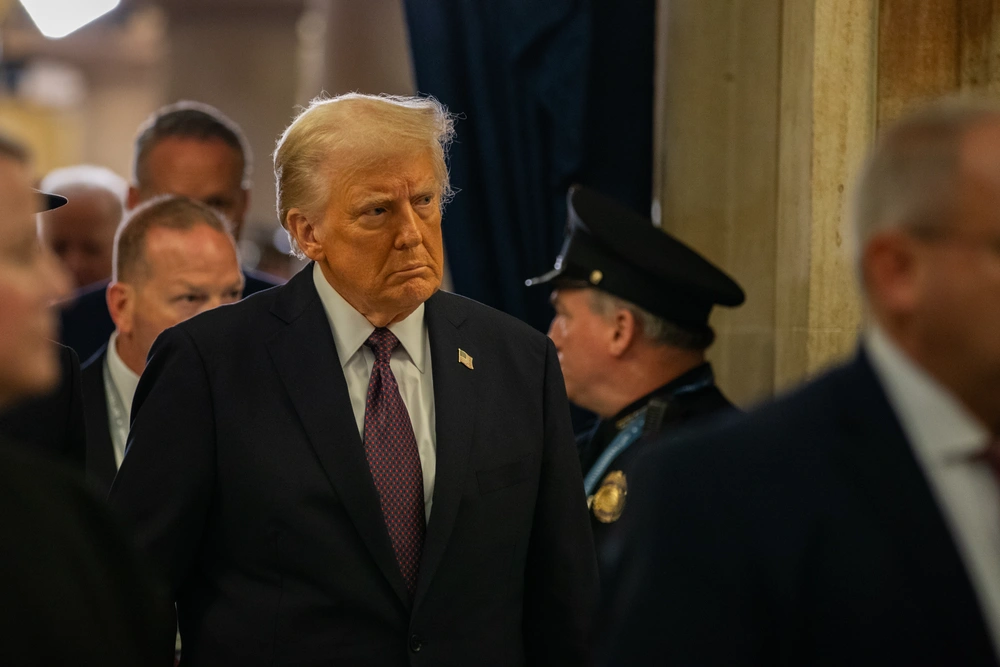
Trump’s support for Le Pen—NR’s candidate for the 2027 presidential elections—was evident even while she was facing a five-year ban from political office. When her candidacy first came under threat for embezzlement in March 2025, Le Pen turned down an offer of public support from US state officials. During the trial, Trump posted “Free Marine Le Pen” on Truth Social. He expressed admiration for her and denounced the initial ruling as a “witch hunt.” Le Pen did not comment on this support either.
Before Le Pen’s sentence was reduced in a recent court decision, Magali Lafourcade—Secretary General of France’s National Consultative Commission on Human Rights—alerted the French Foreign Ministry of having been approached by US State Department envoys. The envoys apparently sought material to support the narrative that Le Pen’s case was unfounded and that she was being politically targeted. Although Lafourcade refused to help propagate this claim, this attempt to undermine the legitimacy of Le Pen’s trial is an example of how Trump’s support for the European far right borders on political intrusion. Regarding the 2027 election, the NR’s president, Jordan Bardella, has said the party does not wish to accept Trump’s backing. In an interview with Politico, he asserted that the NR does not need to “open the door to any form of interference.”
Bardella’s warning points to a deeper concern within the NR: it seeks to avoid the risk of being perceived as a party dependent on the support of a foreign power. Trump’s “America First” policy could undermine the NR’s emphasis on French national sovereignty. Although the NR shares key elements of Trump’s rhetorical agenda, a partnership with the US president could alienate voters. Cluster17, a French polling institute, found that only 18 per cent of NR voters and 7 per cent of citizens consider him a friend of Europe. Conversely, 55 per cent of French citizens view him as an enemy of Europe.
Furthermore, Trump’s protectionist policies are fundamentally at odds with the NR’s efforts to be viewed as a defender of France’s markets. Consider Le Pen’s bold attempts at convincing business leaders of the party’s credibility on economic policy: ‘economic patriotism’ defines the NR’s promises to defend France’s purchasing power and industries. The tariffs on European goods imposed by the Trump administration have raised the cost of trade with some of France’s largest economic partners, and resulted in a significant drop in French exports, such as a 40 per cent drop for the spirits industry. The NR would therefore struggle to align itself with the Trump administration without appearing inconsistent with its economic policies.
The NR seems aware that close alignment with the Trump administration could undermine its attempts to present itself as an independent champion of French interests. This might explain why it has not reciprocated Trump’s support with the same enthusiasm. In this tension lies a key limitation of Trump’s NSS regarding Europe: formalizing US support for the European far right does not necessarily guarantee mutual support from the very parties he seeks to strengthen. As a political party built around French sovereignty, the NR cannot accept patronage from an unpopular foreign president without alienating potential voters.
The NR’s calculation should also be seen as part of a broader trend of other nationalist European parties distancing themselves from the American president.
Italian Prime Minister Giorgia Meloni, previously one of Trump’s most prominent European allies, posted on social media that being Trump’s friend “certainly has not helped” her popularity. Similarly, the far-right Alternative for Germany party has decided to reduce the number of official trips to the United States in light of the war in Iran. This repudiation of one of the 21st century’s most successful right-wing movements increasingly reveals the distinction between learning from Trump versus aligning with Trump. While the MAGA movement’s ascendancy has been an undeniable source of inspiration for the European right, the American president is now being rebuffed by once-warm comrades.
Ultimately, Trump has miscalculated: he cannot be a friend of the European far right while maintaining a confrontational approach toward Europe. In the NR’s case, shared beliefs have not been enough to strategically justify the blow that aligning with Trump could deal to the party’s image. His would-be allies must choose between ideological solidarity and their electoral interests. It seems unsurprising that they would choose the latter.
The apparent contradiction in Trump and the National Rally’s relationship is, in fact, almost inherent to nationalism: it makes sense that most nationalist parties would rather be seen championing their country’s sovereignty above the interests of a foreign leader. Trump’s “America First” strategy is thus incompatible with his attempts to foster relations with nationalist European parties that seek to put their own countries first. Even as Europe’s far-right parties continue to garner popular support, Trump may still end up with an ‘America alone.’
Edited by Daniel Sun
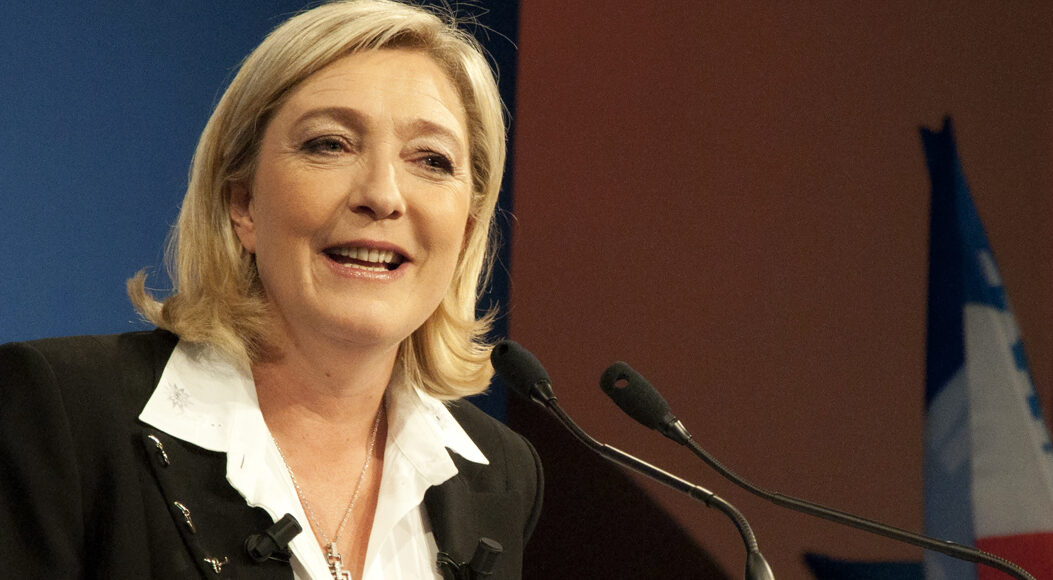
Featured Image: Marine Le Pen addresses supporters at the Equinoxe Hall following the first round of the 2012 French presidential election. Photo by Rémi Noyon is licensed under CC by 2.0
