
Inside Russia’s Disinformation Campaign Against France’s 2027 Election
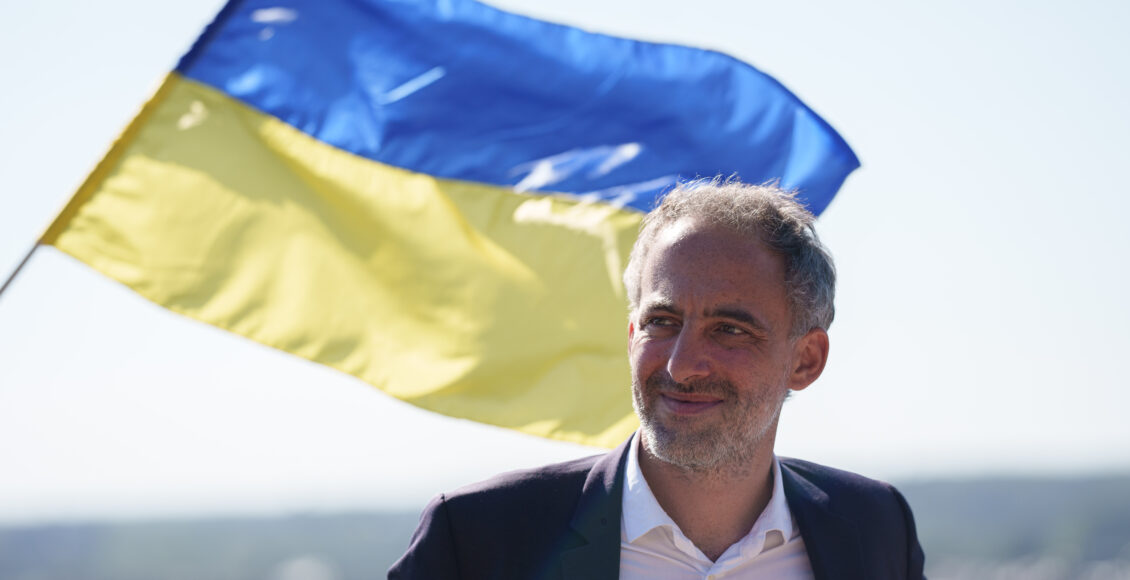
In early August 2026, an AI-generated testimony of journalist Edwy Plenel appeared to confirm that his co-host, Léa Salamé, had bribed major news outlets to secure favourable coverage for her partner, presidential candidate Raphaël Glucksmann. France’s national security services later identified the video as originating from Russia’s Storm-1516 network, run by the GRU. Russian interference in the 2027 French presidential election is designed to be cheap, redundant, and impossible to fully neutralize. By laundering fake narratives through a network of burner accounts and amplifiers, these operations don’t need voters to believe any single lie. They only need to pollute the information environment enough to erode trust in candidates, institutions, and the media. Therefore, debunking any single fabrication cannot erase the residue of confusion and suspicion left behind.
Russia has spent years cultivating ties with the French far right and working to erode public support for Ukraine. Between July and August 2026, three presidential candidates were targeted by some form of Russian networks. Before the Glucksmann-Salamé deepfake, candidates Edouard Philippe and Gabriel Attal were each targeted by fabricated rumours about their health. Philippe was said to have frontotemporal dementia, and Attal was accused of having Parkinson’s disease.
This pattern is not incidental. Philippe has been a vocal supporter of continued European military backing for Ukraine, Attal served as prime minister under a staunchly pro-Ukrainian president, and Glucksmann has built his political career on European federalism and support for Kyiv. None of these targets of Russian attacks align with Marine Le Pen, the major candidate most sympathetic to Moscow. Despite her conviction over the misuse of European Parliament funds, Le Pen remains eligible to run and is currently the leading candidate in first-round polling. In addition, VIGINUM, the French agency working to counter foreign digital manipulation, frames the strategic objective of these networks as the erosion of Western support for Ukraine.
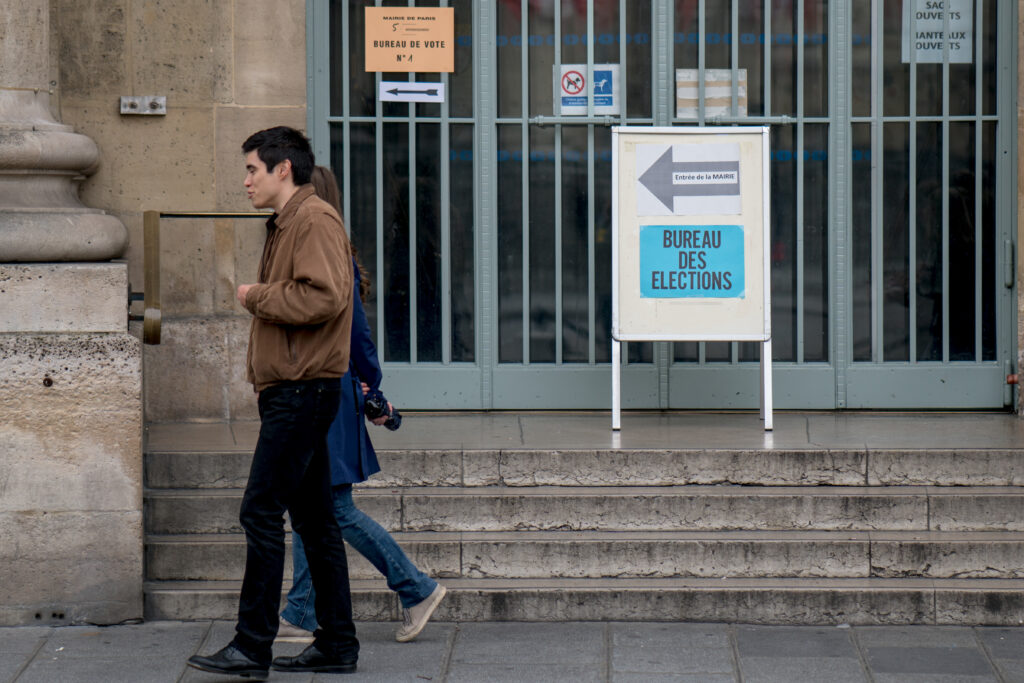
Over the past two years, France’s foreign interference watchdog has mapped how operations, including Storm-1516, function. In a May 2025 report, the agency documented 77 Storm-1516 campaigns between the network’s emergence in August 2023 and March 2025. While the nature of these manufactured narratives varies, the playbook is consistent: disposable social media accounts, often acquired in bulk from suppliers, insert fabricated evidence under the guise of “whistleblowing,” or exposing alleged wrongdoings. Paid third-party sites and other amplifiers launder the content by republishing it as though it were independently sourced. Pro-Russian sympathizers then spread it further, no longer spurred on by monetary compensation.
Microsoft’s Threat Analysis Center has found that the network’s strength lies in creating a supply of “outlandish fake videos and scandalous claims,” then using affiliated websites to give those claims wider reach. Clint Watts, the centre’s general manager, has described the network’s model as one of sheer volume rather than precision: most fabrications fail to land, but at that scale, occasional success is close to guaranteed.
While major news outlets and mainstream media have a more rigorous fact-checking process, often shutting down manufactured rumours before they reach a nationwide audience, the act of debunking itself extends their reach to a much larger audience. In other words, the effort to correct the narrative can paradoxically introduce a much larger audience to a rumour it had never encountered, while simultaneously publicizing its Russian origins. The specific content of the lie ends up meaning less than the fact that it existed and was taken seriously enough to warrant an official response.
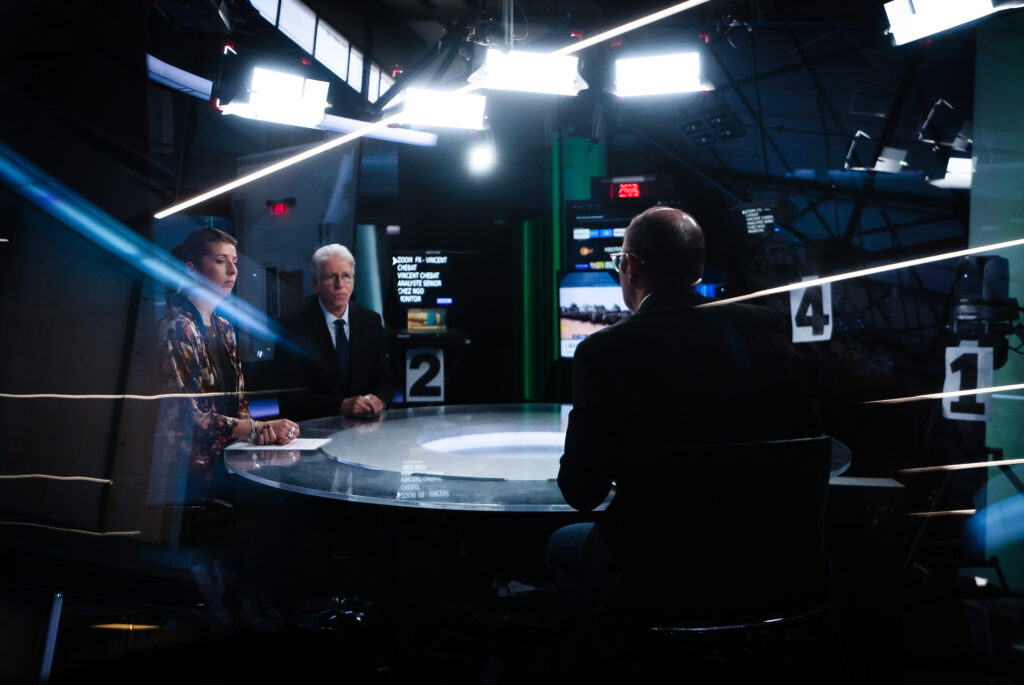
Furthermore, Storm-1516’s use of fabricated media illustrates what researchers call the “liar’s dividend”: the idea that, in an environment saturated with synthetic media, authentic evidence starts to lose credibility too, since anything, real or fake, can be plausibly dismissed as fabricated. If that dynamic takes hold, the risk isn’t only that voters believe specific lies about specific candidates; it’s that they stop trusting verification itself, which would make any future correction, however accurate, less persuasive by default.
Glucksmann himself described the goal of these operations as creating a “halo of suspicion,” in line with the logic that where there is smoke, there’s fire. Exposure and correction cannot fully erase the suspicion that a fabricated claim leaves behind. Multiplied across dozens of operations run by several independent networks, this phenomenon becomes nearly impossible to contain through debunking alone. That structure is what makes the redundancy in the pipeline matter. Catching one burner account, one fake site, or even one entire network does nothing to another network already active elsewhere. Three candidates targeted in a matter of weeks, by two independent operations, is a preview of what that redundancy looks like at scale over a full campaign.
France’s institutional response has moved quickly, at least on paper. Prime Minister Sébastien Lecornu credited a new detection system for automatically flagging all three campaigns as they emerged, and said a draft law addressing digital interference had already been presented to the Council of Ministers. Separately, the Paris prosecutor’s office opened formal investigations into the operations targeting Glucksmann, Attal, and Philippe. Whether faster detection and a new legal framework can outpace a pipeline built specifically to survive being caught is, at this stage, an open question rather than a settled outcome. Yet it marks the first sign that French institutions are treating the redundancy of the system, rather than each individual fabrication, as the problem to solve.
The central challenge is not simply stopping false stories before they spread. These campaigns do not need to convince voters of any particular lie to be effective. Their success can instead be measured by how much uncertainty they create: enough contradictory claims, fabricated evidence, and competing narratives can make voters less certain about what is true and less willing to trust the institutions responsible for telling them the truth. As the 2027 campaign intensifies, the question remains whether French institutions can respond effectively.
Edited by Shumyle Eman Sahid
Featured image: Raphaël Glucksmann pictured at the Parti socialiste’s summer conference in Blois, France, on August 28, 2022. Photo by Parti socialiste is licensed under CC BY-NC-ND 2.0.


