
Opinion | France’s Failed Billionaire Tax and the Persistence of Trickle-Down Economics
Last year, inside the walls of the French National Assembly– a space supposedly built on the principles of liberty, equality, and fraternity– a proposal intended to create a more balanced tax system was rejected by the Senate. The National Assembly first approved the bill on February 20, 2025, only for the Senate to reject it in June, and the National Assembly rejecting it again on October 31st.
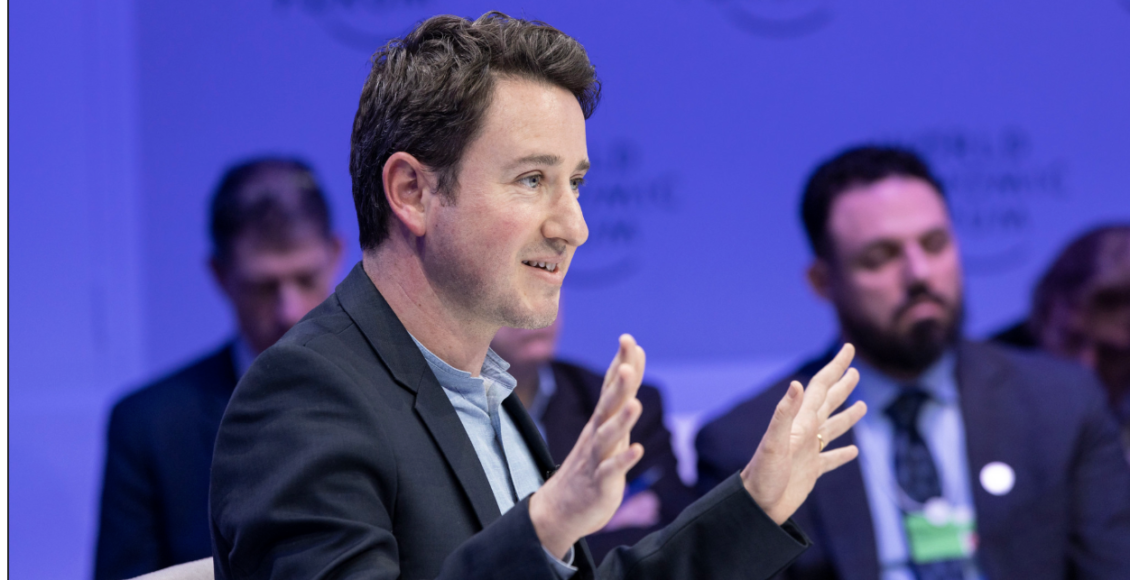
The Zucman tax, named after its engineer, economist Gabriel Zucman, marked a concrete policy measure to combat the rise in wealth inequality. It aimed to impose a minimum two per cent tax on households with a total net worth exceeding €100 million. The tax received strong support from the left, while the right opposed it, and it was ultimately not adopted.
Gabriel Zucman has defended the tax as a necessary adjustment to an unjust tax system. He stated that wealth inequality in France had increased significantly, with the richest 0.01 per cent of the population paying less in taxes than the average French citizen. Billionaires mostly pay 26 per cent of their taxable income, while the average French person pays around 50 per cent. This is because much of the ultra-rich’s wealth is held in financial assets. These include stocks, bonds, investment funds and other financial holdings that can generate and hold revenue as wealth without necessarily appearing as taxable income in the same way as wages or salaries, or, in the case of billionaires, dividends from their companies, thus resulting in effective income taxes of below two per cent. This proposal would have affected a total of 1,800 out of 31 million households nationwide.
The tax was also developed in the context of a global push for billionaire taxation. Indeed, the policy has regained popularity, largely due to rising wealth inequality and government spending, not only in France but around the globe. The polycrisis that has emerged in the last decade, including the COVID-19 pandemic, climate change, and increased defence spending, has left the French government with rising debt and in desperate need of additional revenue sources.

If maintained at two per cent, the tax could bring in between €5 and € 25 billion per year. For reference, the damage caused by recent heatwaves was estimated to cost €15 billion in public funds, while the Fonds Vert, which is supposed to fund climate adaptation, has been reduced to a third of its size in three years.
One poll, conducted in September 2025, found that 86 per cent of French people were in favour of the tax, and yet it was still rejected.
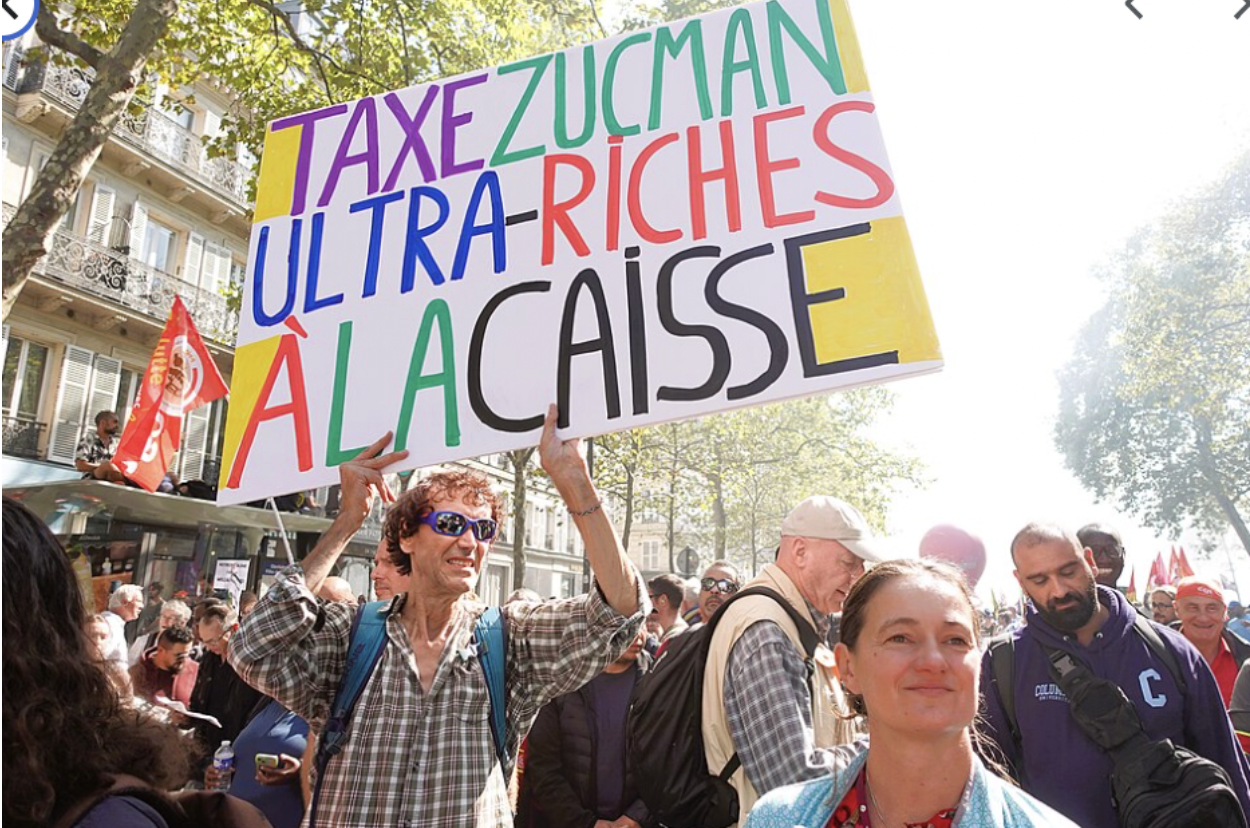
Why would a government that struggles to reach a budget agreement and cannot provide economic stability for its citizens reject a popular tax that could help alleviate some of that economic pressure?
The answer seems to be ideological and lies mostly with the National Assembly’s right-wing seats. Historically, tax policies targeting the wealthy have been highly controversial. Under the theory of trickle-down economics, marginal tax rates and other financial burdens are seen as obstacles to the production of goods and services and, thus, to the accumulation of wealth. The latter is then expected to “trickle down” to the rest of society through higher wages and the creation of new jobs.
The fear, then, is that excessive taxation of the ultra-rich destroys the incentive for new businesses to emerge or for existing businesses to continue operating in France, leading to slower economic growth, rising unemployment, reduced standards of living, and an overall worsening of economic conditions.
Many of the right-leaning candidates for the 2026–2027 presidential election continue to use this rhetoric. When asked about the national debt, candidates like center-right Édouard Phillipe have talked about the importance of “preserving wealth” or, as Bruno Retailleau, candidate for the right-wing LR (Les Républicains) party, has put it, “the first problem of French businesses is not the competition but the bureaucratic state.” This sentiment echoes statements made by former US President Ronald Reagan during the passage of the Economic Recovery Tax Act of 1981, which implemented the largest corporate and individual tax cuts in US history at the time.
Under Emmanuel Macron, France has introduced several financial measures benefiting wealthy individuals and entrepreneurs, while inequality and the cost of living have continued to rise alongside worsening economic conditions and political difficulties. Given that popular support for the Zucman tax is clearly not the issue, a new question emerges: Do French politicians actually possess the political will to implement policies that would significantly increase taxation on the wealthiest citizens?
The answer seems to be no. The Zucman tax was replaced by a luxury tax on goods considered to be for leisure and held through private structures. The measure was a compromise with the left, who refused to accept a budget without a tax on the ultra-rich. It was supposed to bring in around €100 million annually, but it has instead encouraged wealthy taxpayers to reorganize their holdings by buying back properties and other assets. For most, this was considered more profitable than simply leaving those assets inside the holdings. The revenue from this luxury tax is thus significantly smaller than the Zucman tax’s promise of €20 billion.
The Zucman tax itself would not have created the same problem because it was designed as a tax on an individual’s total net worth. To escape it, wealthy individuals would have had to leave the country, something the proposal already sought to prevent by a clause allowing France to continue taxing them for five years after their departure. The ultra-rich targets of the tax could also have attempted to divide their wealth between family members or associates, but for many of those impacted by the tax, this measure would not be enough to significantly reduce their taxable wealth.
The tax, however, was not perfect, as it presented a few constitutional concerns. Critics argued that imposing an additional tax specifically on billionaires could undermine the principle that taxpayers should be treated equally. Additionally, some feared that it could present problems for liquidity. In order to pay the tax, some billionaires would have to sell some of their financial assets, which violates a fiscal tradition dating back to the French Revolution against the “Impôt en Capital.” Yet an important counterargument remains: Does the mere fact that the wealthiest individuals are proportionally paying less in taxes not also violate the principle of tax equality?
This is not the only initiative aimed at taxing billionaires. It is part of a broader worldwide movement to increase taxation on the ultra-wealthy, which has become increasingly visible in recent years, mostly coming from the left. Figures such as Gabriel Zucman, Bernie Sanders, Rutger Bregman, Zohran Mamdani, and many others have contributed, in different ways, to bringing wealth inequality and billionaire taxation back into mainstream global political discourse. California is currently discussing a similar tax, with Silicon Valley billionaires fiercely opposed to it.
The rejection of the Zucman tax reveals a growing contradiction. As crises multiply and public debt rises, the cost of living remains a persistent concern. Meanwhile, the wealthiest continue to accumulate unprecedented wealth, and governments struggle to move away from trickle-down economics despite widespread public support.
Cuts are instead imposed on essential sectors such as education, healthcare and the ecological transition, while the taxation of extreme wealth remains politically contentious. Right-leaning politicians continue to hold on to trickle-down economics even as its relevance is increasingly challenged by rising inequality and the government’s need for additional revenue. This leaves critical questions unanswered: why do they continue to follow this doctrine so dogmatically? Is it purely ideological bias, or are there greater interests at stake? And whose interests are those?
Edited by Sophie Wright Sinclair
Featured Image: Gabriel Zucman speaking at the World Economic Forum at Davos. Photo by World Economic Forum/Faruk Pinjo is licensed under CC BY-NC-SA 2.0.

