
Who speaks for Iran? Montreal’s Divided Diaspora Searches for Common Ground
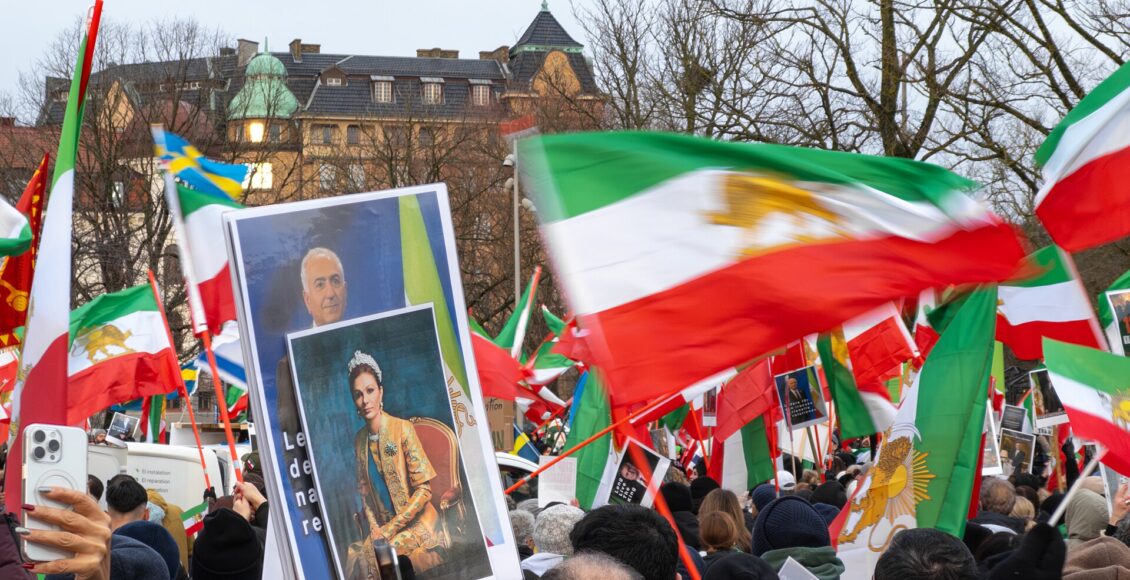
On a cold Saturday afternoon along Montreal’s Sherbrooke Street, protesters gathered for their fourteenth consecutive weekend march. Above the crowd, a yellow-and-red Lion and Sun flag—Iran’s pre-revolutionary national emblem—flapped in the wind next to tricolour banners without symbols. Weeks earlier, when word had spread that Iran’s Supreme Leader Ayatollah Ali Khamenei was killed on February 28 in a military strike by the United States and Israel, hundreds of Iranian Quebecers poured into the streets in spontaneous celebration. As those initial weeks of shock settled into a brief ceasefire, the atmosphere in Montreal’s streets began to reflect a much deeper, quieter tension. In principle, everyone marching shared a single goal: demanding an end to the Islamic Republic. In reality, the moment the conversation questioned who or what should replace it, the community fractured along deep ideological issues.
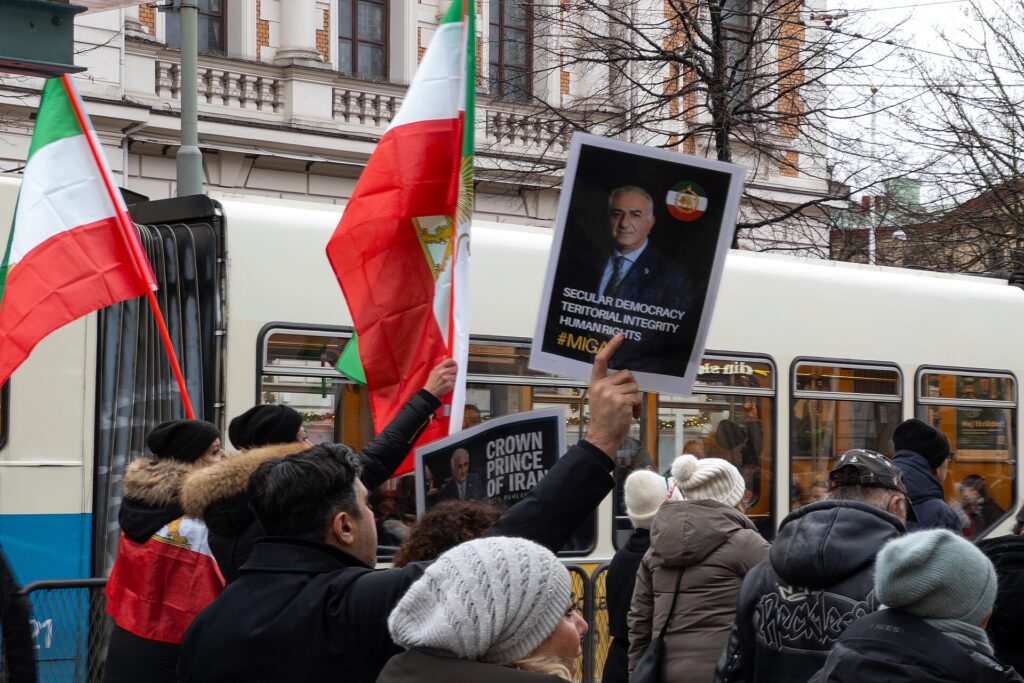
A large part of Montreal’s diaspora has a vision for Iran that mirrors its pre-1979 history. At local rallies, supporters carry portraits of Reza Pahlavi, the exiled son of Iran’s last shah, framing him as the primary figure capable of leading the opposition. Some demonstrators even wear ‘Make Iran Great Again’ caps, pointing to the pre-revolutionary era as the lost golden age of secularism and prosperity. As political analysts observe, shouting monarchist slogans is seen less as a literal mandate for royal rule but rather as an “escape from a dead end,” which is a rejection of decades of theocratic repression when no clear political alternative feels within reach. The Monarchist ideology still receives pushback from secular republicans, leftists, and ethnic minorities across the diaspora. Republican activists argue that replacing a religious autocracy with the Shah simply trades one centralized authority for another. Further, many exiled communities oppose the Shah because they fear a return to a system that suppressed their ethnic identities and gave them little political autonomy. These minorities insist that Iran’s path forward must be a democratic, federalist structure that is founded on civil rights rather than the rebirth of an ideological imperial system. For example, many exiled Kurdish and Balochi communities experienced heavy centralized control and cultural repression under both the Shah and the current clergy.
These friction points are not merely accidental; they are shaped by a complex mix of geography and generation. North America was the main hub for early monarchist exiles after 1979, whereas continental Europe has distinct cohorts of Iranian leftists, dissidents, republicans, and minority activities. Generational timing creates a strong divide. A first-generation exile who fled state persecution in 1979 carries a different political memory than a young student who left during the late 2000s. An exile in Montreal and an activist in Berlin do not merely hold different political opinions; where they landed and when they left shape how they define what it means to be Iranian and part of the diaspora.
This internal rift poses a troubling question: who actually has the right to speak for the millions of Iranians living in the country? High-profile diaspora figures often receive attention from the Western media, yet their priorities do not always align with the domestic realities in Iran. With Tehran enforcing extended internet blackouts this spring to destroy internal communications, diaspora voices were further amplified. The debate over foreign military intervention represents these cleavages well. While some Montreal protesters welcome foreign airstrikes to weaken state forces, others express anxiety over military escalation putting civilian lives at risk and allowing the regime to frame internal dissent as a foreign issue.
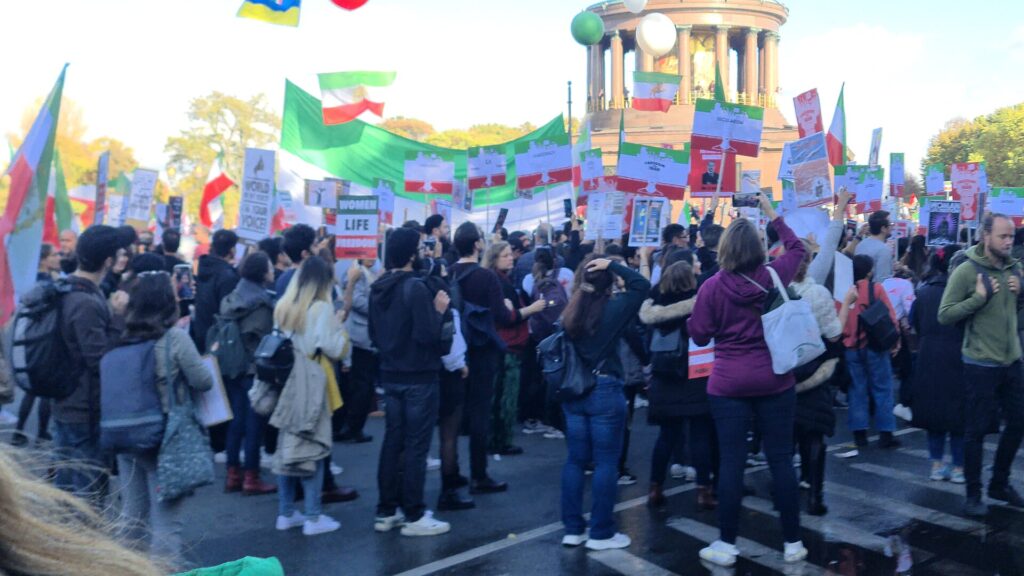
Amid such heated arguments over flags, leaders, and foreign strikes, it is easy to conclude that the Iranian diaspora is hopelessly divided. On the surface, what binds Montreal’s diaspora together is a very powerful consensus: complete agreement on what must end. Despite the rage against the regime, many question whether these groups will ever find common ground.
Looking at what binds these factions together may start to reveal an answer. Regardless of their fierce arguments over monarchism versus republicanism or foreign intervention versus revolution, virtually every demonstrator standing on Sherbrooke Street wants to see a free Iran where basic human rights are secured. An exile holding a lion-and-sun banner and a student waving a “women, life, freedom” sign may appear to represent preferences for different governmental structures. However, both are fighting against a regime that functions on exile and state violence. Both collectively want an Iran where no citizen is jailed, tortured, or executed for simply speaking their mind.
True common ground does not require forcing monarchists and republicans into an artificial monolith or demanding that every activist rally behind a single leader. In fact, trying to enforce one total political agreement simply mimics the authoritarian ideology the diaspora seeks to dismantle. Instead, real unity rests on agreeing to a shared democratic process. This is a promise that, regardless of personal preferences, the ultimate choice of governance belongs only to the people of Iran through free and fair elections.
The passionate debates seen online and in Montreal should not be dismissed as political failure or fragmentation. Instead, these should be considered a representation of this community’s desire to see democracy in their homeland. In arguing so passionately for Iran’s future, Montreal’s diaspora isn’t failing to find common ground. It demonstrates that, despite decades of exile, the readiness for Iranian democracy is well and alive.
Edited by Koena Banerjee
Featured image: Iranian dissidents attending an anti-Iranian regime protest in Sweden. Photo by Crannofonix News is available in the public domain.


