
AI-Guided Agriculture and the Race for the Global Food Supply
Historically, foreign aid to the Global South has been characterized by capital or concrete infrastructure development. Today, however, wealthy states and tech conglomerates have overwhelmingly pivoted from traditional finance to “data aid.” This quiet transformation is best demonstrated by initiatives like the OpenAI Foundation’s $60 million USD investment to bring AI-powered weather and crop disease forecasting to 100 million smallholder farmers across South Asia and East Africa. While this digital migration promises a new era in food security through the use of soil sensors, drone surveillance, and precision modelling to shield smaller farming communities from increasing climate volatility, an aggressive corporate expansion into the agricultural sector persists underneath this philanthropic facade. AI-guided agriculture may create unprecedented technical solutions for food security, but it fundamentally serves as a contemporary tool for Western soft power. Crucially, the systemic extraction of hyperlocal agronomic data risks trapping developing countries in a state of asymmetric digital dependency, effectively turning the race for food security into a period of digital colonialism.
At its core, AI-guided agriculture uses artificial intelligence, such as machine learning, satellite imagery, and in-field sensors, to provide farmers with real-time data that drives small-scale agricultural decisions. These systems aim to optimize farm management across three distinctive pillars: accuracy, precision, and relevance. Innovative tools can track crop health, monitor soil moisture and nutrient levels, and model weather patterns. From the perspective of smallholder farms, AI-guided farming optimizes resource allocation, diminishes operating costs, and maximizes crop yields on a scale never seen before. Furthermore, “data aid” has become increasingly popular because it is direct and effectively bypasses slow government processes, infrastructural instability, and potential local corruption.
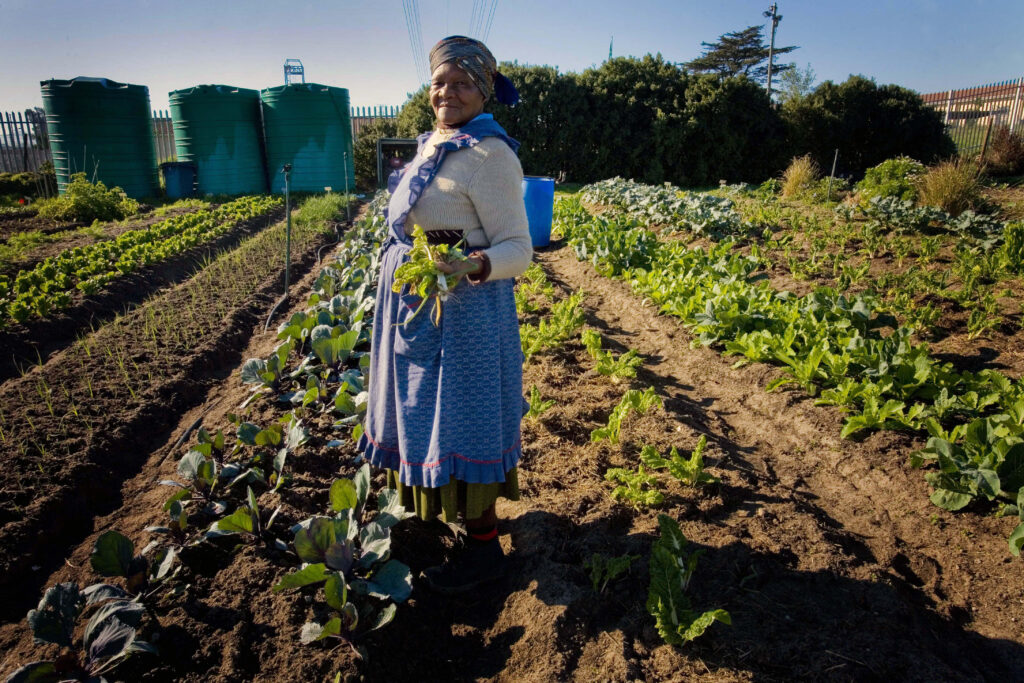
![]() This image depicts a South African woman holding up vegetables grown with urban agricultural methods funded by Australia. Photo by Kate Holt is licensed under CC-BY-2.0.
However, tech monopolies are not investing in these tools altruistically. Instead, they are looking for “data exhaust.” This refers to the continuous stream of hyper-local data points generated by these tools during use. Tech giants use this massive volume of information to train their own algorithmic models, such as Google DeepMind’s WeatherNext initiative. Subsequently, the knowledge and information nurtured by these communities over generations are systematically extracted and appropriated into corporate assets.
Since this infrastructure is digital, it creates an opportunity for long-term sustainability and scalability. Nevertheless, this architecture functions fundamentally as an instrument of soft power. Whenever a Western corporation funds a digital advisory network, it builds immense brand equity and diplomatic leverage in that respective region. This strategy mirrors China’s Digital Silk Road (DSR) initiative. Beijing has provided extensive financing, political support, and advanced technology to developing nations across Africa, Latin America, and Southeast Asia through the DSR. While Western democracies frequently criticize this policy framework, they are simultaneously pursuing digital alignment.
![]()
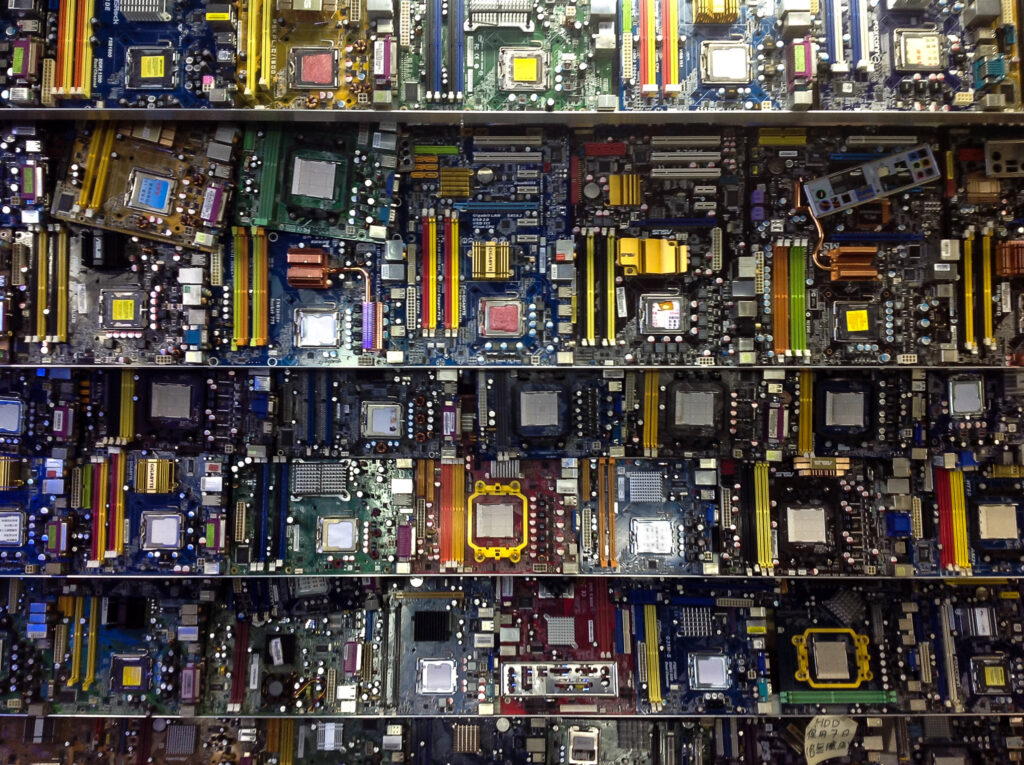
An overview of circuits and motherboards in Hong Kong. Photo by See-ming Lee is licensed under CC BY-SA 2.0.
The risks of this structural digital dependency are significant. The hyper-local data is stored on foreign servers controlled exclusively by major tech corporations. Once local farmers become fully reliant on these digital systems, corporations can lock them into exploitative subscription pricing models, thereby undermining farmers’ bargaining power and forcing them to buy back their own operational data from these companies.
Additionally, Western AI models innately reflect the cultural values and data biases of the Western entities that build them. A potential overreliance on these instruments can erode traditional agricultural practices in favour of industrial methods preferred by foreign corporate partners. For example, in Maharashtra, India, millions of smallholder farms utilized the AI program Plantix. Upon further investigation of its crop disease diagnostic tool, it was found that the company behind the app exploited farmers’ reliance on it to push AI-powered recommendations that favoured the agrochemical markets that funded the company. Instead of suggesting local or organic solutions, the program defaulted to generating toxic ‘pesticide cocktails’ that ended up burning crops and financially ruining these smallholder farms.
Outsourcing this infrastructure also creates severe geopolitical and national security vulnerabilities. Crucially, data metrics regarding a state’s food supply and crop disease forecasts are highly sensitive security assets. Giving corporate entities, particularly foreign ones, exclusive control over this information grants other nations asymmetric leverage over a state’s agricultural policies and national autonomy. If a developing state completely outsources its meteorological and agricultural intelligence to Western corporations, it essentially surrenders its technological sovereignty.
Ultimately, the merging of Big Tech and agriculture represents an opportunity for global food security efforts, giving smallholder farms the critical data needed to thrive in a changing climate. Simultaneously, however, this concentration of power can become a dangerous tool that subtly influences domestic interests and restricts state sovereignty. In hopes of preventing the overreach of corporate entities, the international community must pivot away from these monopolies. As the World Bank has emphasized, the future of global farming relies entirely on creating safe, open data ecosystems that protect the long-term interests of local smallholders.
Edited by James Knechtel
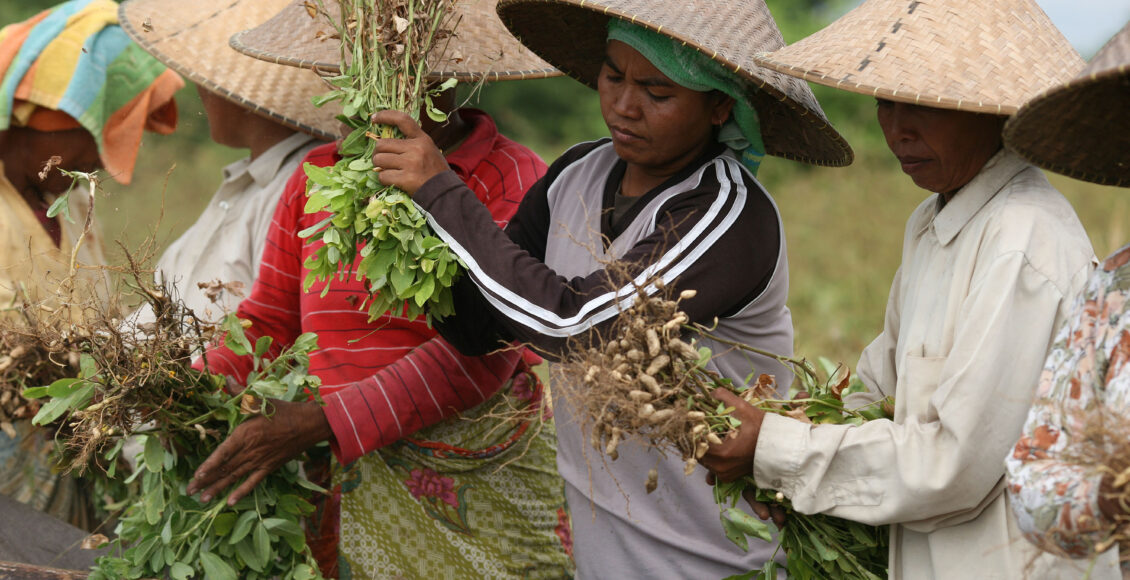
Featured Image: Women in Lombok farming peanuts, a crop not native to the region but favoured economically. Photo by the Department of Foreign Affairs and Trade is licensed under CC BY 2.0.


