
China’s Bid To Win the AI Race
In January 2025, Chinese startup DeepSeek shocked the artificial intelligence world by releasing a large language model (LLM) rivalling those of American tech giants. Built with a fraction of the cost—reportedly around 10 times less than Meta’s latest technology at the time—and with far fewer and less advanced chips than its American counterparts, the novel model caused international financial markets to freefall as investors questioned the future of American AI dominance.
The success of DeepSeek’s model marks a significant escalation in what has been dubbed an “AI arms race” between the United States and China. This AI race unfolds across many dimensions, beyond merely developing the most advanced LLM. Critically, the “winner” of the AI race will be determined by how deeply AI is integrated into each country’s domestic economy and, ultimately, into the global one.
In comparing the US and China, the US has greater access to private capital, with private AI investment more than 23 times that of China’s in 2025. The US also clings to a quickly shrinking lead in frontier AI, with its top model’s performance just 2.7 per cent ahead of China’s. Despite this, China’s AI development model may be more suitable for global diffusion because of its government-industry coordination, open-weight models, and growing partnerships abroad—particularly in the Global South. These strategies have boosted inter-firm competition domestically and internationally, lowered costs, and accelerated innovation, thereby helping China consolidate its soft power internationally.
Moreover, US semiconductor export controls on China have further incentivized the country’s technological self-reliance while exposing the US’s dependence on Taiwan’s advanced semiconductor manufacturing industry. As the US’s lead in frontier AI ebbs, China may be better positioned to deploy its AI internationally, especially if the US does not stabilize relations with its allies, increase technological independence, and lower costs. This global shift would have major economic, security, political, and ideological implications as well as other unforeseen consequences.
The Chinese government’s strategy for LLM dominance emphasizes diffusion and competition domestically through a combination of state direction, local subsidies, and market forces. At the national level, Beijing has implemented a strict regulatory framework and initiatives to integrate AI across key sectors, including education, robotics, and intelligent vehicles. This strategy is then reinforced by local governments, which both subsidize and hire AI companies, lowering barriers to entry through incentives such as compute and model vouchers, while simultaneously providing government data for companies to train and improve their models. Beijing then promotes these models abroad—which are attractive to users because of their low prices— cultivating international sway.
Another key element of the Chinese approach, in contrast to the closed-weight models of American tech giants Anthropic and OpenAI, is its use of open-weight technology. In AI, a “weight” is a numerical value related to how AI systems use the digital data they consume to generate answers. When a model is ‘open-weight,’ it means that these ‘weights’—which rule the AI system—are publicly available, allowing others to download, use, and modify them. This enables companies to build on each other’s models, reducing massive compute, development, and time costs, thereby lowering barriers to entry and user prices and accelerating innovation. As users outside China are drawn to its high-performance, low-cost open-weight models and foreign companies begin using Chinese models to craft their own, China can grow its soft power internationally by embedding itself deeply in the world’s AI ecosystem.
Since 1978, China has become a powerhouse in the global economy. It has been dubbed the “world’s factory” for manufacturing a wide range of goods, both low- and high-level. However, economic sociologist Gary Gereffi explains that under President Xi Jinping, China shifted its strategy to “promote initiatives to reduce its dependence on producing cheap low-tech products and to highlight instead the production of high-tech goods and services.”
China’s growing adoption of AI is thus also helping the country reinforce its dominant position in industrial manufacturing and move up the global value chain (GVC) through process upgrading. The GVC encompasses all the activities involved in the multinational development and (re)use of a product, and advancing along it is often achieved through process upgrading, which consists of improving the efficiency of the production method, such as by introducing new technologies like AI. China’s robust integration of industrial AI (particularly robots) and LLMs is helping it produce high-level goods in key sectors like manufacturing and automotive. This has, in turn, enabled it to move up the GVC by improving operational efficiency and optimizing production through predictive maintenance and quality control services.
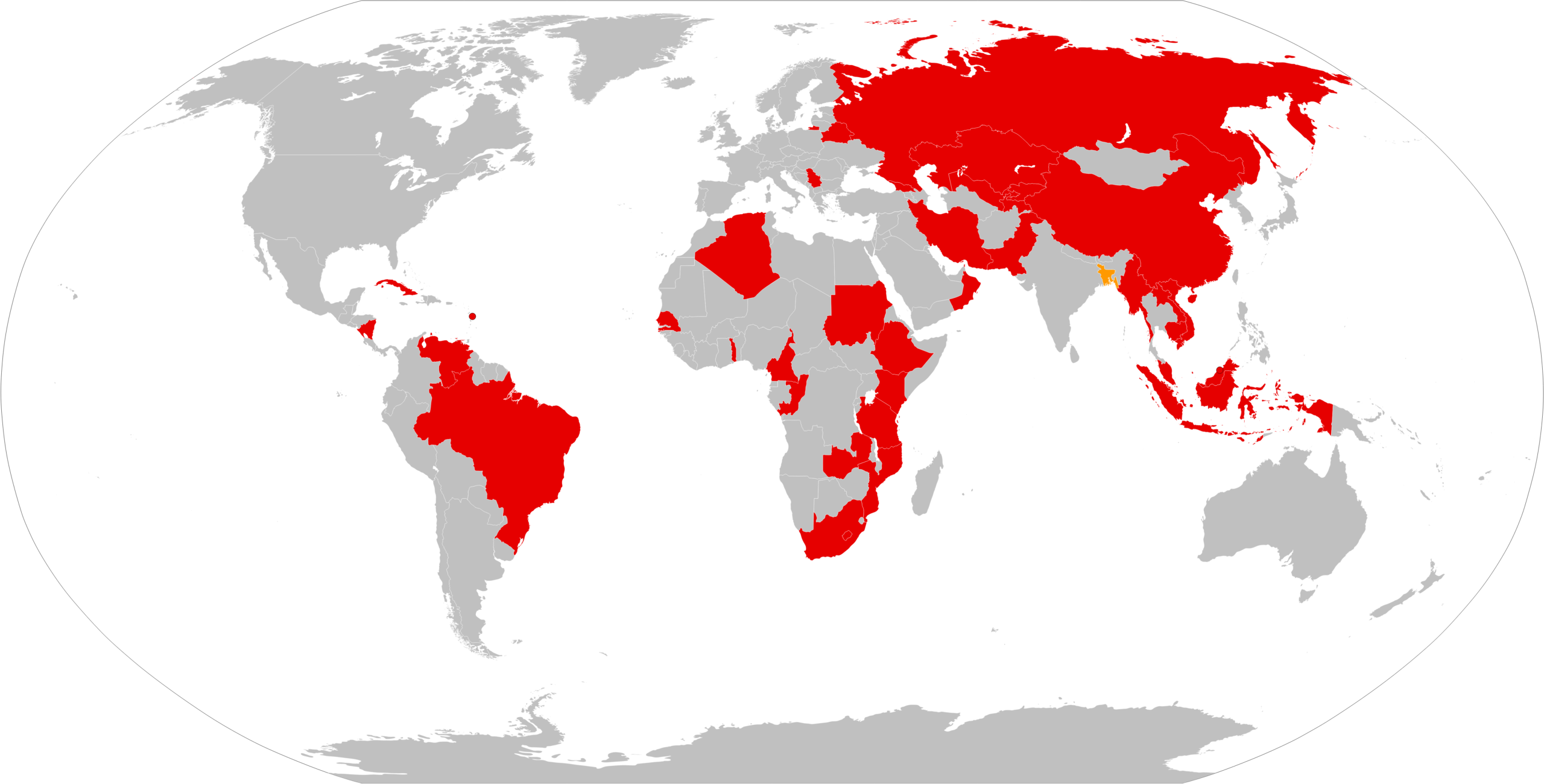
Moreover, the Chinese government is also gaining immense geopolitical sway through AI partnerships abroad, particularly through close cooperation with countries in the Global South. In July, China challenged the US’s hegemonic world order by spearheading a new AI alliance comprising 29 countries, including key Global South countries such as South Africa, Brazil, and Indonesia. The institution, called the World Artificial Intelligence Cooperation Organization (WAICO), will help Beijing shape AI governance abroad to align with China’s geopolitical interests, potentially facilitating the international normalization of Chinese AI systems. At the same time, as China strengthens its many partnerships in the Global South, US relationships with allies are increasingly strained due to President Trump’s unreliable behaviour, including his temporary ban on Anthropic’s latest models for non-American users. As a result, many nations could be encouraged to diversify their AI industries to reduce dependence on the US, potentially giving China an even greater opportunity to expand its technological influence abroad.
Furthermore, US attempts to stymie Chinese AI growth and safeguard its tech dominance by placing export controls on advanced semiconductors have inadvertently accelerated Chinese innovation and reduced dependence on the US for the best chips by forcing domestic production. Since 2022, the US has used export controls to try to restrict China’s access to and production of advanced semiconductors, which are the building blocks of AI and therefore strategically important for developing frontier models. However, with limited access to cutting-edge chips and much less private capital than US firms, Chinese startups like DeepSeek have begun to implement innovative tactics to develop high-performance models using far fewer chips and at a fraction of the cost of American ones.
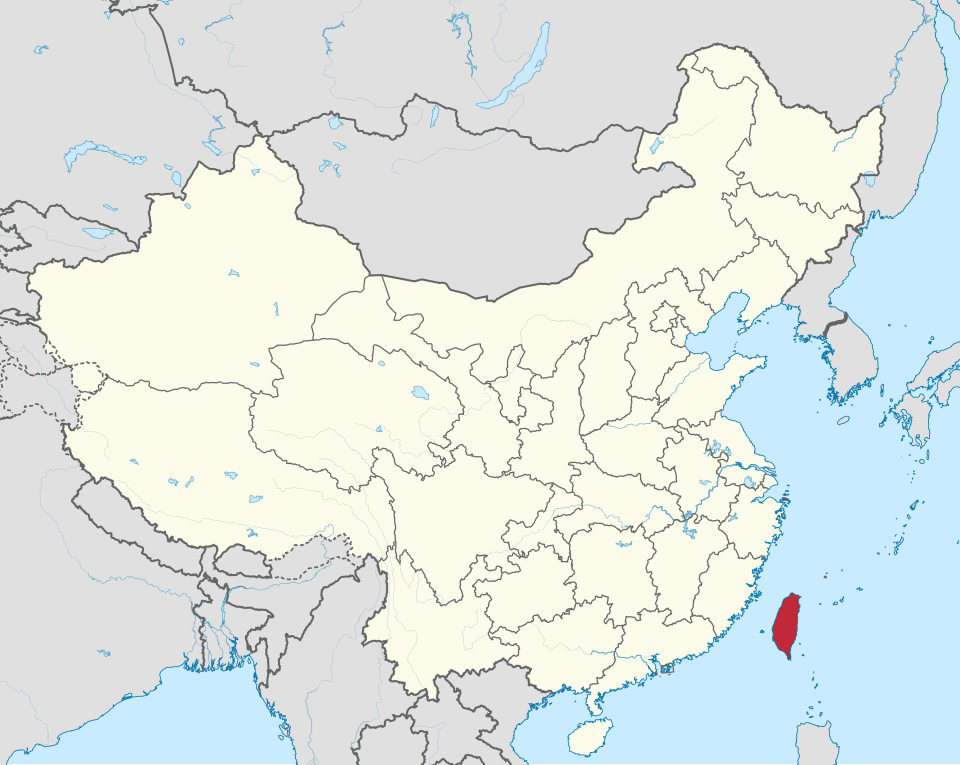
Beyond these consequences, US export controls on China also paradoxically reveal its own dependence. US firms like Nvidia rely heavily on Taiwan, particularly the Taiwan Semiconductor Manufacturing Company (TSMC), which accounts for over 90 per cent of the world’s leading-edge chip production. This presents a liability for the US, as any conflict or crisis in Taiwan would likely disrupt exports of advanced chips to the US, potentially causing immense harm to the American AI industry. This possibility is especially relevant due to China’s longstanding ambition to “reunify” Taiwan with mainland China through annexation, raising concerns over possible Chinese intervention on the island.
Ultimately, the AI race will likely be won not just by the country with the smarter LLM, but also by the country with the greatest geopolitical sway. Although the US has more private capital and maintains a narrowing advantage in frontier AI, high costs, ineffective export controls, and political instability could limit the adoption of American AI abroad. Conversely, China’s incorporation of domestic diffusion, open-weight models, and expansive international relationships better position the country to deploy its AI globally. Thus, the significance of DeepSeek’s release of its model lies not merely in China’s ability to build an advanced LLM, but in the fact that China’s AI strategy is more attractive for global integration than America’s. If China succeeds in replacing the US as the new technological hegemon, it could reshape the world’s political, economic, and ideological international norms and pose a critical security concern to the dethroned US.
Edited by George Wu
Featured Image: Though the US has greater access to private capital for AI investment, China’s development model may be poised to be more successful globally. Photo by Kaboompics is licensed under the Pexels license.


