
Dollar Stores: A Symptom and Cause of Persistent Poverty
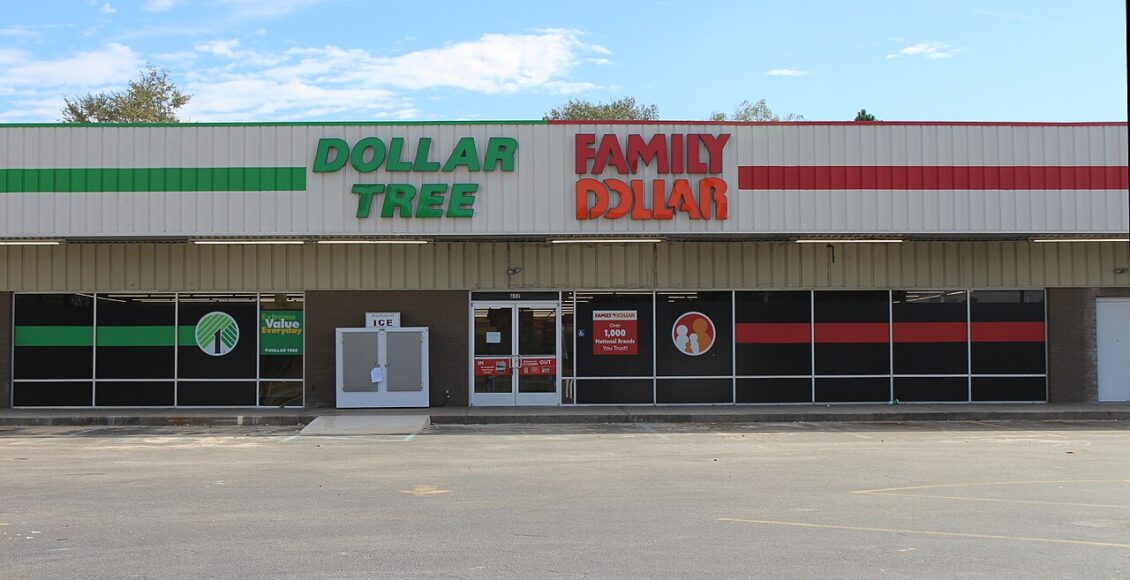
In recent years, dollar stores have become a ubiquitous presence in American communities, expanding at a pace unrivalled by any other business model. From urban neighbourhoods to rural towns, these stores are increasingly the go-to option for low-cost goods and groceries. However, despite their convenience and affordable allure, dollar stores deepen inequality and poverty over time through their profit-driven methods and effects on small communities.
Dollar stores are famous for their $1 USD items. Although more compact than their original packaging, the items’ lower price makes them appear more affordable, especially for people on a tight budget. However, compared to buying an item in bulk, dollar store products end up being more expensive per unit. For example, a bottle with 40 caplets of 500 mg acetaminophen costs $1.25 USD at Dollar Tree. A bottle of 1,000 caplets at Costco, by contrast, costs $12.43 USD. Although the Dollar Tree option may appear more affordable at first glance, it costs 3¢ per caplet, whereas Costco’s option costs less than 1.2¢ per caplet. To put this into perspective, one would need to buy 25 40-caplet bottles of ibuprofen at Dollar Tree (costing $31.25 USD) to get the same number of caplets that Costco offers for $12.43 USD. Individuals who live on a tight budget often can’t afford the more expensive Costco option, so they opt for the Dollar Store version instead. In doing so, dollar stores ensure they retain a consistent customer base that ultimately pays more over time—a strategy that exploits those struggling financially.
Pricing isn’t the only place where dollar stores cut corners. To reduce costs, dollar stores will hire as few workers as possible. On average, they will keep a total of six employees, with only two or three working in the store at a time. Alex Skopic, a former Dollar General employee, recounts their experience at the company in an op-ed published in Current Affairs. When describing the stressful work environment, Skopic explains: “You’re a cashier and a janitor, and a security guard, and a stocker of shelves, and an unloader of trucks–and you’re the complaints department when any of that goes wrong.” Despite the overwhelming workload, workers are not compensated financially for their additional duties. In 2021, 92 per cent of Dollar General workers made less than $15 USD an hour, a salary Skopic accurately calls “starvation wages.” In the same piece, Skopic describes a particularly harrowing case documented by the Economic Policy Institute. Dawn Hughey, a Dollar General manager from 2009 to 2011, was paid $34,700 per year for work she understood to be a 44-hour workweek. In reality, she was often forced to work 60-to 70-hour workweeks without additional pay. As Skopic puts it: “There is, as it happens, a word for labour that’s both mandatory and unpaid: slavery.”
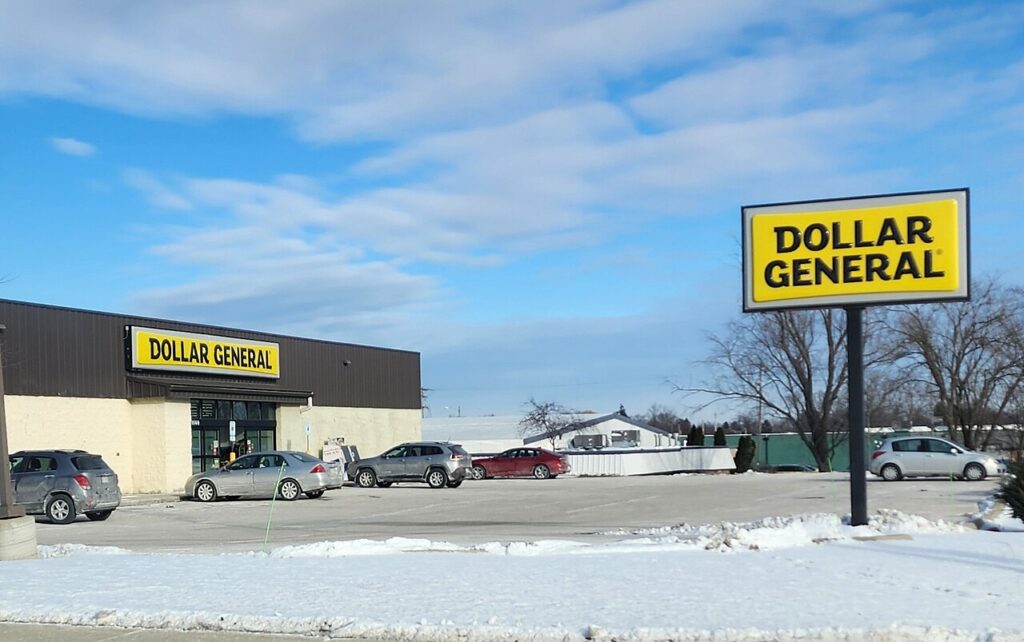
Individual workers aren’t the only ones harmed by this business model; it can harm entire local communities. When dollar stores open in small communities, they infringe upon the business of local independent grocery stores. According to research conducted by economists from the Economic Research Service, North Dakota State University, and the University of Connecticut, when a dollar store opened in a census region, independent grocery retailers were, on average, 2.3 per cent more likely to close. There are numerous similar examples of this nationwide. In Whitmire, South Carolina, the only locally-owned grocery store shut down in February 2022, just two years after a Dollar General opened there. This left residents with the choice of buying their food from Dollar General or making a 45-minute commute to the nearest town with a local grocery store. The only local market in Casselton, North Dakota, closed after losing 10 percent of its business profits once a Dollar General opened in town.
Closing these independent grocery stores out of business doesn’t just harm the store owners. It damages the entire locality. Dollar stores hire fewer individuals than the local grocers they force out of business. While a Dollar General employs an average of 6 people, a small, independently owned grocery store employs an average of 14. This increase in jobs, coupled with higher wages, means local markets offer more high-quality job opportunities to their communities, thereby encouraging economic growth. When these stores close, the town loses additional income from property taxes. After the only grocery store in the town of Haven, Kansas closed, the town lost the $75,000 in property taxes the store had been paying. This alone resulted in a net annual loss of $15,000 USD in Haven’s property tax revenue. Simultaneously, the local Dollar General reached an agreement with the town council to reduce its utility bills by $72,000 USD. The council conceded to paying half of that. In sum, when Haven’s local independent grocery store closed, the town lost more than $50,000 USD in annual revenue. The presence of a dollar store also reduces residential property values, thereby affecting tax revenue. A 2022 study by Clemson University determined that between 2016 and 2019, proximity to a dollar store reduced property values by 16-21 per cent, while proximity to an independent grocer increased home value by 14-15 per cent.
Another pressing concern associated with dollar stores is their adverse health impacts. Whether due to dollar stores or not, there is a prevalence of food deserts, or areas without convenient access to a grocery store, supermarket, or other food provider. This is often due to supermarket redlining, a strategy adopted by supermarket chains to avoid low-income neighbourhoods they deem high-risk and unprofitable. Once dollar stores open in these areas, the probability that a supermarket will open nearby decreases. For many locals in these areas, even when a store is within a reasonable distance, transportation is insufficient to reach it. This may result from a lack of personal transportation or an insufficient public transportation system, allowing food deserts to exist even in more urban regions.
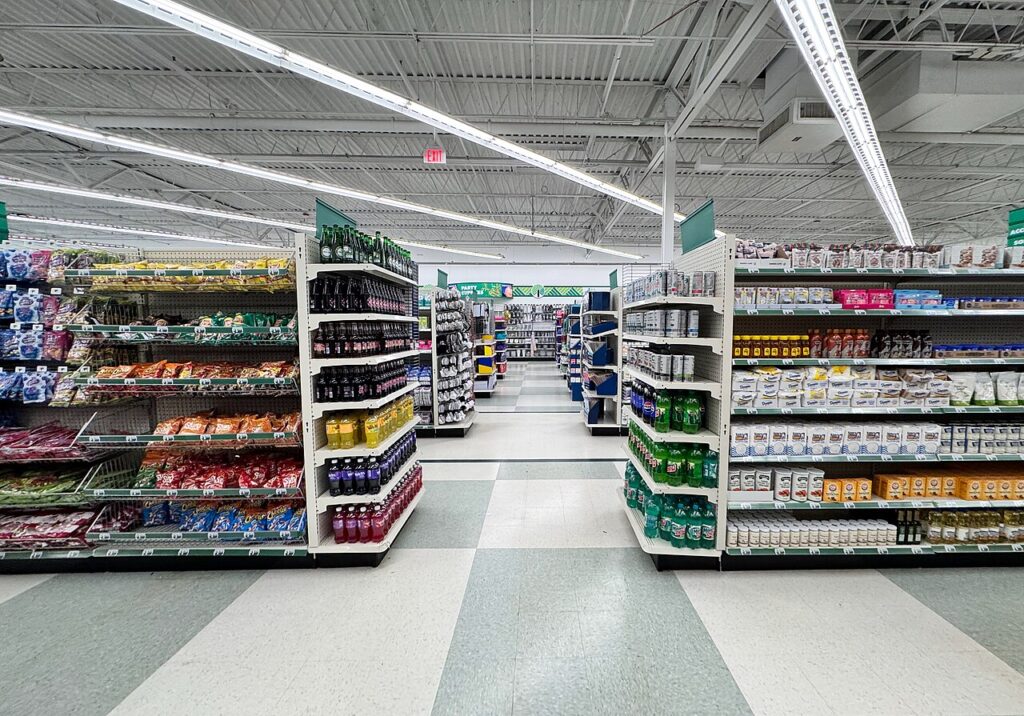
Regardless of how these food deserts come to be, dollar stores can quickly become the community’s sole source of food. Despite filling a crucial gap in these communities, their stock is limited and rarely includes fresh, nutritious food. Research on the consumer food environment in dollar stores found that they almost universally stock very limited fresh produce, while promoting and offering mostly processed snacks and super-sweetened beverages. This lack of fresh produce, alongside dollar stores’ tendency to drive nearby independent grocery stores out of business, significantly reduces the availability of nutritious foods in a community.
This is not to say that dollar stores are entirely harmful; in fact, they are a half-baked solution for a very real problem. The lack of food suppliers, whether due to supermarket redlining, transportation issues, or other factors, creates a very real gap for dollar stores to fill. To assess public perception of dollar stores, the Center for Science in the Public Interest surveyed low-income residents living near them. The results indicated that 82 per cent of the 750 residents surveyed believed dollar stores helped their community. They provide food, medication, and household goods to people who would otherwise be without. For many communities facing an economic downturn, dollar stores are the only things keeping them functioning.
Thus, dollar stores may be best understood as a Band-Aid on an already infected wound. Dollar stores are both a symptom and a cause of economic decline: they offer short-term relief for struggling communities, but deepen inequality and poverty in the long run. The majority of their revenue depends on low-income communities remaining low-income, thus profiting from poverty. Their expansion strategy targets persistent deprivation, and their business model—by suppressing local economic development, driving small grocers out of business, exploiting employees, and limiting job opportunities—reinforces the cycle of poverty. In the words of Dollar General’s CEO, Todd Vasos: “We do very well in good times, and we do fabulous in bad times.” Dollar stores don’t address the systemic causes of food deserts; they serve as a temporary balm, making the problem less visible.
Edited by Chloe Nairne
Featured Image: Photo by Michael Rivera is licensed under CC 4.0.


