
Inside Mount Kilimanjaro’s Responsible Tourism Debate
On August 13, the Tanzanian Ministry of Natural Resources and Tourism (MNRT) issued a “special notice” warning the Kilimanjaro Responsible Trekking Organization (KRTO) to stop presenting itself as a legal regulatory authority for Mount Kilimanjaro’s tourism industry.
The KRTO—a legally registered NGO devoted to improving the lives of Kilimanjaro’s tens of thousands of mountain porters—has been accused of regulatory overreach. In a region that supports thousands of Tanzanian livelihoods, the dispute has major implications for those who keep the mountain’s industries afloat. In acknowledging the KRTO’s growing commercial influence over one of Tanzania’s most important industries, the government’s accusations raise a significant question: amongst a rapidly changing global tourism market, who really gets to define (and enforce) “responsible” tourism?
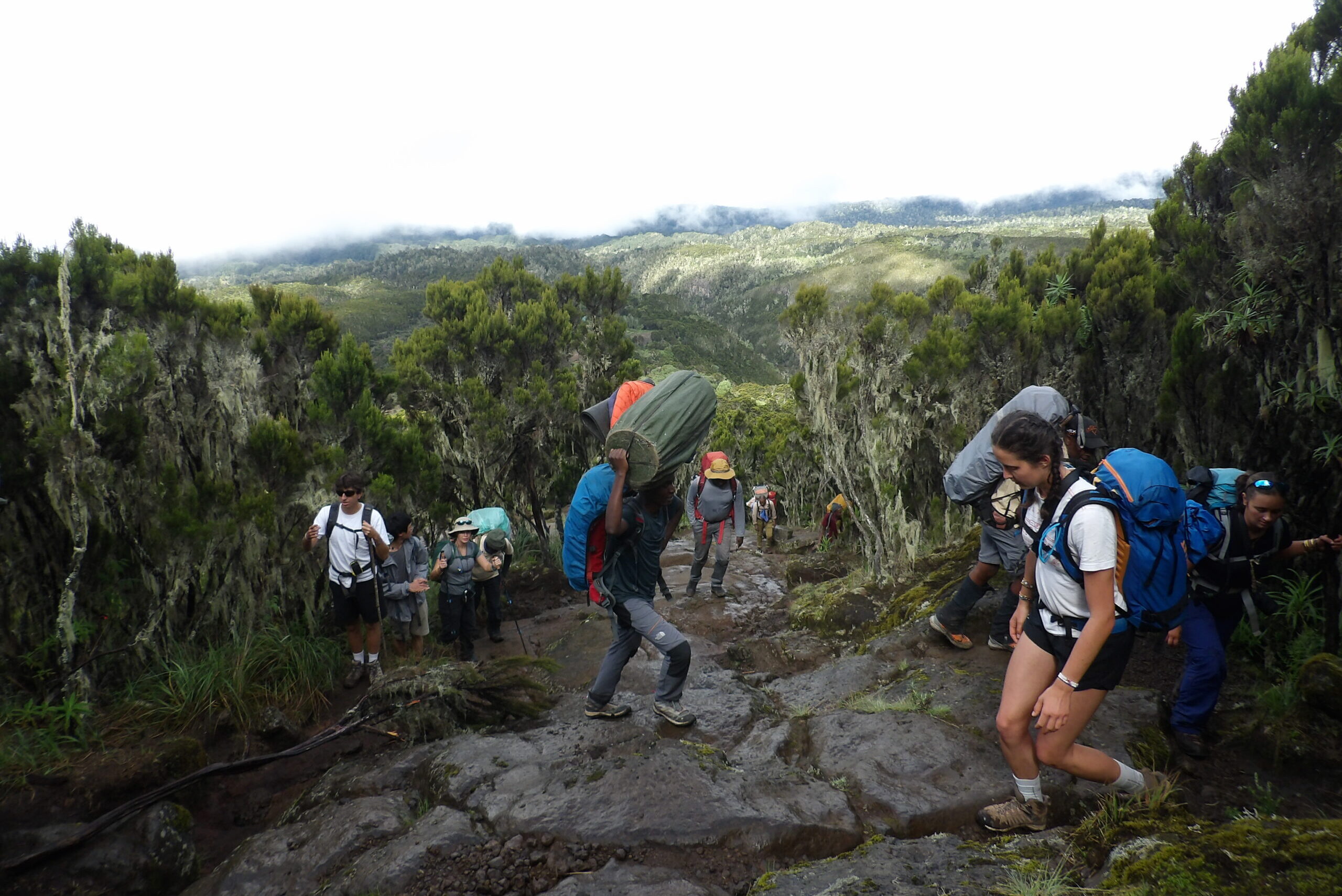
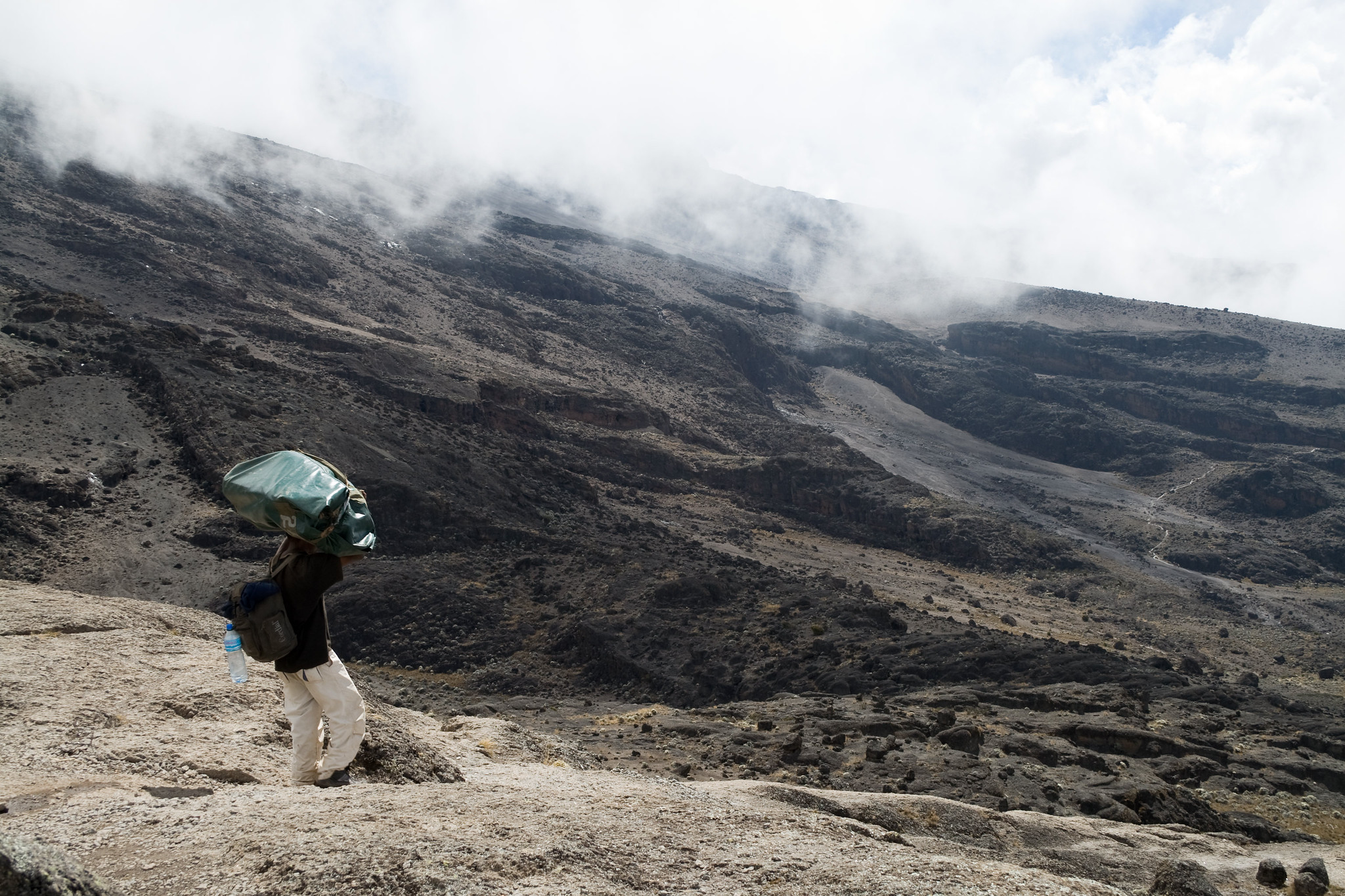
Tens of thousands of climbers attempt to summit Africa’s highest mountain every year. Each one of them relies heavily on a team of Tanzanian porters who carry their food, water, and supplies between campsites. Since German climbers first ascended the mountain in 1889, Mount Kilimanjaro’s porters have faced over a century of exploitation, unknown or formally unacknowledged by colonial explorers (and later, by foreign tourists). As adventure travel emerged as a global industry, international reports of overloaded porters, hypothermia deaths, and tip-skimming became increasingly common.
It was under these conditions that the American NGO International Mountain Explorers Connection (IMEC) founded the KRTO in 2003. Through a system of voluntary monitoring and endorsement, the KRTO, through the Kilimanjaro Porter Assistance Project (KPAP), highlights trekking operators who meet its guidelines for fair treatment. KPAP’s publicly published certification—a label of “Partner for Responsible Trekking”—acts as verifiable proof that the company pays their porters a fair wage, supplies them with proper equipment and shelter, implements transparent tipping procedures, provides medical treatment, and participates in meetings on porter welfare. KPAP staff visit ongoing expeditions, observe working conditions directly, and collect information multiple times a year from guides and porters. Tourists looking to climb the mountain responsibly can thus verify that their trip will meet a basic ethical standard.
Tanzania alleges that KPAP has portrayed its independent certification system as something too akin to a legal barrier to entry for trekking operators. Under Tanzania’s Tourism Act, Chapter 65, the Director of Tourism is established as the sole officer responsible for the Act’s administration, including the registration, licensing, and regulation of tourism service providers. The statement implies that through its public-facing certification system, KPAP has wrongly claimed the authority to declare Tanzanian tourism companies legally legitimate or illegitimate.
The statement objected to communications that could create the impression among travel agents and tourists that KRTO’s “responsible tour operator” status is the authoritative marker of whether a company is legally recognized in Tanzania. Tanzania’s statement goes so far as to say that if KRTO continues to “interfere…with duties assigned to the government,” its actions will be considered “sabotage against the tourism sector.”
Does language like “sabotage” reflect the reality of the KRTO’s regulatory presence?
It’s clear that the KRTO’s free, voluntary ethical label has a genuine influence on commercial decisions. From its inception, KPAP’s partner list has grown to include 170 companies; the operational costs involved with adhering to KPAP’s ethical standards suggest that an increasing number of companies see commercial value in associating with KPAP standards. KPAP has served as a popular filter for consumers—even the most basic online search into porter conditions reveals websites, threads, and blog posts describing the NGO’s functions and merits.
Despite Tanzania’s statement, there is no evidence that KPAP has crossed an explicit legal boundary. It would be difficult for Tanzania to list specific examples of illegal overreach—not once has the KRTO declared a trekking operation illegal; nor has it ever taken aggressive action to stop a company from operating on the mountain. On their official website, the KRTO has published material demonstrating that its “Partner for Responsible Travel” program functions differently from a government license; it is free, voluntary, and based on independent standards. KRTO’s standards also require participating companies to adhere to government laws and regulations. In other words, the KRTO never insinuates that its assessments are a replacement for legal government approval.
Nevertheless, the accusation deserves attention, as it reflects broader shifts in adventure tourism. A key pillar underpinning KPAP’s success is a trend towards responsible travel. KRTO’s informal influence over a notable portion of Kilimanjaro’s foreign visitors mirrors an increase in the public’s desire for responsible, sustainable tourism. As more and more tourists become cognizant of environmental impacts and workers’ rights, pressure increases on international tour operators to appear socially responsible. In turn, local tour agencies feel pressure to follow suit. This isn’t a dynamic specific to Kilimanjaro—the trend is both global and local. KRTO is part of a growing movement supporting better porter treatment around the world; examples of other important porter-welfare organizations include the Kathmandu Environmental Education Project (KEEP), the Porter Voice Collective in Nepal and Peru, and the International Porter Protection Group (IPPG).
Shifting preferences toward responsible tourism have occurred both formally through regulatory bodies and informally among consumers. In 2005, for example, the UN Environment Programme and the World Tourism Organization jointly published a guide to sustainable tourism that gave the sector its now-widely-accepted definition. More recently, the EU passed the Empowering Consumers for the Green Transition Directive, set to take effect September 27, which pushes EU-based tourism intermediaries to provide verifiable third-party evidence for responsible behaviour when utilizing social or environmental sustainability labels. Under these circumstances, KPAP’s partner system increasingly conforms to broader industry needs for independent verification.
So, once again: who defines “responsible” tourism? There is no single definition of ethical travel—universalist standards for “sustainable” tourism, such as those posited by UN institutions, coexist imperfectly with the national standards of host countries and the choices of tourists themselves. This particular dispute should be understood as a conflict between distinct sources of legitimacy: statutory authority, vested in the state, and reputational authority, accrued through third-party verification.
The MNRT’s statement rightly asserts that only the state can legally issue a tourism license. The state cannot, however, legislate the demands of Kilimanjaro’s international clientele. KPAP’s relatively rigorous private-sector standards have matched consumers’ and institutions’ growing desire for transparency, accountability, and better labour conditions. Tanzania’s statutory licensing cannot yet fill that gap—its licensing process contains no porter-welfare-specific certification requirement or accountability mechanism; it acts only as a legal business registration. Despite the government’s concern about maintaining legal regulatory power, it is evident that international markets play a powerful—perhaps even the primary—role in determining which trekking companies will be deemed ethically and commercially worthy.
If Tanzania wants to reassert total regulatory authority over Mount Kilimanjaro, it should stop threatening to crack down on a widely recognized organization with proven outcomes for Kilimanjaro’s porters. A more durable path runs through building a credible, transparent system of state oversight for porter welfare. With its own watchdog, the Tanzanian state could better support its workforce, obviate the need for KPAP to ensure Kilimanjaro’s porters receive ethical treatment, and position itself as a leader in sustainable tourism.
Until it does, alternative accountability mechanisms like KPAP are likely to persist—and to shape commercial outcomes—regardless of their relations to the state.
Edited by Argane Goel
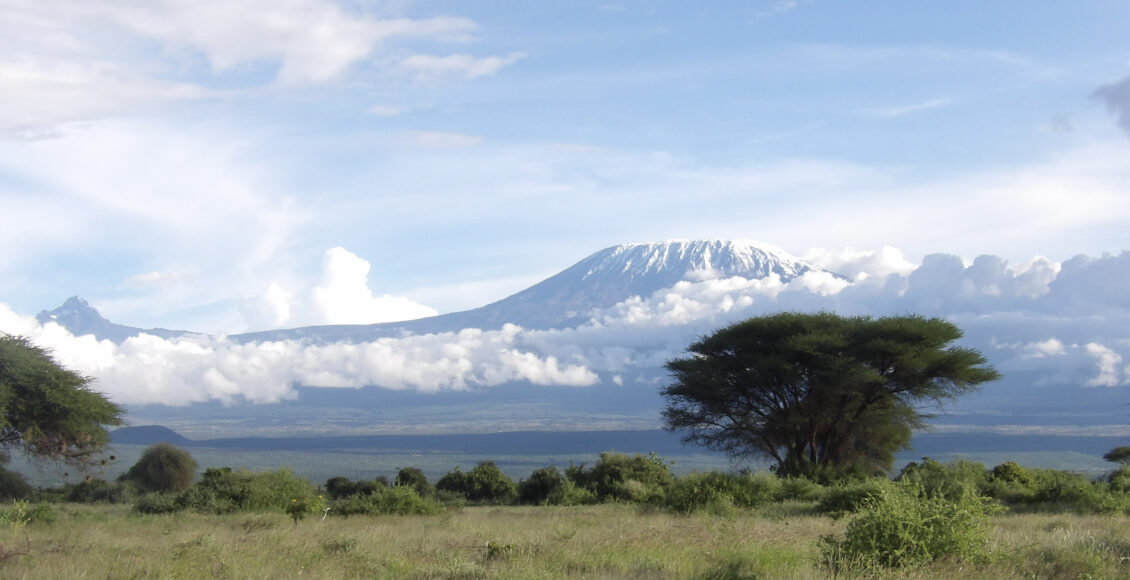
Featured Image: “Mount Kilimanjaro, as seen from Kenya.” Photo taken by the author.
