
Inside Trump’s Transatlantic Cultural Revolution

When US President Donald Trump shut down USAID in 2025, he cried “America First”, claiming the end of wasted money abroad. However, dismantling USAID signals not a total withdrawal of American foreign aid, but a shift in priorities, with the US Department of State picking up outstanding foreign-aid functions. Instead of funding international development, humanitarian assistance, and international security assistance, the Trump administration is planning to fund far-right think tanks and political groups in Europe. Scholars have referred to this export of far-right nationalist, populist, and nativist ideologies from the United States to Europe as a “transatlantic cultural revolution.”
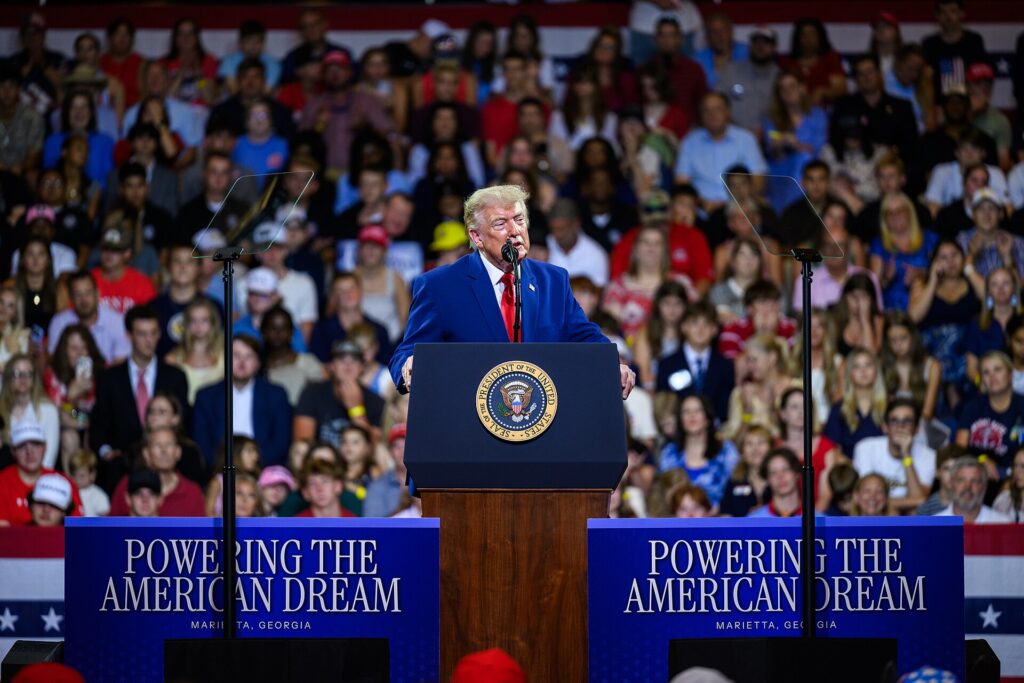
The US State Department has redirected some foreign aid money in the form of proposed grants that include $2 million USD to “counter censorship” from EU regulations like the Digital Services Act and the Digital Markets Act. Both of these acts aim to create a safer, fairer, and more transparent online environment for European people and businesses through increased regulation. Additionally, the Trump administration is planning to fund far-right and MAGA-aligned European think tanks and political organizations that want to “take Trumpism global.” The move from developmental and humanitarian aid to funding pro-Trump ideology marks a massive shift in how the US disperses foreign aid. For instance, the US State Department plans to send $7 million USD to the 878 Institute. The 878 Institute is a British-American think tank whose stated goal is to strengthen the “civilizational partnership” between the US and UK, and states that, to defend that, we must “rediscover and nurture” our English-speaking civilization. Co-founded by the former UK Conservative Minister Jacob Rees-Mogg, 878 expresses many views aligned with Trump’s positions.
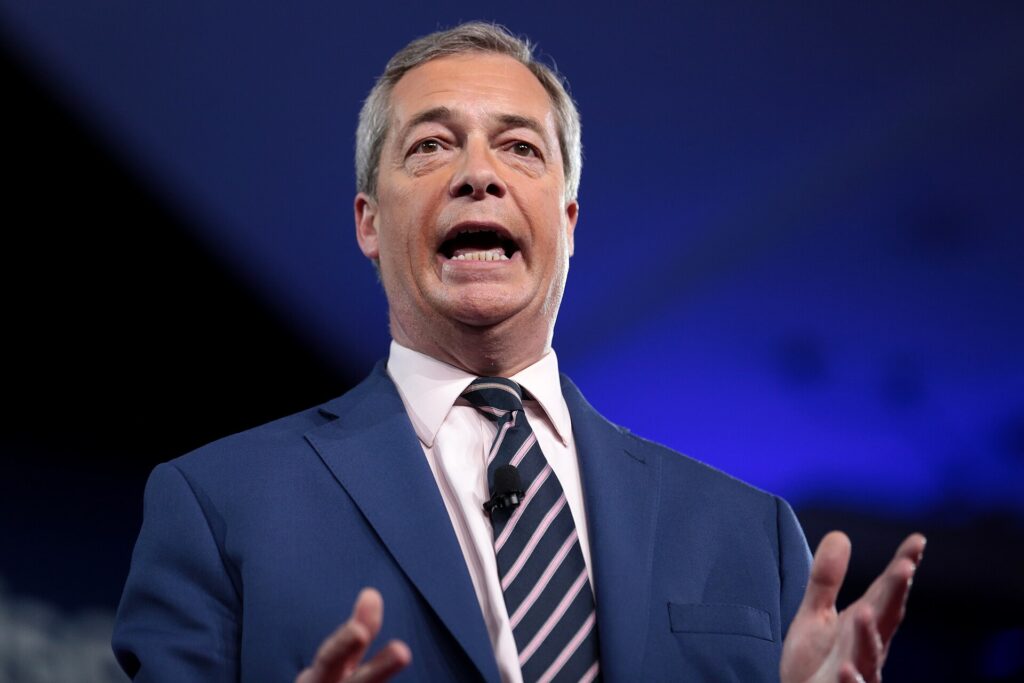
Further, the Financial Times alleged that US Under Secretary of State for Public Diplomacy Sarah Rogers met with prominent figures in Nigel Farage’s Reform UK party regarding funding for the promotion of American values. A senior Reform UK member praised the US for their “crusade to save Europe.”As with the EU’s Digital Services Act, the Trump administration sees the UK’s Online Safety Act as a threat to free speech and an attack on the independence of the American tech industry. In February, the US Republican House Committee on the Judiciary also claimed that the EU was systematically undermining the free speech of Americans online with its efforts to regulate social media within Europe. This sentiment was echoed by Farage himself, comparing it to authoritarianism. Rogers has also met with MAGA-aligned groups in France, Italy, Ireland, Hungary, Poland, and Germany. While it is still not official which exact groups will receive funding, it is clear that the goal is to support anti-immigration, nativist, and Christian nationalist movements and agendas within Europe.
As the US has framed its new foreign aid money mostly around claims of saving Western culture, the concept of heritage has been thrown around a lot. The Heritage Foundation, a prominent US think tank responsible for Project 2025, has been actively forging ties with European think tanks. In this context, ‘heritage’ is invoked as a reason to oppose immigration and to promote nativist rhetoric. For example, the framing of migration as a threat to “Western civilizational heritage” stands on the false and racist claim that majority white populations within many European nations, and in the US, are being intentionally replaced by non-white immigrants and refugees.
This anti-immigration sentiment is also a possible source for the Trump administration’s negative views on content moderation for digital platforms. For the Trump administration and the far right, any form of content moderation, and especially of hate speech, can be framed as an attack on one’s free speech and religious freedom. Yet, this is exactly what can lead to the legitimization of the demonization of immigrant communities.
At its extreme, US funding of right-wing culture in Europe runs the risk of democratic destabilization. German Chancellor Friedrich Merz warned that the US’s financial backing of populist, nationalist, and right-wing think tanks in EU member states could constitute interference in European domestic politics and elections. This is not a distant reality. In 2026, the US unsuccessfully backed the pro-Trump former Prime Minister Viktor Orbán in Hungary. This support for Orbán likely had many political interests behind it, but one clear motive is their common views on a white Christian nationalist civilization for their nations. However, US Vice President J.D. Vance denies that the political backing was any form of interference in Hungary’s elections.
The long-term danger of this transatlantic cultural revolution is the destabilization of traditional democratic alliances built on the shared values of democracy, peace, freedom, and the rule of law. The Trump administration’s actions have the potential to expand the already widening divide between American and European political culture. Historically, the purpose of US foreign aid has been to create and promote regional stability. However, by funding far-right think tanks, MAGA-aligned political groups, and domestic opposition within Europe, the United States under President Trump is destabilizing European democracy, creating an even more polarizing political landscape and threatening the freedom and sovereignty of its closest allies.
Edited by Eliot Mudry Danisch
Featured Image: President Donald Trump at the G7 Summit in France. Photo by the White House is available in the Public Domain.


.jpg)