
Is Mauritius Bracing for the Wrong Crisis?
Across the South West Indian Ocean (SWIO), climate change is pushing food insecurity toward becoming an existential threat to small island developing states (SIDS). Yet, despite sustained regional cooperation and funding, the issue remains conspicuously absent from national priorities. Mauritius makes for an interesting case through which to examine this dichotomy, as its approach to food insecurity reveals the nature of the development priorities and challenges confronting small island states.
Island states in the SWIO region comprise Comoros, Madagascar, Mauritius, Seychelles, and Réunion (an overseas department of France). These islands vary in size and wealth, but share similar structural vulnerabilities, namely, limited land and acute exposure to climate change. Islands are often among the first to bear the brunt of exogenous or climate-induced shocks, even though they are often not responsible for their emergence, which renders them a distinctive case for development. These shocks can include droughts, cyclones, floods, and soil erosion, which impede crop yields and fisheries, or foreign conflicts that deplete fertilizer supplies and inflate oil prices, eventually leading to loss of livelihoods.
In recent decades, food insecurity has become one of the most pressing crises for small island states. Severe import dependence and years of underinvestment in domestic agriculture have left many increasingly exposed to price shocks, which, in turn, precipitate poorer dietary choices. Mauritius, for instance, imports roughly 75 per cent of the food it consumes. As food and fuel prices rise, lower-income households face increasingly constrained food choices, to the detriment of healthy eating habits. Today, Mauritius has one of the highest diabetes prevalence rates in the world, ranking thirtieth globally.
Meanwhile, shared exposure to climatic variations has engendered an incentive for regional consensus and collective action on agriculture and fisheries. In 1982, the Indian Ocean Commission (IOC), an intergovernmental organization, was founded and mandated to mitigate SIDS’ vulnerability to environmental changes and to bolster sustainable development across the SWIO region. Among the organization’s initiatives was PRESAN, a regional food security program adopted by the IOC in 2016, which sought to strengthen local production and competitiveness and to diminish dependence on imports to enhance the economic and nutritional resilience of populations. A total of $950,000 USD was allocated to the program, jointly financed by the Food and Agriculture Organization of the United Nations (FAO) and the International Fund for Agricultural Development (IFAD).
Yet, public evidence demonstrating the program’s long-term impact is scant, and its efficacy remains questionable. Though the UN declared in 2015 that its second Sustainable Development Goal was to eradicate hunger globally by 2030, the reality in 2023 remains sobering. According to the FAO, 150 million more people in the region are affected by hunger than in 2015, and little has changed by 2025. Climate shocks triggered by El Niño are expected to intensify across southern Africa, with devastating consequences for rural livelihoods, which could push that number higher.
So, where is the money going, and why are concrete outcomes so difficult to substantiate? Indeed, following a Ministerial Conference in 2025, commitments to building new food value chains have been perpetually reaffirmed. IFAD has confirmed that its financial support has been provided, yet no specific outcomes have been disclosed, and the program’s “expected results” remain ill-defined. Thus, while the rhetoric around food insecurity carries considerable weight, little of what is pledged has materialized.
Mauritius is particularly well positioned to illuminate this paradox. The island is the wealthiest independent state in the IOC, commanding a nominal GDP of 17 billion USD. Mauritius possesses greater financial and institutional capacity than most of its neighbours. If food security nevertheless remains peripheral to its development agenda, economic prosperity alone may be insufficient to overcome the structural vulnerabilities it confronts. Of all the governments in the region, Mauritius has the least excuse for treating food insecurity as an afterthought, given its substantial financial capacity to address it domestically.
Indeed, a few weeks after the fortieth IOC Council in June 2026, Mauritius tabled its new national budget for 2026–2027, themed “Future Ready Economy.” Notably, food insecurity was not among the seven key priorities outlined. Indeed, the issue is eclipsed by the pledges directed towards AI digitization, such as the development of data centers in Côte d’Or. This is all despite the Prime Minister himself acknowledging food insecurity as an existential risk. What’s more, land on small islands is exceedingly scarce, as every acre given to infrastructure is permanently lost to crops once converted, and basic resources such as water and electricity are dwindling each year. Domestic financial action on the issue is concerningly lacking. Three reinforcing pressures that may constrain any major allocation to food insecurity can help disentangle this apparent paradox.
First are financial incentives: governments perceive investments that enhance competitiveness and digital connectivity, such as data centers, as more likely to attract foreign capital than investments in domestic agriculture. Also important are geopolitical considerations: India, China, France, and the EU are all investing strategically to anchor Mauritius as a tech bridge in the Indian Ocean for their own strategic ends. In July 2026, for instance, Mauritius announced it would join the America-India Connect sea cable program, a move facilitated by India that positions the island as a digital hub linking Africa and Asia. Finally, maritime security is increasingly critical. Piracy, drug trafficking, and illegal fishing imperil every SWIO economy, yet none of the islands possess sufficient capacity to patrol their vast waters.
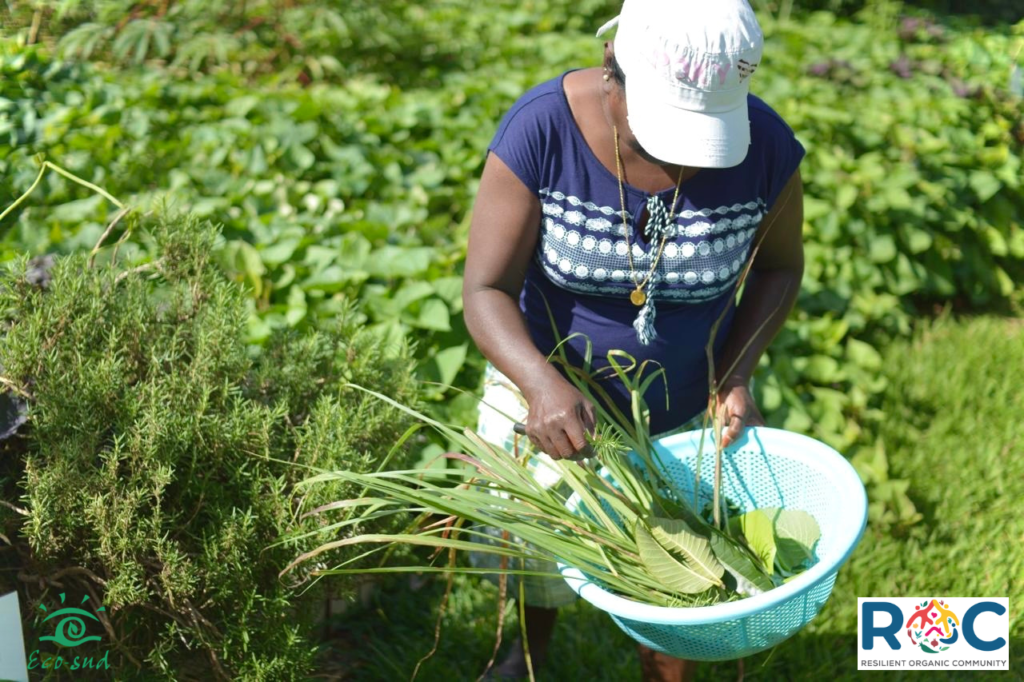
If the state consistently underprioritizes food security, attention naturally turns to whether non-state actors can bridge the gap. While governments alone hold the power to effect long-term structural change, local NGOs, such as the Mauritius-based Eco-Sud, are intervening in the meantime. Based in Mauritius, Eco-Sud has been mobilizing climate action efforts, notably through its Resilient Organic Community (ROC) initiative, which promotes agroecological farming practices and community resilience, autonomy, and solidarity.
In a July 2026 interview with Rachèle Bhoyroo — communication and advocacy director of Eco-Sud — she revealed that the funding structure that NGOs must navigate is incredibly burdensome. First, Mauritius’s categorization as an “upper-middle income” country tends to progressively erode international funding as countries graduate out of eligibility requirements. Set by the World Bank and others, these requirements are often pegged solely to income levels rather than actual ground vulnerabilities. Second, large, private companies on the island have been creating their own small foundations to meet CSR criteria and seek funding from agencies such as the National Social Inclusion Foundation (NSIF) or the EU. In doing so, these giants are intensifying competition for grassroots NGOs and reinforcing their dependency on external assistance. Third, as Bhoyroo underscores, completing funding applications is extraordinarily complex and arduous, compounded by the fact that associations are short-staffed more often than not. Finally, concessional grants remain highly unstable, with no guarantee of renewal, thereby curtailing the long-term development of scalable projects.
Bhoyroo emphasizes the need for NGOs to be more fully included at the discussion table with funders, but, more importantly, for a restructuring of aid flows. NGOs have the greatest impact on the ground, but they can only do so much when funds are tightly controlled and managed by others. Moreover, the state ought to take action, assume its role in restructuring, and compile more data on the impact of NGOs to credit the advancements made by these grassroots associations. For island states like Mauritius, efforts to address the lack of systemic resilience must prove as urgent as financial modernization, thus giving new meaning to their special development status. Data centers may bolster the economy, but they cannot inherently feed people. The political will needed to advance food resilience for small island states remains long overdue.
Edited by Alexandra Agosta-Lyon.
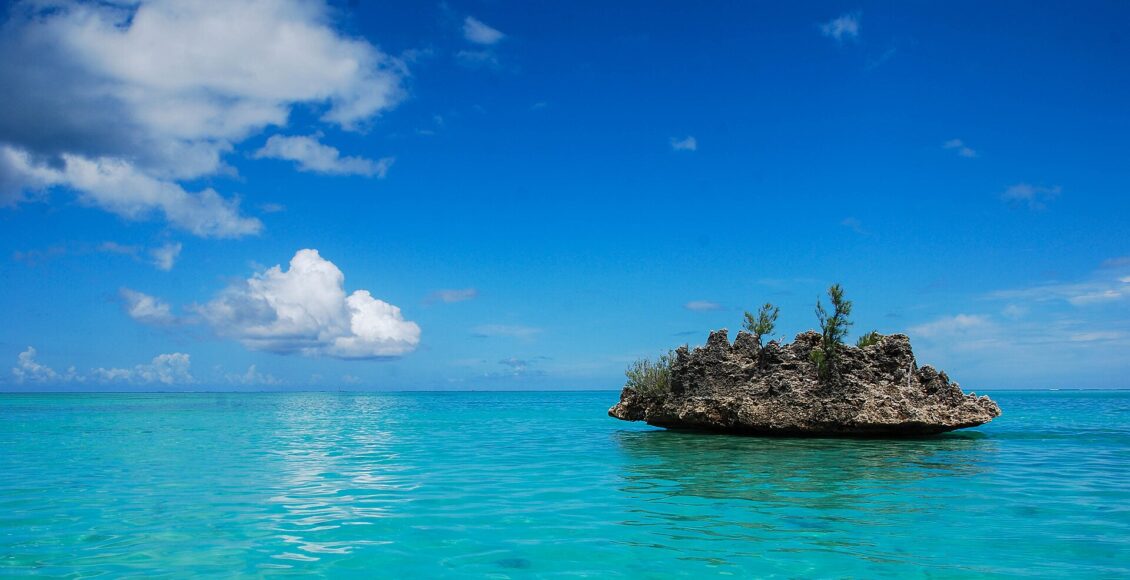
Featured image: Crystal Rock, Mauritius, Indian Ocean. Photo by Daniel Dorfer is licensed under CC BY-SA 4.0

