
Low-Cost Weapons are Forcing a Rethink of Modern Air Defence
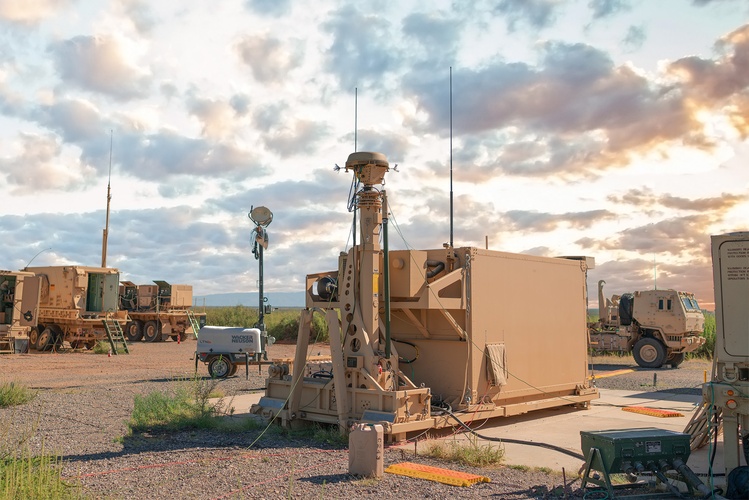
On March 24, 2026, a militia backed by the Iranian government targeted an American HH-60M Black Hawk helicopter alongside a vital AN/MPQ-64 Sentinel radar in Iraq. The attack used multiple quadcopter FPV drones, at least two of which flew uncontested over the base before reaching their targets. A few days later, an Iranian attack consisting of 29 drones and six ballistic missiles targeted the US-operated Prince Sultan Air Base in Saudi Arabia, destroying a valuable E-3 Sentry aircraft worth approximately $280 million, used for airborne surveillance and battle management.
In the rapidly changing landscape of modern warfare, it has become easier for adversaries to exhaust defensive systems with low-cost, yet effective weapons. These systems, specifically one-way attack drones and loitering munitions, like those used by Iran, present a major cost-exchange problem for all modern fighting forces. In an attack that utilizes a large mixed-munition salvo, whether the target is a US military air base or Kyiv, there needs to be a cost-effective defence solution that can provide a similar level of reliability to expensive, highly capable intercept systems. Implementing a threat-tiered defence is an important next step. By linking sensors and shooters through systems like the Integrated Battle Command System (IBCS), low-cost interceptors can efficiently counter low-cost threats, preserving high-end interceptors for advanced threats.
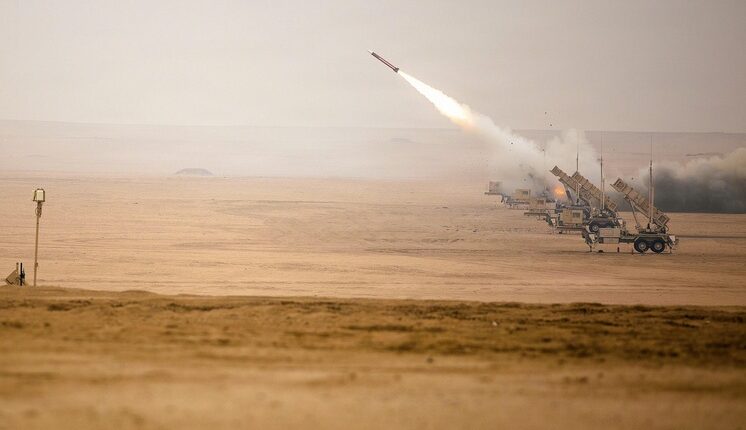
Iran recognizes the advantages created by low-cost, one-way drones, and as a result, has extensively deployed loitering munitions against the US and Israel since the war began in late February. This highlights the pressing need for dedicated drone defence systems. In Iran’s opening salvo, which included more than 2,000 drones and 500 ballistic missiles and lasted four days, an American tactical operations center in Kuwait was targeted by an Iranian drone, resulting in the largest loss of American service personnel since the beginning of the war. This forced the US to expend a substantial portion of its key air-defence interceptor inventories. Recent estimates place remaining Terminal High Altitude Area Defense (THAAD) interceptor stocks between 234 and 278, down from 452 before the war. Patriot interceptor stocks have also fallen from 2,330 to between 759 and 827.
This is alarming: if Iran can substantially deplete US interceptor stockpiles over six months, then a peer or near-peer competitor, like China, could pose a significant risk to US stockpiles. By combining reconnaissance drones, loitering munitions, and missile launches, Iran, a lower-tier adversary, has been able to strain American interceptor stockpiles and hamper future operational capability. These low-cost systems now carry an outsized battlefield impact relative to their cost, being cheap enough to mass-produce and precise enough to threaten valuable targets.
This approach of oversaturating the airspace is not isolated to Iranian attacks in the Middle East. Drones and mixed-munition salvos have proven similarly vital for both sides in the Russia-Ukraine war. Ukraine has increased its yearly volume of drone operations every year since the war began in 2022, striking Russian energy infrastructure, at times deep within its territory. More recently, it has targeted the logistics networks of Russian e-commerce giants Wildberries and Ozon. These are significant developments, demonstrating how cheap, mass-produced technology can bypass nation-level defence architecture and reach vital infrastructure.
Russia has also utilized drones heavily. Over the course of the war, Russia has significantly scaled drone salvo size. In 2022, the average salvo size remained well below 50; since the end of 2024, however, it has steadily climbed to well above 100. During this same period, Russian missiles have been more effective than its adversary’s. Ukrainian missile interception rates reached their lowest at the end of 2024 and have been unable to recover.
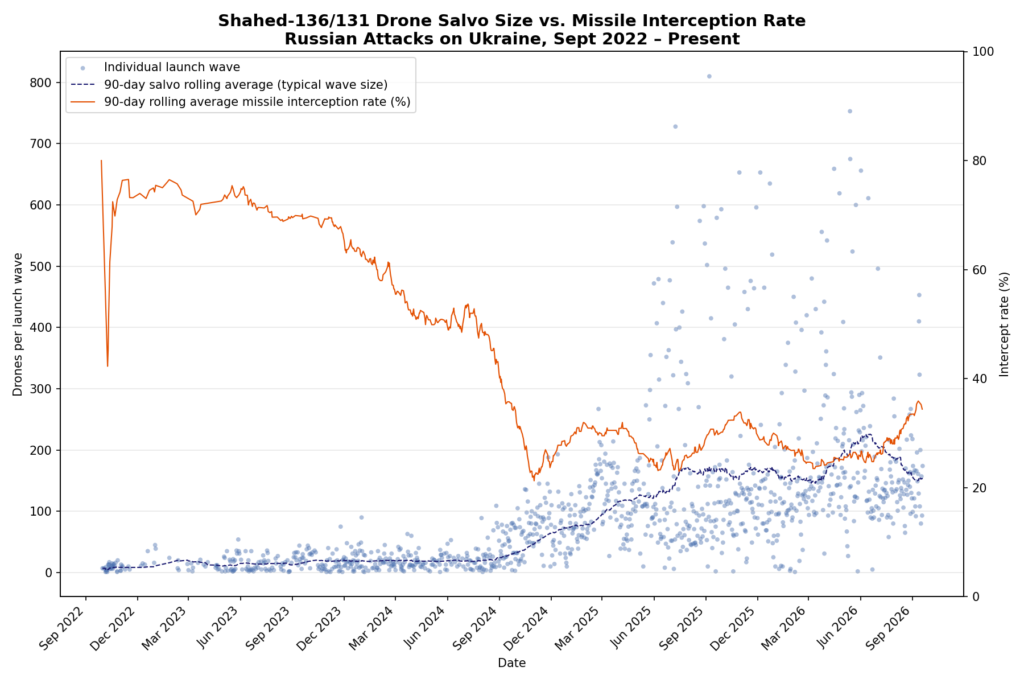
By saturating the airspace with cheap, disposable munitions, Russia gives its missiles a higher chance of reaching their target, even in the presence of Patriot defence systems. It’s worth noting that the character of these attacks differs from those on US bases in the Middle East. Russian and Ukrainian civilian, dual-use, and frontline infrastructure likely do not have the same defence capabilities. However, it still highlights the need for cheap and efficient counter-drone technology, meant to protect both military and civilian infrastructure.
The extended replacement timeline of the advanced interceptors required to counter salvos of ballistic missiles makes efficient alternatives vital. The Center for Strategic and International Studies estimates a roughly 42-month delivery timeline for Patriot interceptors and 53 months for THAAD interceptors, from contract award through completion of the production lot, including lead time. This is partly the result of post-Cold War defence doctrine, which downsized US forces and, along with it, the defence industry. Currently, the US lacks a sufficient stockpile of defensive munitions, and its inability to surge production only further exacerbates the situation.
The industry is also plagued with subcomponent delays. Advanced interceptors, like Patriots, depend on specialized parts, such as solid-rocket-motors and seekers, that only a handful of firms can produce. The US Department of War’s billion-dollar investment in L3Harris, which produces solid-rocket motors for many advanced interceptors, has sought to address the subcomponent choke point. While this is a step in the right direction, it will not single-handedly solve the issues plaguing modern air-defence architecture.
Through efforts like these, the Pentagon aims to quadruple THAAD production and triple Patriot production in the long run, requesting a $12 billion USD increase in funding for Patriot interceptors and $11 billion USD for the THAAD system. In July 2026, the Department of War released an open letter to industry stakeholders stating its aim to streamline data and audit requirements imposed on manufacturers, stripping out regulatory friction that has slowed production. However, even if all of these measures cut the production timeline in half, replenishment would still take around two years, which is far too long given the character of recent conflicts.
The more fundamental fix is implementing an advanced, threat-tiered defence that can easily match interceptor and threat cost and can be built into existing military, dual-use, and civilian infrastructure. Northrop Grumman’s IBCS, which already links the Sentinel radar to Patriot batteries, is built around the principle of “any sensor, best shooter.” By linking all sensors and shooters, defenders can efficiently counter threats, regardless of the munition, from one place.
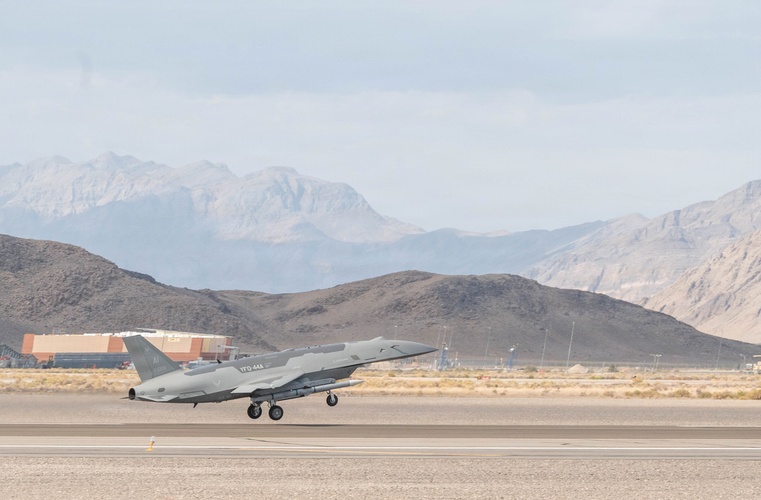
Extending that architecture to the next generation of hardware is key. Pairing next-generation Collaborative Combat Aircraft (CCAs) like Anduril’s YFQ-44A Fury, or General Atomics’ YFQ-42A Dark Merlin, with a lower-cost weapon, like the Advanced Precision Kill Weapon System (APKWS)—which has already been used by A-10s to shoot down drones over the Persian Gulf—would provide efficient firepower capabilities. Combining these CCAs with a persistent, unmanned early-warning sensor, like the LoyalEye-equipped MQ-9B, would offer a compelling combination of unmanned surveillance and firepower.
Integrating low-cost, ground-based defence technology is just as vital. Raytheon’s non-kinetic Coyote intercept drone utilizes electronic warfare and can be reused after intercepting a swarm of drones. In Ukraine, kinetic-intercept drones, such as the Octopus and Sting, have been very effective. The Bullfrog, an AI-cued M240 machine gun with the ability to track and engage a target, can disable a drone for less than $50 USD. The US Army is now also soliciting a 50mm cannon along with an air-burst munition, intended to deal with Class 1, 2, and 3 UAS threats.
The solution is not simply to build more Patriots and THAADs, but to rethink how air defence should be designed to keep pace with the rapidly evolving landscape of war. Cheap threats should be met with cheap, scalable interceptors, while the most capable systems are reserved for the threats that require them. This means combining machine guns, cannons, drone interceptors, and electronic warfare with more sophisticated systems through networks such as IBCS, allowing any sensor to cue the most appropriate weapon. The US already has much of the technology required to build this layered approach. What remains is adapting its doctrine and procurement to a battlefield now shaped by volume rather than precision.
Edited by Laura Ridoux
Featured Image: The US military is modernizing its air and missile defense with the Integrated Battle Command System, an advanced command-and-fire-control system that links defensive systems across all domains to best counter incoming threats. Photo by Nathaniel Pierce is in the public domain.
