
Opinion | The UK’s Double Standard on Protest
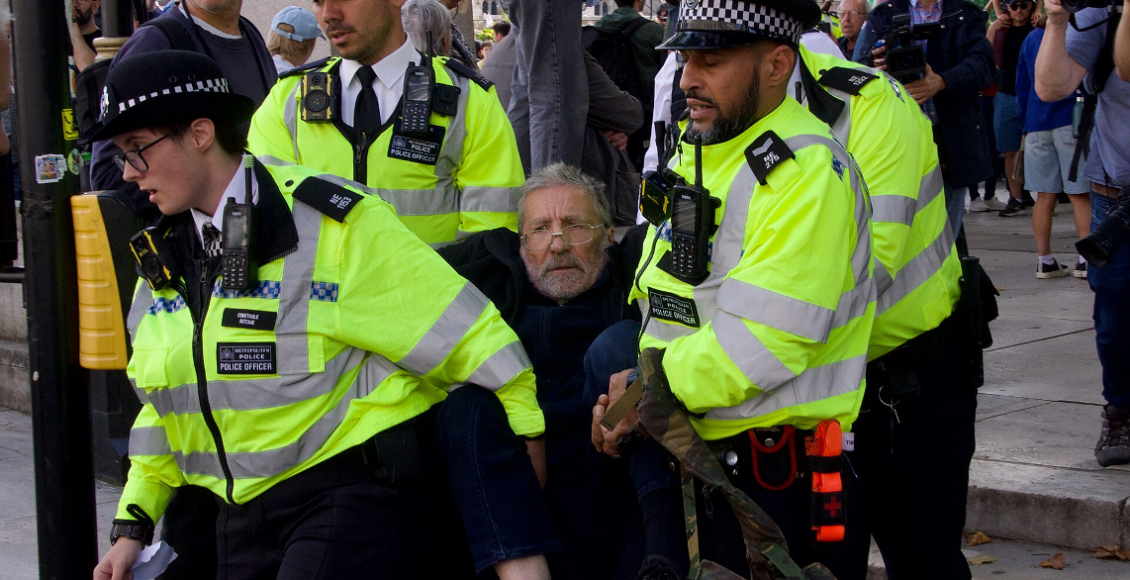
On June 23, 2025, UK Secretary of State Yvette Cooper announced a ban on Palestine Action under the Terrorism Act 2000. After Parliament voted to approve her order, the ban came into full force. This decision was contested in court by the founder of Palestine Action, Huda Ammori; the contestation reached the UK Court of Appeal, whose judges unanimously held that the ban was lawful. It has recently been set to be reviewed by the Supreme Court.
Palestine Action is a UK-based pro-Palestine protest group with the goal of ending Britain’s complicity in Israel’s occupation of Palestine. On the same day that Parliament voted to ban Palestine Action, members of Parliament (MPs) dressed in suffragette colours. In her ruling, Lady Chief Justice Baroness Carr referenced the suffragettes as a group whose actions constituted civil disobedience—not terrorism.
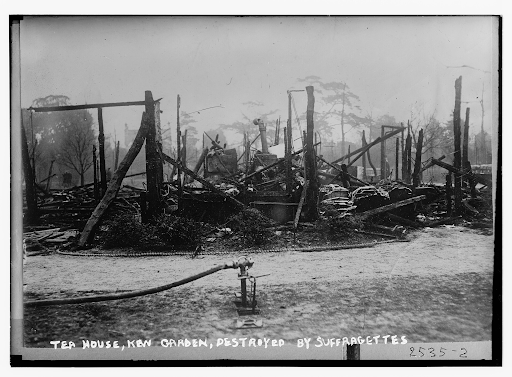
However, the retrospective political legitimacy afforded to the suffragettes can neither be explained by the nature of their operations, nor by the planning behind it. Baroness Carr differentiates Palestine Action from the suffragettes by claiming they operated “transparently,” while calling Palestine Action a “covert organization” that operates to “avoid the detection of those using violence to destroy property.” However, this statement is historically inaccurate, as the suffragettes’ actions were highly covert; smuggling their leaders across the country is merely one such example.
The suffragettes’ activities were also more striking than those of Palestine Action, including a two-year-long nationwide bombing and arson campaign using explosives. On the other hand, the majority of Palestine Action’s activities span spray-painting buildings or disrupting factory operations through protest; their most extreme actions include damaging military equipment and physical confrontations with police officers. Unlike Palestine Action, the suffragettes’ tactics also included targeted violence towards politicians. The incumbent government’s condemnation of Palestine Action stands in stark contrast with its retroactive celebration of the suffragette movement, which campaigned for women’s voting rights.
This ban has raised concerns from UK citizens, politicians, and non-governmental organizations. Former leader of the Labour Party, Jeremy Corbyn, denounced the decision as “absurd and authoritarian,” arguing that the proscription of Palestine Action was a weaponization of the terrorism act. It is thus inconsistent for the UK government to take the suffragettes as a model for civil disobedience while deeming the activities of Palestine Action too “extreme.”
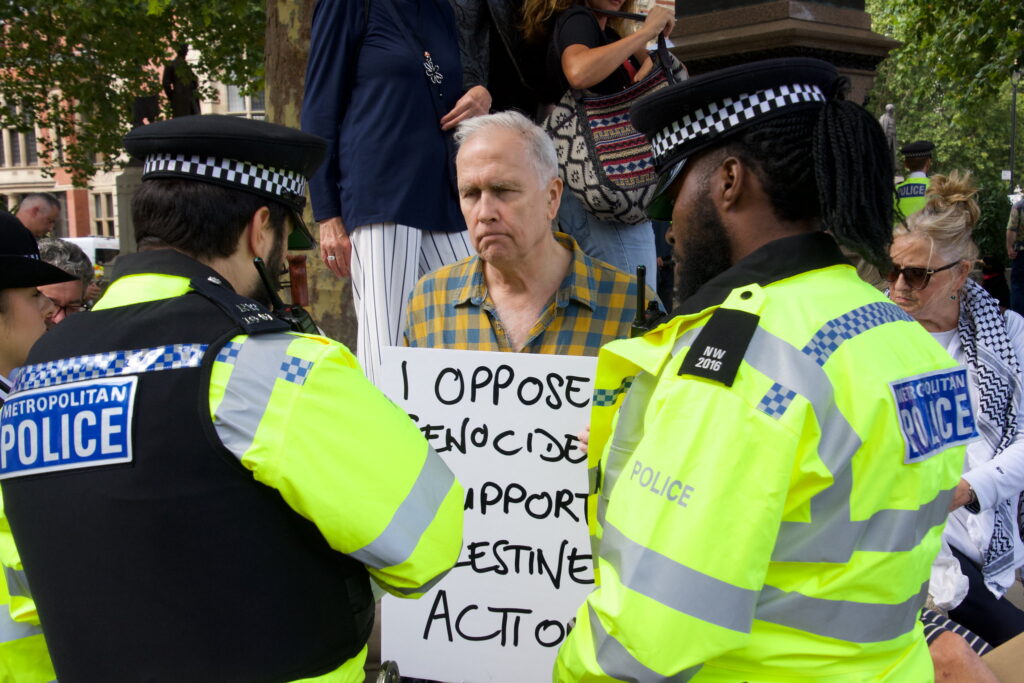
Palestine Action’s ban under the Terrorism Act 2000 means that it is recognized by the UK government as a terrorist organization. As such, any involvement with the group is an offence liable for up to 14 years of imprisonment. This extends to non-members merely expressing support for the group; thousands of civilians have been arrested for holding up placards stating “I oppose genocide, I support Palestine Action.” Of these, over 1,200 people have been charged under the Terrorism Act, though there have been no convictions so far.
The arrests of “otherwise law-abiding citizens,” as Baroness Carr concedes, reveal how the Terrorism Act can enable government interference with the right to protest and freedom of expression. By considering property damage as reasonable grounds for terrorism rather than just acts perpetrated against civilians, the UK Terrorism Act 2000 is being used to define terrorism in a broader sense than its typical (though not universally accepted) understanding in international law, which generally limits the definition of terrorism to groups that cause human harm. This leaves too considerable a discretion to the government in determining which groups fall within its scope.
In a now-overturned ruling, the UK High Court asserted that the ban was unlawful. Its written judgement stated that banning Palestine Action was an act of discrimination that “amounted to an unjustified interference with the rights protected by the European Convention on Human Rights.” Even as government responses against disruptive protest groups grow severe, the proscription of Palestine Action represents the furthest escalation yet. It is the first direct-action protest group to be newly proscribed under the Terrorism Act. The unique legal breadth of such repression against a protest group sets a dangerous precedent. Future movements may be forced to severely restrict their actions in fear of becoming targets of state repression.
Those behind the ban have had little to say in response to growing concerns in the UK, raised by politicians and human rights organizations alike, about the danger the decision poses to civil liberties. Parliament’s official stance merely maintains that Palestine Action is a terrorist rather than a civil disobedience group, thereby justifying the legal crackdown.
Per the High Court, of the several activities Palestine Action engages in, only three meet such an expansive definition of terrorism. The Terrorism Act is scarcely a quarter-century old, and Palestine Action’s proscription bodes poorly for future movements that may rely on direct action. That this group faces such harsh retributive measures suggests that the government is shifting from prosecuting individual acts to targeting entire organizations.
Importantly, the crackdown on Palestine Action should not be viewed in isolation. An early daily motion tabled by the House of Commons warns that “this [ban] is part of a broader pattern of disproportionate repression against campaigners.” Notably, members of Just Stop Oil were initially sentenced to five years in prison for planning a non-violent protest; the Court of Appeal denounced the sentences as “manifestly excessive” and repealed them.
In the past, incidents of dissent were dealt with at an individual level. For instance, members of the Women’s Social and Political Union were individually prosecuted, despite the group itself being recognized as lawful. Now, the UK government seems to be targeting protesters at a collective level. This makes it far easier to suppress protest movements, outlawing entire groups as terrorists even if 99 per cent of their actions fall outside the wide scope of the Terrorism Act, as is the case for Palestine Action.
Those behind the proscription of Palestine Action have taken the “easy way out” in light of concerns over the right to protest and free speech being under attack. Instead of justifying that the criteria for distinguishing between terrorism and civil disobedience are being fairly applied, judges and MPs chose to highlight the suffragettes—a group whose historical conduct dwarfs the activities for which protest groups are being suppressed today.
The failure to deliver a compelling justification reveals a worrisome double standard. Historical movements whose goals are seen as consistent with contemporary UK values today are celebrated, while contemporary protest groups whose aims challenge current UK policy are decried. It is easy to celebrate a movement long after its fight is over, but the UK government is not truly honouring the suffragettes’ legacy by restricting the protest groups of today. This matter far surpasses concerns of a poor, ill-fitting historical analogy. Overlooking violence that is indissociable from countless struggles for social change offers no guarantee for future freedoms and does little to improve our understanding of the past.
The UK government has failed to reassure the public that there is space left for civil disobedience in modern society. Celebrating disruptive protest only after it has succeeded, while condemning comparable tactics used in the present, risks turning civil disobedience into something that can only be admired in hindsight. Indeed, hypocritically misportraying history in the face of ideological collision constitutes taking apart the very constructions of free speech.
Yvette Cooper writes that “[p]roscription represents a legitimate response to the threat posed by Palestine Action.” Yet, perhaps the real threat is the line that proscription blurs between civil disobedience and terrorism, dangerously constraining fundamental democratic rights.
Edited by Argane Goel
Featured image: Protester arrested by police during a protest for Palestine Action. Photo by Indigo Nolan is licensed under CC by 4.0

