Poland’s Recipe for Industrial Adaptive Reuse — And America’s Missing Ingredient
Urban planners have long recommended adaptive reuse projects as the answer to several urban issues. These projects attempt to conserve the original structures of buildings while adapting them to be reused in a different capacity. Adaptive reuse is presumed to be more sustainable than traditional ground-up construction, meet demands for affordable housing, and preserve the unique identity of the surrounding neighbourhood. This approach is particularly championed by planners and academics in America’s most prominent metro areas.
Developers will tell another story. Market conditions in major US cities require developers to internalize costly externalities of political initiatives. This includes premiums for energy-efficient building materials, revenue lost on affordable housing requirements, and potential bureaucratic delays. This, along with rising construction costs and land premiums, makes adaptive reuse projects nearly impossible to pencil out in major American cities. Demolishing existing building stock to build higher and denser is often the only way to turn a profit in a constrained real estate market. Hence, modern condominiums and glassy high-rises still dominate new construction. Evidently, something is not quite clicking.
Unbeknownst to most, cities in Poland face quite different circumstances. Construction of adaptive reuse projects has seen significant success in former Polish urban industrial districts. Developers in this unassuming central European country are able to finance projects that developers in major American cities can only dream of. The US has cities, like those in the American Rust Belt, with similar physical conditions to Polish cities. Circumstances start to diverge at the levels of political commitment to funding industrial adaptive reuse. Looking at the roadmap set by Poland, we can find what in the American context needs improvement to produce successful post-industrial urban development.
There are a few reasons why adaptive reuse is an economically viable urban development strategy in Poland. First, the EU and Polish governments have made strong financial commitments to helping Polish developers finance adaptive reuse projects. EU initiatives like the European Funds for Infrastructure, Climate, and Environment and the Cohesion Fund program help offset costs for expanding public transportation. This is important for attracting residents to residential developments made from old industrial buildings; heavy industry is typically located outside of central business districts. Additionally, these funds aid projects designed to protect social and cultural heritage. This applies to industrial adaptive reuse projects around Poland, as many of these sites hold historical value. The Polish government created the National Fund for Environmental Protection and Water Management, which subsidizes the redevelopment of contaminated industrial areas. This fund prioritizes projects that reuse former industrial buildings to create spaces with broader public benefit.
Second, the transition out of communism left Polish cities with a weak land market, much of which was dominated by parcels that contained obsolete factories, distilleries, and power plants. Real estate economists argue that higher land prices create more pressure to maximize density. This strategy often results in the developer having to demolish and redevelop a former industrial parcel. However, with lower-value land, this pressure to maximize density is not as substantial. Developers then have greater potential to capture the value of the existing building stock, assuming that the costs of revitalization and remediation are not excessive.
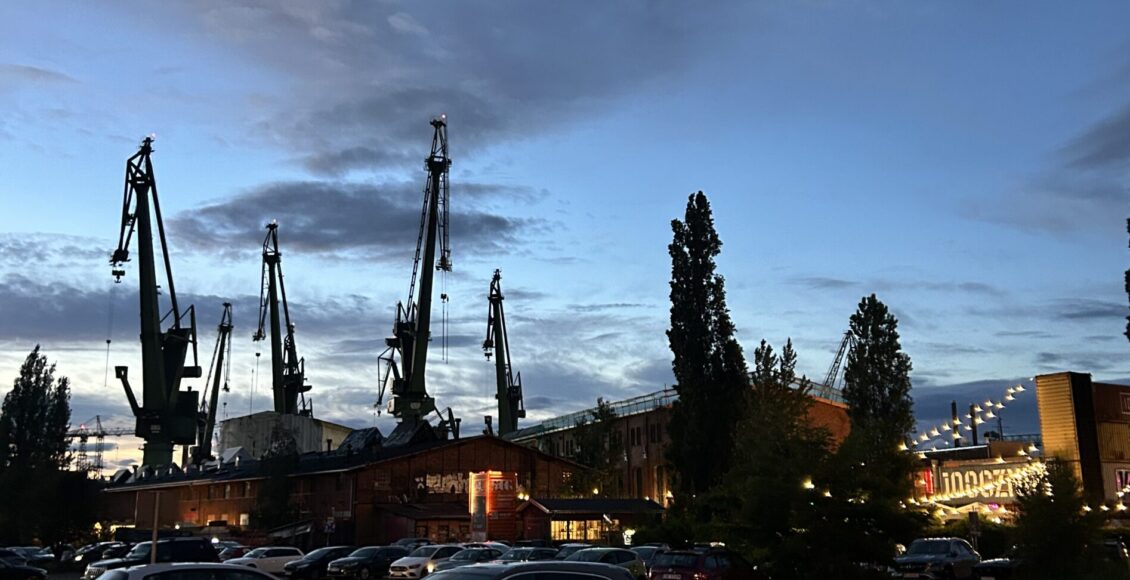
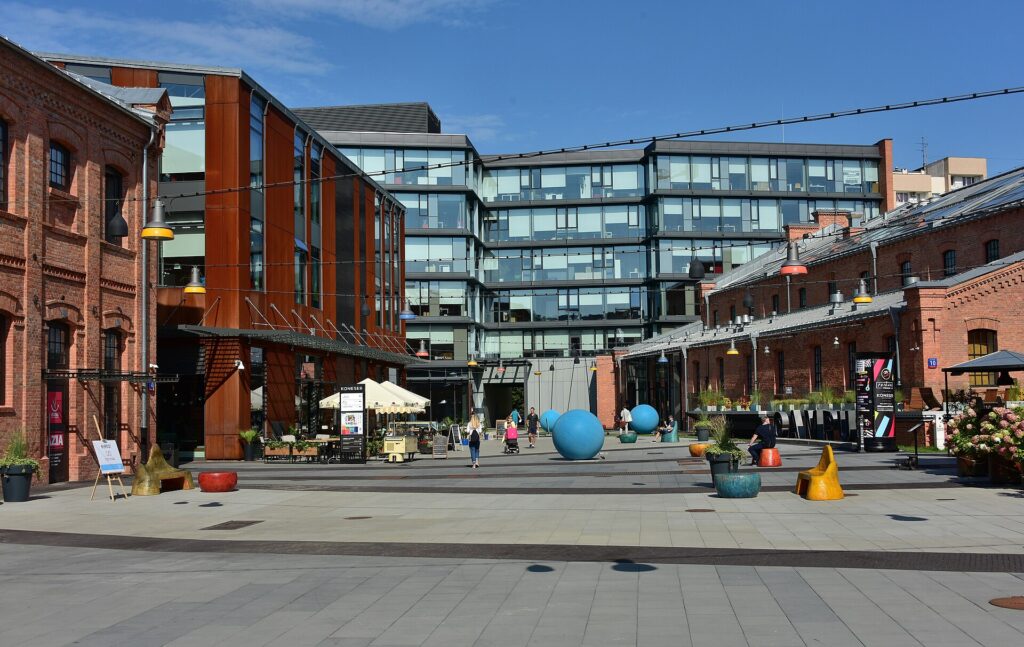
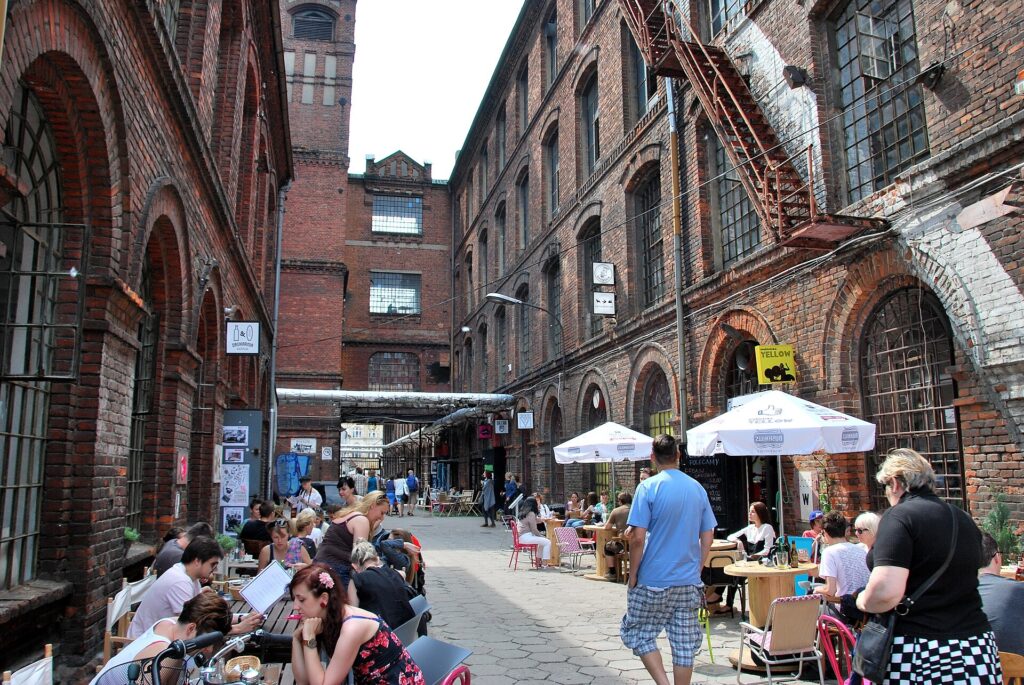
These conditions lead to the creation of adaptive reuse projects that are now destinations for locals and tourists alike. Two important examples are Centrum Praskie Koneser, a former vodka distillery that employed thousands across Warsaw’s Praga neighbourhood, and Montownia, a former shipyard in Gdańsk that was the center of the Solidarność movement that ousted the communist government. On both of these sites, the original buildings were maintained to create bustling mixed-use districts. They contain affordable and market-rate residences, commercial spaces, and museums dedicated to the sites’ former uses.
Similar to urban areas in Poland, cities like Pittsburgh, Cleveland, and Detroit all contain an abundance of obsolete industrial property and vacant lots – remnants of the collapse of the American coal and steel industries. Many of these properties have the potential to be industrial heritage sites. Now-defunct facilities were formerly connected to the onset of American automotive manufacturing, the creation of assembly line production, and the growth of labour rights movements. Relative to bigger American metro areas, the land market in Rust Belt cities is weaker. However, adaptive reuse projects are not happening at the scale that should be expected with the amount of underutilized industrial building stock available. The problem does not lie in lacking the space, structures, or desire to preserve industrial heritage. Rather, it lies with the lack of the correct market conditions to incentivize developers.
Looking back at the rubric set by Polish cities, hoping for market conditions to improve does not bode well for creating a consistent supply of useful post-industrial spaces. While cities in the Rust Belt have recorded positive economic growth in the last few years, these rates are not staggering enough on their own to pull developer attention. The demand is there; the few industrial adaptive reuse projects that have been completed in the Rust Belt have created bustling new mixed-use districts that have attracted more social programming and tourists. The Polish urban market had similar conditions. Private investment would not find its way to cities like Poznan or Gdansk on its own due to meagre prospective returns. Government funding is an important instrument to create the market environment that draws developers to post-industrial urban markets. The Polish case teaches us that good industrial adaptive reuse requires strong commitment from upper levels of government. The EU provided financial support for projects all over Poland. American state and national governments need to do the same for change to happen.
What this could look like in the American context is the expansion of special tax credits for developers that aim to remediate brownfields and preserve historic districts. Another strategy is the creation of funds that collect deferred capital gains taxes from investors to put into projects located in historically underserved markets. Both of these strategies have already made some progress in financing redevelopment. They help to cover the costs that developers currently struggle to internalize. However, current efforts are evidently not enough. These incentives still need substantially more financial and political backing to match the successful funding strategies that Polish cities have used.
Comparing international case studies can reveal alternative techniques and unlock new possibilities for the future of American cities. Analyzing contexts like Poland is especially important now, seeing the profound tension between planners and advocates calling for the reform of urban development practices, and constrained market conditions that leave developers with few options. Planners are correct in their presumptions about industrial adaptive reuse; there are many benefits that have yet to be unlocked in several American cities. The lack of these projects in the US does not necessarily mean that developers are uncreative. The case of Polish cities shows that fully relying on the private market to guide development may hamper the potential for cities, like those in the American Rust Belt, to experience the opportunities that projects like adaptive reuse can create. Poland didn’t wait for the market to reinvent its industrial history; if American policymakers remain bystanders, the true potential of American cities may never be unlocked.
Edited by Dahlia Harrison-Irwin
Featured Image: Gdansk shipyard, partially adapted into a public entertainment space on the Baltic coastline. Photo by Allison Dera.