
Sunlight is Testing the Limits of International Law

The United States’ energy sector has long been tied to the state. Since 1789, companies have been required to meet federal rules to qualify for government subsidies. However, new technologies are beginning to threaten the status quo of governmental regulation. Amid the global rise in electricity demand, energy companies are looking beyond Earth’s finite resources and shifting their gaze to space-based solar power (SBSP).
As a relatively new field, SBSP has thus far evaded international regulation, as no treaty has yet established a regulatory framework. Its efforts are increasingly funded and controlled by state defence contracts, granting private firms significant power over government infrastructure and day-to-day electricity, with no accountability mechanism currently in place.
Although solar-powered satellites have existed since the US’s 1958 launch of the Vanguard 1 satellite, SBSP is different: satellites orbiting the planet harness solar radiation and transmit it to beacons on Earth. The idea was first introduced by American engineer Peter Glaser in 1968 as a solution to the 1970s energy crisis. Despite initial resistance due to the high costs of rocket launches, the development of new components and lighter materials ultimately prompted the US, along with Japan and China, to revisit the proposal. SBSP also uses satellites already in gestation, is not restricted by the day-night cycle on Earth, and has an infinite energy source, making it fairly cost-efficient and reliable. This is incredibly appealing for states seeking a stable energy source for heavy military infrastructure projects and data centres unburdened by slow logistics operations.
Overview Energy, an aerospace startup, received an undisclosed contract for SBSP from the US Pentagon’s Operational Energy Capability Improvement Fund (OECIF) on September 30, 2026, allowing them to begin building a beacon on US soil. This follows a contract Overview Energy received from Meta in April to power their data centres, and another from the US Air Force in May to test the use of SBSP for military power provisioning.

These contracts point to a rising trend in which states are the main funders, consumers, and rule-setters for this new technology, rather than international legal institutions. Usually, energy is overseen by markets, the military is held accountable by the state, and space is governed by international treaties—such as the 1967 Outer Space Treaty (OST), which outlines the legal bounds of space exploration and resource extraction and addresses private space activities. SBSP, however, sits at the intersection of all three, and thus has no legal framework that fully applies to it. Article VI of the OST, for example, outlines that “the activities of non-governmental entities in outer space […] shall require authorization and continuing supervision by the appropriate State Party to the Treaty.”
In other words, states are responsible for overseeing and authorizing the actions of private actors within their jurisdiction while also ensuring that those actors’ activities conform to the treaty. Through the Pentagon’s defence contract, the US government procures Overview Energy’s system while remaining internationally responsible for its activities. Simultaneously funding and supervising the project enables the US government to reroute its energy to its own military and data infrastructure. Although Article VI is technically satisfied, there is no mechanism constraining Overview Energy’s actions. Meanwhile, Article II’s non-appropriation principle also prohibits the ownership of a celestial body, but does not limit privately owned machines in outer space. Further, Article VIII actually recognizes that the presence of a commercial space object does not automatically amount to the appropriation of space or, in this case, the Sun. Defence contracts funding commercial space activities thus cannot, by themselves, be seen as an OST violation.
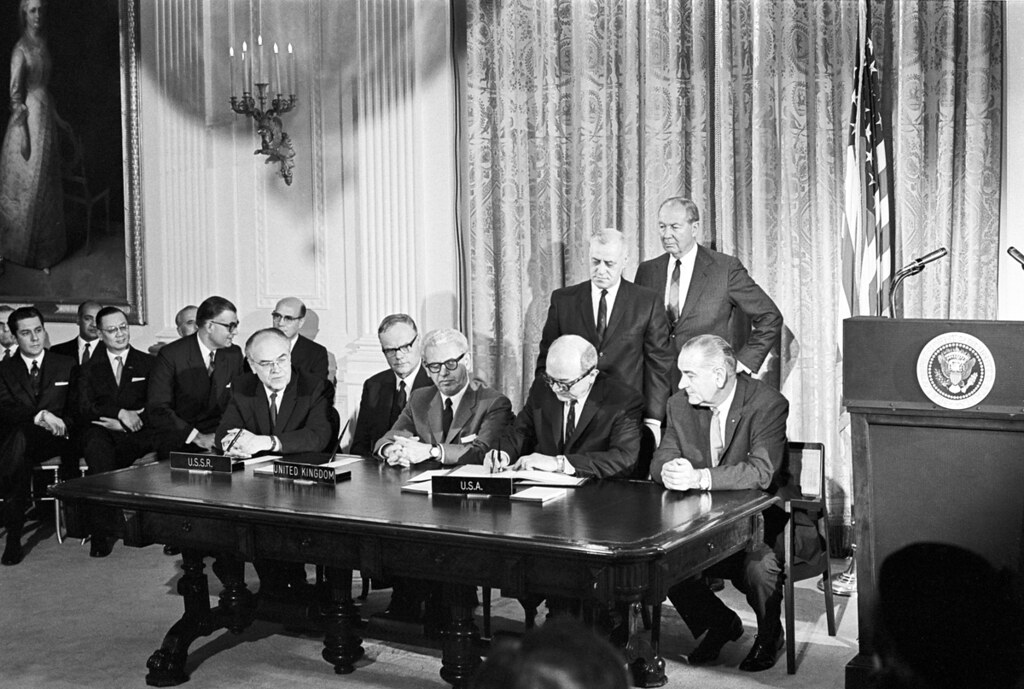
Since this framework was developed against an overwhelmingly state-led backdrop, its principles are left to states to interpret, creating gaps in implementation. Amidst this lack of specificity, a corporatocracy may arise. SBSP companies, bankrolled by states, will hold significant power over energy infrastructure while fueling states’ respective militaries. This grants private actors power over state institutions and public utilities, enabling corporate control of society’s critical infrastructure without public accountability, thus undermining state sovereignty. As regulation typically arrives much later than innovation, SBSP will likely be—at least initially—governed by defence contracts rather than international law, eroding states’ legitimacy and raising numerous concerns.
Privatizing states’ military infrastructure primarily creates a legal crisis in accountability. As international law was created by and for states, non-state actors, notably private ones, lack a substantial international legal personality; they typically cannot be held accountable under international law and must instead be tried under domestic law. Although the latter holds them accountable, private companies avoid international reprimand and direct legal scrutiny, making it easier to avoid responsibility. Additionally, companies have bureaucratic structures that can limit international organizations’ ability to control their behaviour, making it harder to ensure they abide by internationally agreed-upon principles. Therefore, SBSP grants private actors significant military and market power, with no strong incentive to be transparent.
SBSP could also produce a dangerous overreliance on private actors for military strength. Relying on one company for significant energy sourcing creates a strategic vulnerability if SBSP fails. This also grants companies bargaining power over states, potentially allowing them to play a direct role in war-related policy decisions or demand terms that are unfavourable for civilians. This grants private actors the leverage to lead state policy in line with corporate interests, redirecting the state apparatus to serve corporate profit rather than the general public, producing a corporatocracy. Not only is this undemocratic, as companies are not elected by popular will and therefore have no incentive to act in the public interest, but it ultimately weakens the government’s control over its own infrastructure and, by extension, its sovereignty.
In the American case, defence contracts are not all subject to congressional review, allowing private actors to control infrastructure that affects national security, access to electricity, and the digital sphere without public scrutiny or accountability. This once more fuels corporate control over key societal infrastructure, creating a corporatocracy. However, there is little civilians can do to contest this. This lack of transparency and appeal may also foster corruption. Nevertheless, the state will formally bear responsibility under international law, while the private actor can easily deflect blame onto intermediaries, undermining public trust and worsening a crisis of state legitimacy.
This new era of commercialized space-based solar power reveals that technological developments are far outpacing international law, with private actors determining the rules of the game before global regulation can adapt. As states become more dependent on firms, accountability will continue to fragment while the vulnerabilities posed to states will worsen. In the long run, governments may become more dependent on companies that are not accountable to international law, setting a dangerous precedent for the normalization of corporate power in warfare and the erosion of international legal norms.
Edited by Ella Schrebler
Featured Image: A satellite glides over Earth, showcasing dramatic cloud formations and the vast expanse of space. Photo by SpaceX is licensed under the Pexels License.

