
The Beautiful Game Unmasks Britain’s Ugly Dependency
Andy Burnham’s first months as Prime Minister have been met with a degree of cautious optimism. However, one of the biggest scandals in Premier League history – arguably Britain’s biggest cultural export – now threatens to expose an uncomfortable dependency on foreign capital and majorly set back the early positivity surrounding Burnham’s new Labour government. As he looks to begin the next chapter of British politics, the realities of the private sector’s ties to foreign investment have been a rude awakening for the new prime minister.
Much of Andy Burnham’s early rhetoric as prime minister has centred around rebuilding a country scarred by two decades of little to no economic growth. During his speech at the Labour Party Conference in September, Burnham emphasized his intention to take back political and economic ‘control’ of Britain. Speaking to those who have felt let down by decades of economic stagnation in Britain, Burnham made his commitments clear: “When we gave up public control, we left people exposed … Our plan for public control is a plan for growth, growth of people, places and businesses.” This philosophy of ‘control’ is not a new one for Burnham, but has its foundations in his time as Mayor of Greater Manchester between 2017 and 2026. Focused on blending ideas such as devolution and public control of essential services while maintaining free markets, Burnham has often described ‘Manchesterism’ in a nutshell as “the end of neoliberalism.” Fundamentally a politics of compassion, ‘Manchesterism’ seeks to relieve pressure not only from the average individual, but also from strained public services more generally. Burnham hopes that the easing of Britain’s housing and cost-of-living crises will flow downstream from the implementation of these ideas.
The speech received multiple standing ovations and broadly positive press coverage. However, political elements in a seismic Premier League scandal now threaten to undermine these policies. At its core, the scandal is a question of who holds power over a valuable institution and who is held accountable for it – the very issue Burnham’s ‘public control’ agenda claims to answer. Beyond the global reputation of English football, this strikes right at the heart of his political philosophy.
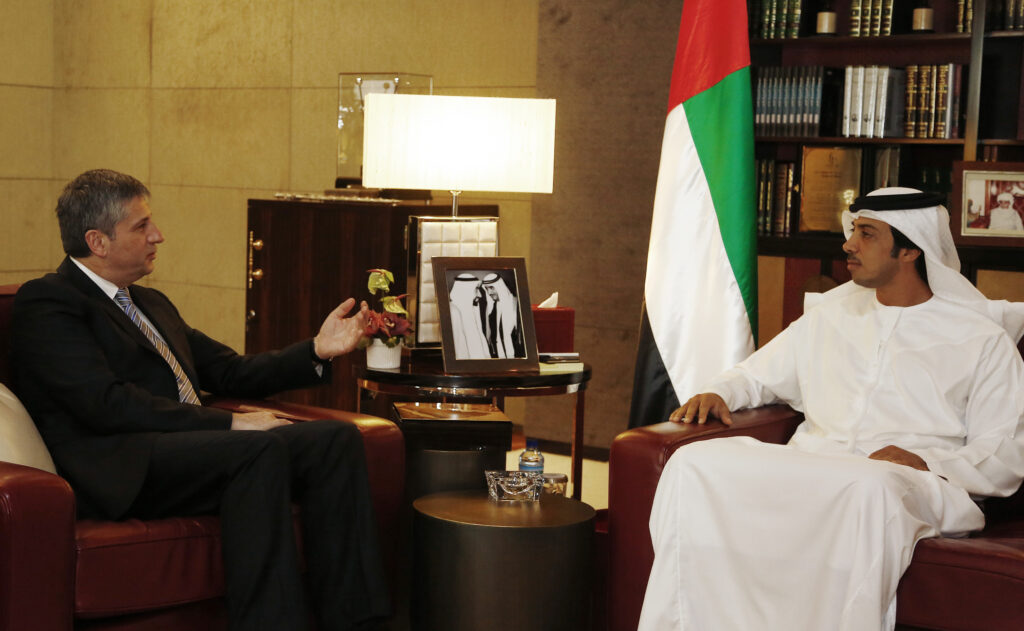
In 2008, Manchester City, then a relatively insignificant rival of the global superbrand Manchester United, was bought by the Abu Dhabi United Group. Led by now UAE Vice President Sheikh Mansour bin Zayed Al Nahyan, this injection of capital would not only see Manchester City dominate the next decade of English football but would bring a comprehensive regeneration of the eastern parts of Manchester. In 2014, Manchester City Council announced a £1 billion GBP deal with Mansour, which included more than 1000 private rented apartments and nearly 400 built-for-sale homes. It promised to be “a world-class exemplar of regeneration” and, in many ways, it was. However, with only six per cent of homes built in Greater Manchester between 2015 and 2024 being classed as affordable, questions have been raised over Manchester’s – and, by extension, Burnham’s – dependence on direct foreign investment, which seems completely at odds with a rhetoric of “ending neoliberalism.” Now, in light of a recent verdict on the Abu Dhabi Group’s financial wrongdoings in English football, what had been a peripheral criticism of the City Council’s regeneration of Greater Manchester has now become the centre of a major sporting scandal.
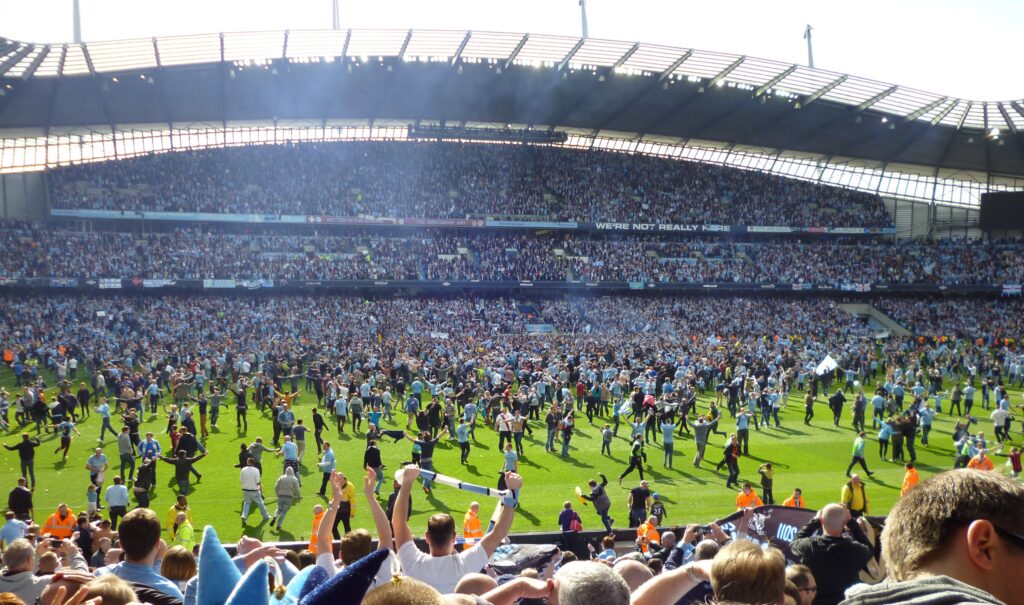
At the end of September, the Premier League confirmed that an independent commission had found Manchester City guilty of over 100 charges of breaching its financial rules over a nine-year period. Inflating revenues and understating expenses by arranging “sham contracts” with commercial partners, the commission found that Manchester City had boosted their income by more than £800 GBP million during the period. This allowed the club to outspend competitors in the transfer market, resulting in star-studded teams which dominated the Premier League for over a decade. By rising to the top of European football in record time, the Emirati owners were able to acquire not only soft power globally, but significant economic leverage – and thereby political influence – in Britain.
In response to the commission’s verdict, Downing Street has not disputed reports that the decision may have “undermined” the UAE’s “appetite for future grand-scale UK commitments.” Depending on the severity of Manchester City’s punishment, the Emirati owners are now threatening to pull the plug on billions of pounds in investment for a hi-tech hub between Oxford and Cambridge, billed as “the UK’s answer to Silicon Valley.” The pressure on Burnham is obvious.
Crucially, following the Premier League’s announcement, Burnham told the BBC that he would be “really concerned” if the Emirati owners were forced to sell the club. In doing so, he has unnecessarily drawn attention to his own personal relationships with Emirati investors from his time as Mayor of Greater Manchester, as well as Britain’s awkward dependence on the UAE more generally. Beyond concerns about economic dependency, responses to the verdict from both sides highlight an uncomfortable degree of Emirati influence in British politics.
While a reliance on foreign investment might contradict Burnham’s political rhetoric, he is still likely to maintain support from business-oriented Labour interests sympathizing with the benefits where necessary. Whether this is a long-term solution to Britain’s cost-of-living crisis or not, it is difficult to argue that such investment has been bad for Manchester.
However, the added element of the UAE’s now significant influence in British politics leaves Burnham with a difficult conundrum. Major projects that were previously welcomed are now facing public scrutiny due to the Emirati owners’ open and unapologetic corruption of England’s national sport.
Furthermore, in this context, Downing Street’s moral shift on illegal settlements in the West Bank now raises consistency problems for Burnham – Foreign Secretary Ed Miliband recently described illegal settlers’ actions as “terrorism” and “ethnic cleansing.” Considering the UAE’s record of human rights violations, Burnham’s Labour must be careful to avoid selective moral standards in their foreign policy. His refusal to seriously address the UAE’s human rights violations has followed him since his mayoral days, often avoiding the topic by shifting responsibility to Parliament. Now the leader of that body, he finds his back against a wall which he created.
Any of these three concerns – an overreliance on foreign capital, increased Emirati influence on Downing Street, and selective moral standards – may have been acceptable to the Labour base in isolation, but taken together, both Burnham’s political and moral consistency are now firmly under the microscope. In a post-Starmer Britain, strong value-based rhetoric was a bold but obvious place to start. Now, with the walls of political reality closing in, it is time for Burnham to act in accordance with his words. A philosophy that lacks credibility is unlikely to reignite the political trust this Labour government so desperately needs.
Edited by James Knechtel
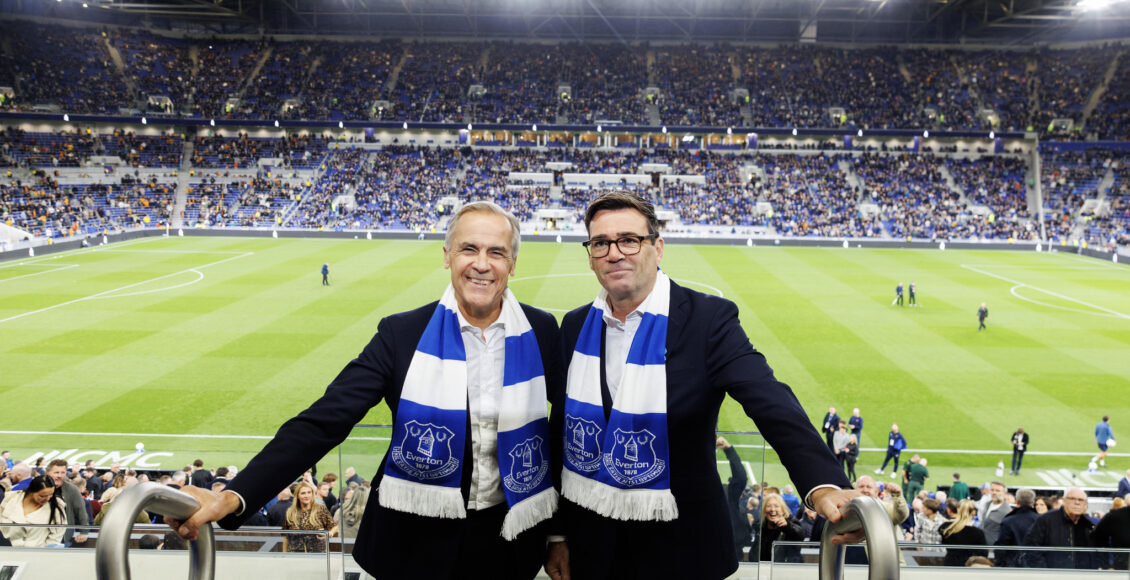
Featured image: Mark Carney and Andy Burnham at a Premier League game in September. Photo by Simon Dawson is licensed under CC BY-NC-ND 4.0


