
Washington Loves Data Centres. Most Americans Don’t.
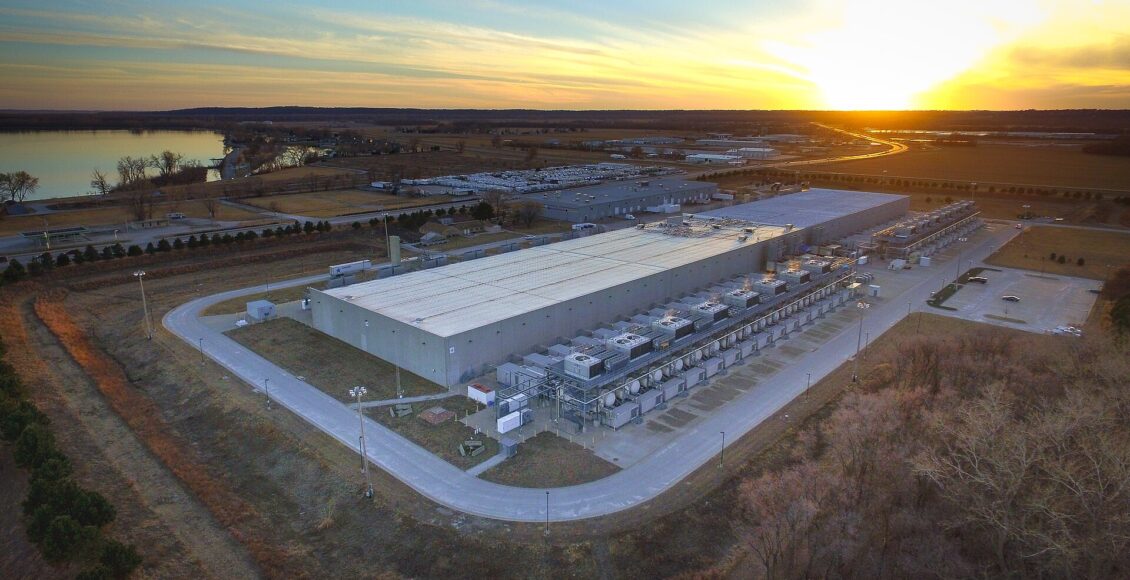 Google Data Center, Council Bluffs Iowa
Across the political aisle, Americans are souring on data centres more than ever before. A March 2026 Gallup poll found that 7 out of 10 Americans surveyed would directly oppose data centre expansion in their neighbourhood, making the data centre question perhaps one of the few issues the country can currently reach consensus on. As a result, data centre expansion has rapidly become a hot-button topic ahead of the November midterms, and the stances politicians across the country are taking are not necessarily divided along traditional party lines, which makes quite the odd break.
To better understand what this means for the United States as a whole, we should first take a closer look at the region with the most data centres in the country. About thirty miles northwest of Washington, D.C., in Loudoun County, Virginia, lies a community of 40,000 people known as Ashburn. Despite its small size, Ashburn is just as integral to the American economy as New York, Chicago, or San Francisco. As architecture journalist and commentator Andrew Blum put it, Ashburn has become “the bullseye of America’s internet,” thanks to the 133 data centres located there.
This high concentration of data centres is not unique to Ashburn. Together with the North Virginian communities of Tysons Corner, Reston, Dulles, Herndon, and Sterling, Ashburn is part of a stretch of land colloquially referred to as “Data Centre Alley.” As a result, perhaps no state in the country is more intimately entrenched with the social, economic, environmental, and political ramifications of data centre expansion than the Commonwealth of Virginia. To this end, in many ways, the events that transpire in Virginia regarding data centres could serve as a premonition for the country as a whole.
For most of this past June, Virginia governor Abigail Spanberger, a Democrat, was locked in a stalemate with the state legislature over the state budget. The source of tension was primarily Spanberger’s push to keep a tax exemption on the sale and purchase of data centre equipment—an exemption so lucrative that the industry saved roughly $2 billion USD from it in the last fiscal year alone. The fight over that exemption dragged Virginia to the brink of a government shutdown in June, with Spanberger eventually acquiescing and pushing through a compromise that included raising additional taxes on data centres less than 48 hours before the budget deadline. However, Spanberger’s original tax exemption was ultimately not repealed in the state’s new budget and will continue to remain in effect.

What is particularly noteworthy about the Virginia deadlock is that the state is currently under the control of a Democratic trifecta: both chambers of the Virginia legislature and the gubernatorial position are occupied by Democrats. Indeed, a growing divide has emerged within the Democratic Party in recent years between the establishment centrist faction and the more progressive social-democratic wing. In many ways, the June budget stalemate in Virginia is a likely preview of a battle that could unfold in similar battleground states across the United States during the November midterms.
The more progressive wing of the Democratic Party, including Rep. Alexandria Ocasio-Cortez (Dem. NY) and Sen. Bernie Sanders (I. VT), has already proposed a bill in both chambers of Congress that would effectively shut down the expansion of data centres nationwide. But the proposal faces major debate within Congress, placing serious doubts on its ability to survive a filibuster. Speaker of the House Mike Johnson (Rep. LA) is perhaps one of the most vehement dissidents, arguing that a nationwide moratorium would severely hinder America’s ability to go toe-to-toe with China in a potential AI arms race. As Johnson stated in August, “A broad moratorium against data centers is kind of a dangerous prospect right now. [If China is] able to leapfrog us in that race, it’s a very dangerous thing for everybody around the country.”
The progressives’ proposal is not only facing backlash from Republicans, as there is also criticism within the Democratic Party over the prospect of a national moratorium. House minority leader Hakeem Jeffries (Dem. NY) has mainly backed the view of Jay Obernolte (Rep. CA) and Ted Lieu (Dem. CA), representatives who want to continue funding for data centres and AI research. Jeffries consequently maintains a more centrist position, akin to that of Spanberger’s, saying that House Democrats have “maintained from the very beginning […] that we want to support innovation excellence, while at the same time making sure there are guardrails to protect the American people.”
Despite this, there have been some wins for the anti-data centre camp in recent months. In July, Governor Kathy Hochul (Dem. NY) became the first governor in the nation to place a moratorium on data centres outright, while in August, Governor Josh Shapiro (Dem. PA) signed an executive order demanding that “developers meet strict standards on energy affordability, environmental protection, workforce and economic development, transparency, and community engagement.”
Perhaps even more surprising is that several prominent Republican politicians across the country are also becoming disillusioned with data centre expansion. Most notably, Governor Ron DeSantis (Rep. FL), a strong Trump ally, has placed some of the most stringent restrictions on the industry of any governor nationwide. This has included banning developers from using Floridian water to cool their centres and prohibiting public utilities from passing development costs to taxpayers, effectively killing all future data centre development in the Sunshine State. Typically, going against Trump is a death knell for a Republican’s political career in 2026, but many other Republicans seem to also be turning on the President’s absolute “build-at-all-costs” stance, including incumbent Texas Governor Greg Abbott (Rep. TX) and Rep. Tom Tiffany (Rep. WI), who are both running in the November gubernatorial elections.

Upon revisiting the Virginia deadlock, what is most notable is that Spanberger’s changes only add new taxes without touching the existing exemption. Such a policy reads very much like the national party’s position in a vacuum: acknowledging the problem, offering some minimal symbolic concession, but ultimately falling short of confronting the issue directly. It begs the question: if a Democratic governor and a Democratic state legislature in the most data-centre-saturated state in the country cannot deliver anything more than a modest tax adjustment, are national Democrats prepared to offer voters elsewhere anything beyond that?
For what it’s worth, for the first time since 2022, the Democrats no longer seem to be fighting an uphill battle to win back control of Congress. Polling data from various sources currently shows that the party is within reach of winning key Senate races in North Carolina and Michigan, and is putting up a strong fight in the Republican strongholds of Texas, Alaska, and Ohio. Further, a growing rift in the Republican coalition among some of President Trump’s closest allies, including DeSantis and other major Republican politicians choosing to break from the administration’s maximalist growth-at-all-costs stance, is handing Democrats a golden ticket they did not have to manufacture themselves.
But acting upon said opportunities is a whole different story, and the national Democratic Party does not seem willing to take it. With the elections imminent, it remains to be seen whether growing opposition to data centre expansion will play a significant role in shaping voters’ decisions and, ultimately, the balance of power in the House and Senate.
Edited by Alexandra Agosta-Lyon
Featured Image: An aerial view of a data centre in Council Bluffs, Iowa. Photo by Chad Davis is licensed under CC by SA 2.0.


