
Why China Wants Myanmar’s Junta to Win
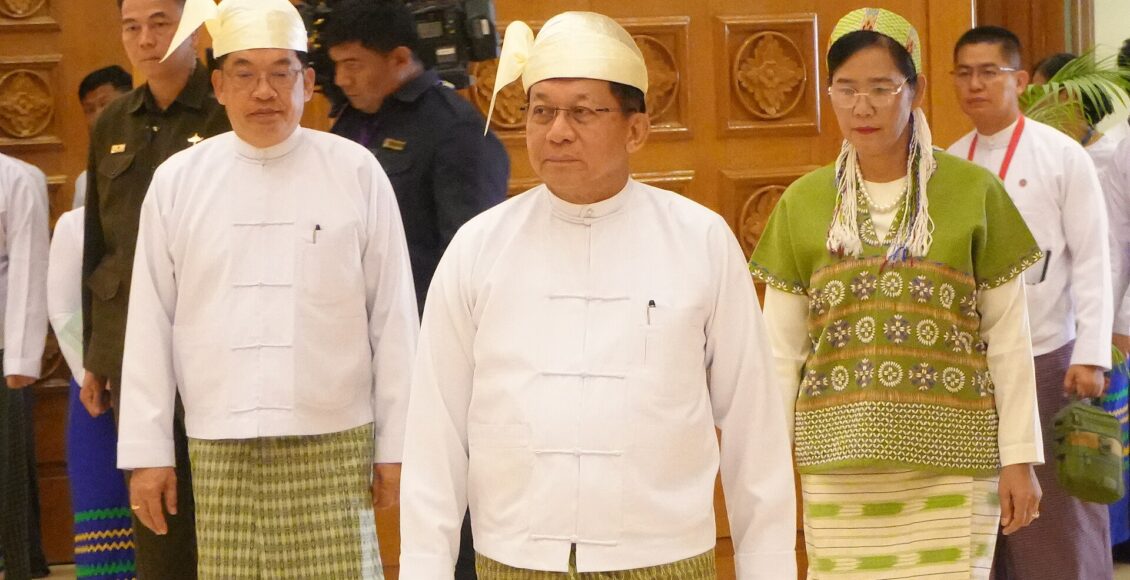
In February 2021, Min Aung Hlaing, then the highest-ranking military officer in Myanmar (formerly Burma), staged a coup one day before the legitimately elected National League for Democracy (NLD) was to assume roughly 80 per cent of seats in parliament. In the following days, Min Aung Hlaing’s provisional government imprisoned NLD leaders and democracy activists and killed hundreds of dissidents. Armed resistance ensued.
After five years of civil war, Chinese-brokered ceasefires, and promises of Chinese aid for a national election, Burmese voters returned to the polls. The junta disqualified major opposition parties and criminalized criticism of the election’s handling. It came as no surprise that the junta-backed political party won over 80 per cent of seats. Min Aung Hlaing was formally elected as president in April, even as the United Nations dismissed the results.
Coups and insurgencies are common in Myanmar, but today’s military government faces an unparalleled existential threat from dozens of insurgent groups. Until Beijing started actively supporting the junta in 2024, the regime was faced with territorial losses, defections, and desertions. Although Beijing negotiated ceasefires between the junta and insurgents, fighting persists in other regions. Despite Min Aung Hlaing’s hold on major population centers and indiscriminate violence against civilians and insurgents, his government effectively controls only 21 per cent of the country. The junta’s retention of national power, in the face of limited substantive control, might be best explained by Beijing’s involvement.
Broadly, Myanmar’s rebel organizations fall into two distinct categories: People’s Defence Forces (PDFs) and ethnic armed organizations (EAOs). PDFs—formed in the wake of the coup—are decentralized volunteer militias that serve as the armed wing of Myanmar’s democratic movement, whose goal is to give civilians ultimate political authority. EAOs, on the other hand, are the armed wing of specific ethnic political organizations. For decades, these ethnic organizations have fought for greater rights and autonomy for Myanmar’s historically disenfranchised ethnic minorities.
While PDFs often rely on EAOs for training and logistical support, EAOs and PDFs are separate organizations with separate interests. That said, some PDFs have lost autonomy fighting for a particular EAO, rather than the broader democratic movement. In other cases, PDFs have maintained relative independence, working with other rebel organizations against the junta.
EAOs and PDFs may have different underlying goals, but they share an overriding interest: defeating the junta. Unfortunately for them, Beijing has gotten in the way.
Since the start of the coup, Chinese suppliers have sold the junta $267 million in weapons, not to mention fighter jets and drones. In January 2024, Beijing-brokered talks stopped EAO advances into central Myanmar—the junta’s heartland. When the ceasefire broke in June, China shut down border trade, forced insurgent EAOs to concede territorial gains, and ordered non-insurgent EAOs to stop supplying rebels. After the rebels signed another ceasefire, China reopened the border. Through military support and neutralizing the rebels, Beijing has allowed the junta time to stabilize and try to regain legitimacy through elections.
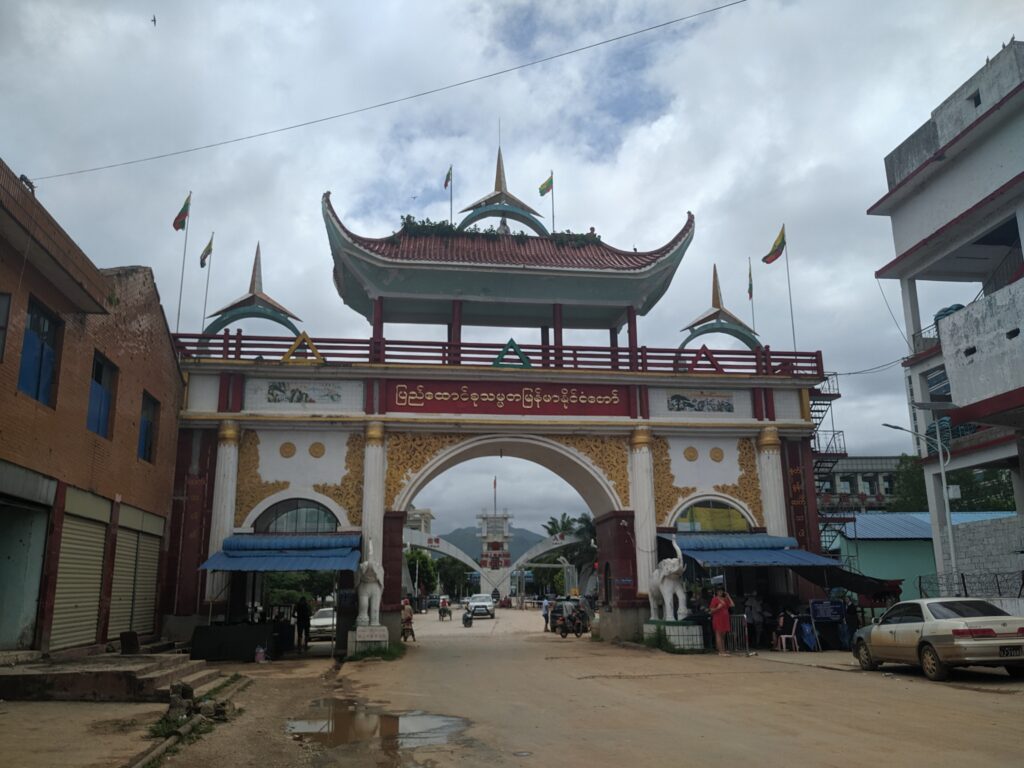
Beijing believes its neighbours are essential to its national security and development. That makes Myanmar, bordering China’s Yunnan province, a key security and economic interest. Beijing pursues its security interests by keeping Myanmar’s domestic situation stable and friendly. A stable and friendly Myanmar, in turn, allows Beijing to pursue economic development interests that require access to Burmese resource wealth and the Indian Ocean.
China relies on Myanmar’s rare earth oxides to dominate and maximize its share in the global market. Rare earth oxides are essential for the magnet and electronics industries, sectors in which China has a dominant economic interest. Furthermore, Chinese state-owned companies operate copper mines across Myanmar, generating millions of dollars in revenue. As copper is needed across many economic sectors, Beijing uses Myanmar’s copper deposits to help maintain industrial power. Additionally, China wants to export Myanmar’s hydroelectricity, and currently transports oil and gas from the Indian Ocean to Yunnan through the country.
Myanmar is China’s shortest route to the Indian Ocean. The proposed China–Myanmar Economic Corridor would allow China to expand its trade presence and enhance its military projection capabilities, furthering its security and development interests.
If Myanmar’s domestic situation becomes unstable or unfriendly to China—or both—Beijing will not achieve its security and development interests. Therefore, Beijing’s support for the junta stems from its view that the military is the best actor to secure Myanmar’s domestic stability, and with it, China’s interests. In other words, the junta satisfies China’s security and economic interests better than any other faction.
In the case of autonomous PDFs, Beijing’s concern is that they are fighting to establish a democratic regime in which public policymaking is ultimately accountable to the people. If PDFs succeed, a new Burmese government will be more likely to register the public’s concerns and pursue policies that more closely reflect public opinion. Unfortunately for Beijing, a significant portion of the Burmese public resents China’s economic involvement. Acclaimed Burmese academic Thant Myint-U notes the widespread perception that China has been taking advantage of Myanmar for years, often at the expense of the Burmese people.
Beijing is aware of this perception. In 2011, widespread public outrage led to the suspension of the Chinese state-backed Myitsone Dam project. The dam would have delivered 90 per cent of the electricity it generated to China. In 2012–2014, protests over the eviction of locals by the China-backed Letpadaung copper mine temporarily reduced the project’s planned scale. Protests continue to this day, and anti-China sentiment has only increased following China’s support for the current junta. Therefore, the democratic movement’s success would likely undermine Beijing’s economic and development investments in the country.
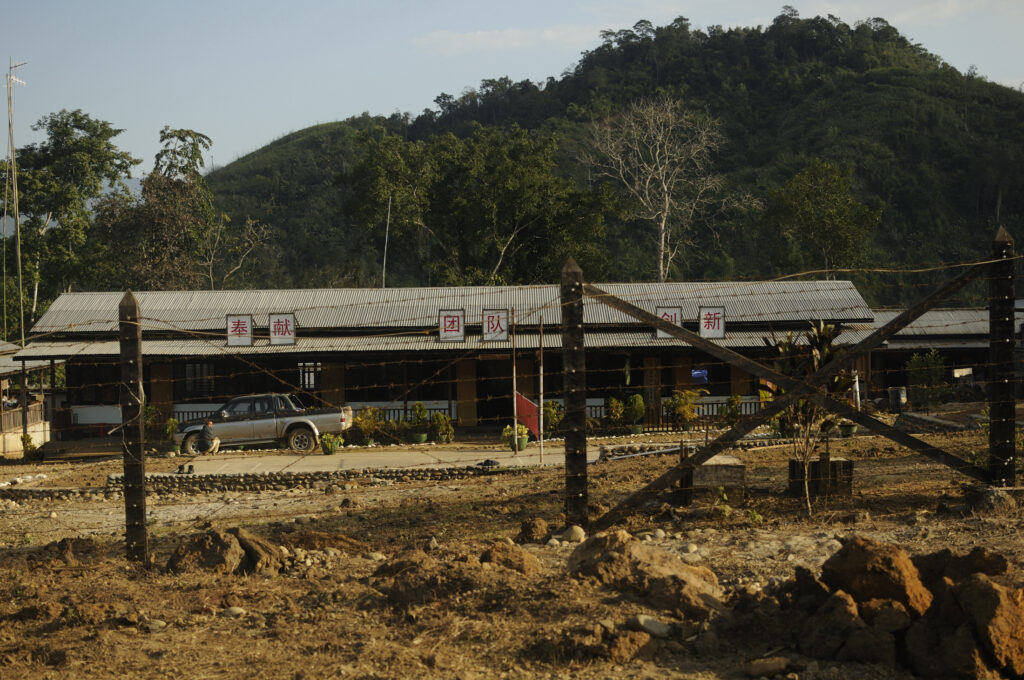
As for EAOs and their PDF proxies, differences in goals and interests sometimes lead to violent clashes. Myanmar’s history of institutional discrimination and enduring tensions between ethnic groups heighten the stakes. The junta’s absence does not guarantee a unified Myanmar, and parcelled territory makes it more difficult for Beijing to realize its economic corridor.
Beijing already has longstanding relationships with major ethnic political organizations, but the risk of more conflict and instability is a dealbreaker. China has already suffered from conflict spillover and does not want more, as the construction and use of its economic corridor would again be hampered by domestic infighting. Thus, the EAOs also fail to satisfy Beijing’s political and economic interests, as a divided Myanmar will increase security risks and impede China’s access to the Indian Ocean and the accompanying economic and security benefits.
The junta, on the other hand, has a proven record of keeping Myanmar in one piece and signals a willingness to cooperate with Beijing’s interests, even at the expense of domestic welfare. Helping the junta win means Beijing will secure a stable neighbour that guarantees China’s security needs and helps facilitate its economic development. Supporting the resistance would risk empowering forces that endanger China’s border integrity and refuse to meet China’s development demands. Compared with the resistance, the junta is more stable, friendlier, and less risky. Therefore, Beijing has pursued a policy of forcing rebels to concede in the face of junta counterinsurgency. As China minimizes risk and secures regional interests, the junta continues to march under the banner of Chinese patronage.
Edited by Daniel Sun
Featured Image: President Min Aung Hlaing, accompanied by Vice Presidents Nyo Saw and Nan Ni Ni Aye, at their April 2026 inauguration ceremony. Photo by Zawzawaungthwin is licensed under CC0 1.0 Universal.



.jpg)